European Union leaders have united behind an ambitious plan to construct a continental defence network, dubbed a “drone wall,” in a direct response to a series of brazen Russian airspace violations that have rattled the region. The decision, which was made during a summit in Copenhagen, represents a significant change in Europe’s security strategy as it faces a more assertive Russia.
What is the EU’s “Drone Wall”?
In light of Russia’s increasing assertiveness, the decision, which was adopted at a summit in Copenhagen, marks a dramatic shift in Europe’s security approach.
How would the drone wall work?
The “drone wall” is envisioned as a networked system of sensors, detection technology, and anti-drone weapons stretching across Europe’s borders. Its primary purpose is to detect, track, and neutralise intruding unmanned aircraft before they can threaten critical infrastructure or sow panic. While the eastern flank, due to its proximity to Russia, will be a priority, von der Leyen has stated the wall is conceived as a shield for the entire continent.
Also Read: ‘Accept or Pay in Hell’: Muslim, Arab Leaders Back Trump’s Plan as ‘Only Way’ to End Gaza War
Why is this being proposed now?
The plan gained urgent momentum just hours after a significant incursion in March, when approximately 20 Russian drones entered Polish airspace. This event, along with recent violations over Denmark, Poland, and Estonia, exposed critical gaps in Europe’s ability to defend its skies against low-cost, disruptive drone technology.
What is Driving This New Defence Push?
The summit in Copenhagen itself was a testament to the heightened threat, with security bolstered by foreign troops and anti-drone systems.
Why are EU leaders so concerned?
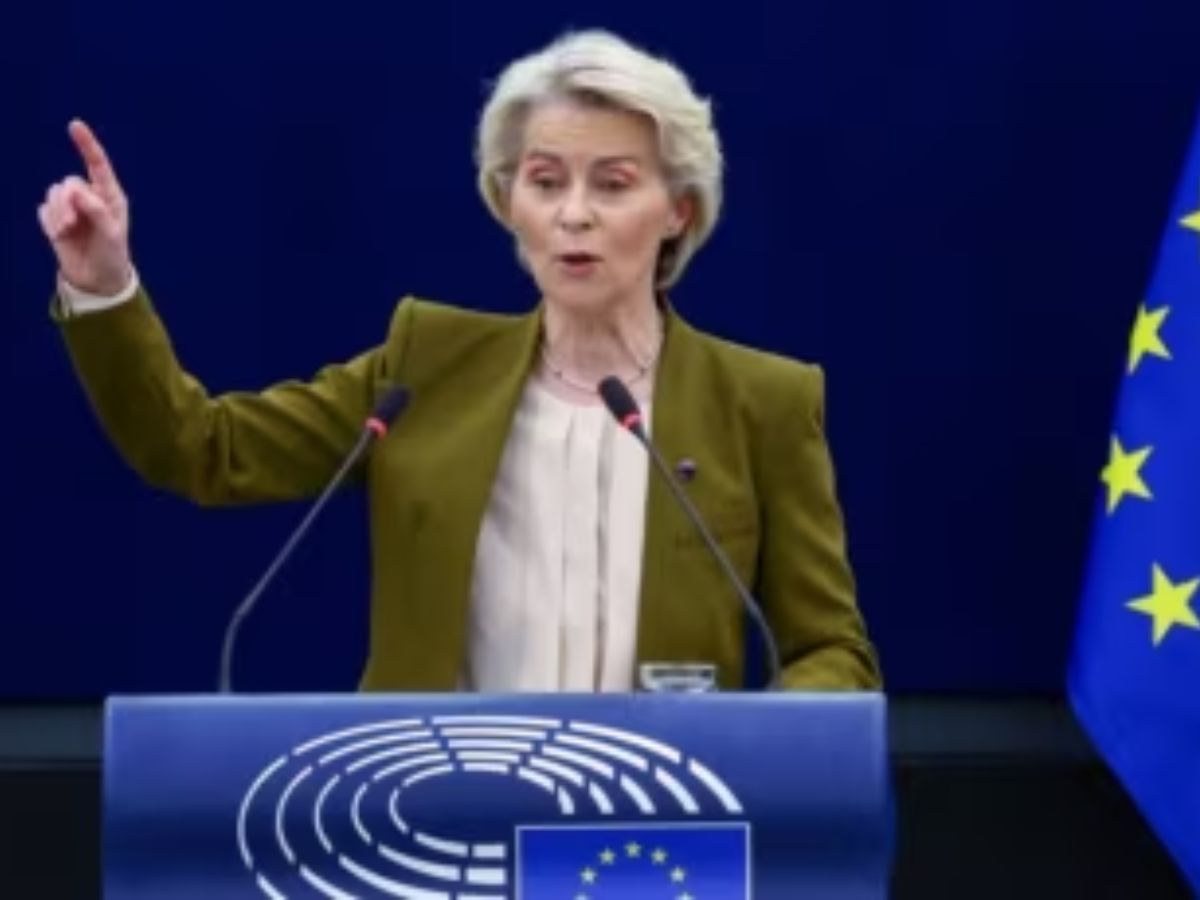
European authorities accuse Russia of a campaign of deliberate provocations. These airspace intrusions are not seen as accidental but as calculated tests of NATO and EU resolve. European Commission chief Ursula von der Leyen stated, “Russia tries to test us. But Russia also tries to sow division and anxiety in our societies. We will not let this happen.” This perspective has cemented following Moscow’s full-scale invasion of Ukraine in 2022, transforming Russia from a strategic partner into the bloc’s primary security threat.
How have recent incidents influenced the decision?
Recent events have made the theoretical threat tangible. In Denmark last week, unidentified drone intrusions—widely believed to be Russian—disrupted air traffic at multiple airports. The incursion into Poland required a major response involving fighter jets, helicopters, and a Patriot air defence system to shoot down the drones, demonstrating the resource-intensive nature of current defences.
What Are the Next Steps and Challenges?
Despite the obvious political intent, there are many obstacles in the way of making the “drone wall” a reality.
What support does the plan have?
The initiative has received strong backing from key leaders. “Timely and necessary” is how NATO Secretary General Mark Rutte described the proposal. Danish Prime Minister Mette Frederiksen stressed during the conference that “Europe must be ready to defend itself,” advocating for increased drone and anti-drone production. Finnish Prime Minister Petteri Orpo warned, “Russia will continue and we have to be ready.”
Also Read: Italian Unions Call General Strike After Israeli Forces Intercept Gaza Aid Flotilla
What are the major obstacles?
The European Commission has not yet produced a detailed plan, leaving major questions unanswered. The colossal cost of such a continent-wide system and the practical complexities of integrating different national technologies into a seamless network remain the biggest challenges. Furthermore, the plan necessitates a significant ramp-up in the European defence industry’s capacity to produce the necessary drones and counter-drone systems.
The sobering understanding that its security environment has changed irrevocably is what motivated Europe to take the “drone wall” as a decisive step towards strategic autonomy.