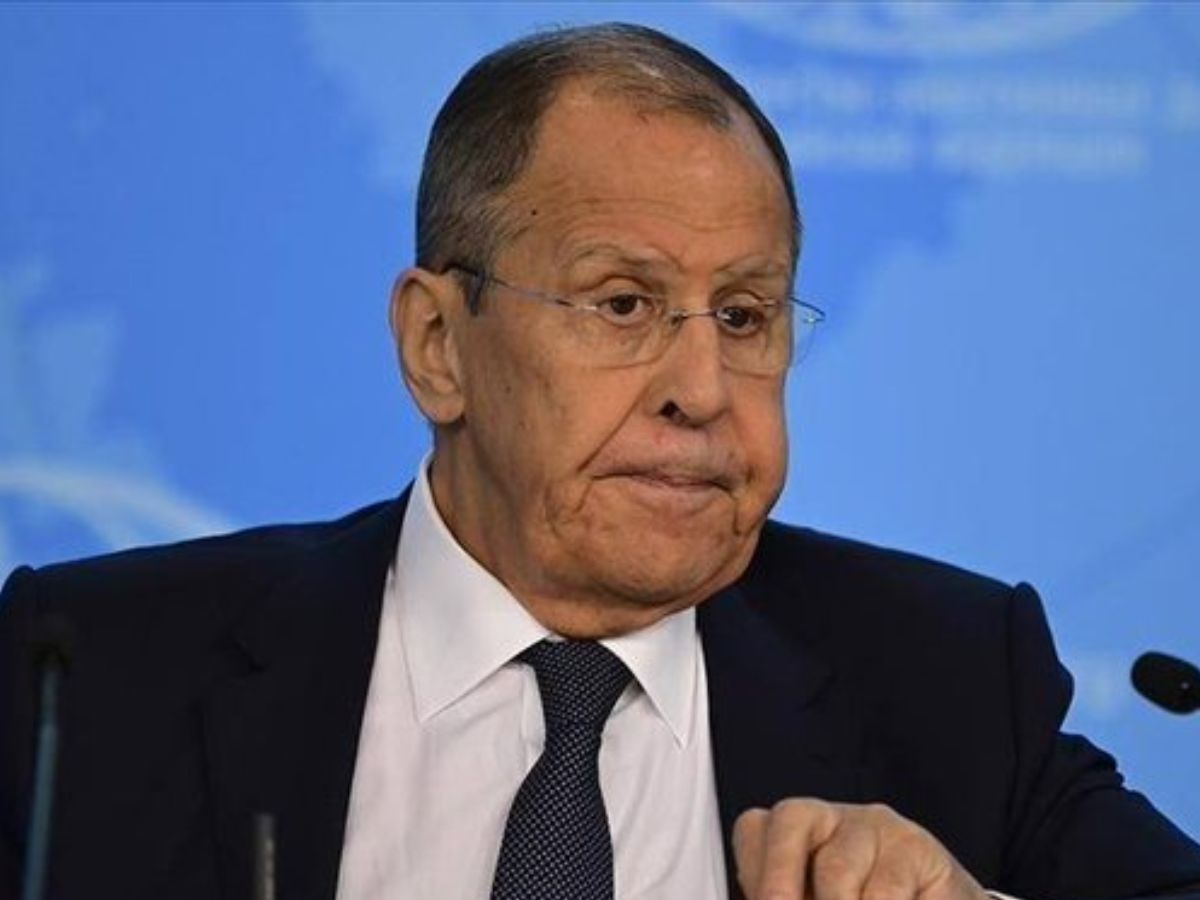
As diplomatic efforts to end the Russia-Ukraine war pick up pace, Moscow has shifted the spotlight toward Europe. Russian Foreign Minister Sergey Lavrov has accused European nations and the European Union of standing in the way of peace talks, even as the United States pushes for a negotiated settlement under President Donald Trump.
Lavrov’s remarks come at a critical moment, just ahead of Trump’s meeting with Ukrainian President Volodymyr Zelensky, where fresh proposals to end the war are expected to be discussed.
Lavrov Says Europe is the ‘Main Obstacle to Peace’
In a recent interview, Lavrov claimed that progress toward ending the war slowed after Europe hardened its stance against Russia. “After a new administration came to power in the United States, Europe and the European Union emerged as the main obstacles to peace.
They are making no secret of the fact that they are getting ready to fight it out with Russia on the battlefield,” Lavrov said. He suggested that European capitals prefer a prolonged conflict rather than compromise, despite rising economic and security costs.
Russia Praises Trump’s Role in Peace Efforts
Lavrov openly welcomed the Trump administration’s approach, describing it as practical and results-driven. “Russia appreciates efforts by President of the United States Donald Trump and his team to achieve a peace settlement.
We are committed to continuing to work with the American negotiators to devise lasting agreements for addressing the conflict’s root causes,” he said. This statement signals Moscow’s intent to engage more closely with Washington, while sidelining European intermediaries.
Trump-Zelensky Meeting Raises Stakes
Ukrainian President Volodymyr Zelensky is set to meet Trump in Palm Beach, Florida. The meeting is expected to focus on a revised 20-point peace plan.
The proposal reportedly includes the withdrawal of Russian forces from several Ukrainian regions and the creation of an $800 billion post-war recovery fund. However, Trump has publicly tempered expectations.
“He doesn’t have anything until I approve it. So we’ll see what he’s got,” Trump said earlier, underscoring his leverage in the talks.
Europe’s Dilemma in Ukraine War Talks
While the EU continues to support Ukraine militarily and economically, Lavrov’s remarks reflect a growing divide between Washington and Brussels. Russia argues that Europe’s hardline stance leaves little room for compromise.
European leaders, however, maintain that any deal must protect Ukraine’s sovereignty. This gap now risks turning Europe into a secondary player as US-led talks move forward.
Shift in Global Power Mediation
Lavrov’s comments highlight a broader geopolitical shift. The US is positioning itself as the primary dealmaker, while Europe faces criticism for prolonging the conflict. If Washington succeeds in pushing a framework both Kyiv and Moscow accept, Europe’s influence over the outcome may weaken significantly.
Why This Matters Now?
With the war dragging on into another year, pressure is mounting for a political solution. Lavrov’s remarks suggest Moscow sees a narrow window for peace — but only if Europe steps aside and the US leads the process.
The coming days, especially the Trump-Zelensky meeting, could redefine who controls the path to ending Europe’s deadliest conflict in decades.