
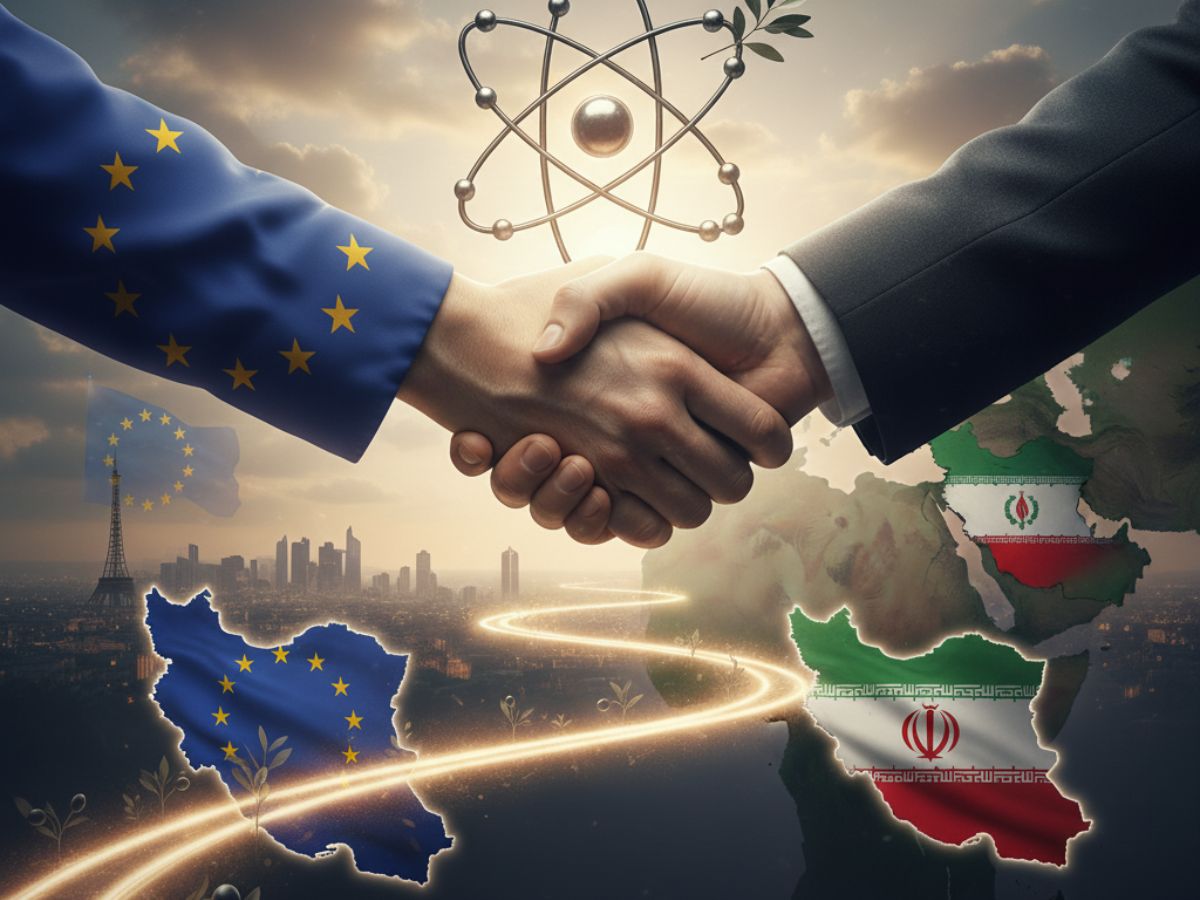
In a high-stakes diplomatic effort, Iran and European powers have agreed to continue talks aimed at salvaging the 2015 nuclear deal and averting the reimposition of United Nations sanctions. The agreement to keep diplomacy alive came after a meeting on the sidelines of the UN General Assembly in New York, just days before a critical deadline that could trigger a return of severe sanctions on Tehran.
The foreign ministers of France, Britain, and Germany, the E3, along with the EU’s foreign policy chief, met with Iranian Foreign Minister Hossein Amirabdollahian. Despite the commitment to further consultation, both sides acknowledged the significant hurdles that remain, with time running out.
Why is There a Deadline?
The urgency stems from a move by the E3 on August 28. The European powers initiated a 30-day process to reimpose UN sanctions, accusing Iran of failing to comply with the 2015 Joint Comprehensive Plan of Action (JCPOA), commonly known as the Iran nuclear deal.
What is the deadline? This process is set to conclude on September 27, potentially automatically restoring a wide array of UN sanctions that were lifted under the original agreement.
What is the accusation? The E3 states that Tehran has violated the terms of the deal, which was designed to prevent Iran from developing nuclear weapons in exchange for sanctions relief. Iran has consistently maintained that its nuclear programme is solely for peaceful purposes.
Also Read: Chilling Coincidence: The Disturbing Convergence of D4vd’s Art and a Real-Life Homicide
What is Europe’s Proposal to Avert Sanctions?
In a bid to allow for diplomacy, European nations have proposed a mechanism for Iran to delay the sanctions.
The Offer: The E3 has agreed to postpone the imposition of further sanctions for a maximum of six months.
The Conditions: In return, Iran must meet three key demands:
- Restore complete access to the International Atomic Energy Agency (IAEA) for UN nuclear inspectors.
- Address concerns about its growing stockpile of enriched uranium.
- Engage in direct talks with the United States.
Is a Deal Likely? Officials Express Pessimism
While the agreement to continue talking is a positive step, officials on all sides have expressed deep skepticism about the chances of a breakthrough before the deadline.
The European View: A French diplomatic source stated that discussions would continue to “explore all possibilities to the fullest” but noted that Iran has yet to meet the E3’s conditions. German Foreign Minister Johann Wadephul was more blunt, stating that the chances of a diplomatic solution were “extremely slim” after what he characterized as Iran’s “delaying tactics.”
The Iranian Stance: Iranian officials have set their own terms. Foreign Minister Abbas Araqchi framed the choice for the E3 as one between “cooperation or confrontation.” Ali Larijani, a senior adviser to Iran’s supreme leader, criticized the West for “making empty promises,” insisting Iran would only accept a proposal that “guarantees Iran’s interests.”
The U.S. and Iran: An Unbridgeable Divide?
The shadow of the United States looms large over the Europe-Iran talks.
Under President Donald Trump, the United States withdrew from the JCPOA in 2018 and has been going after Tehran with “maximum pressure.”
Trump’s Position: In his UNGA address, President Trump reiterated his hardline stance, declaring, “The world’s number one sponsor of terror cannot be allowed to possess the most dangerous weapon.”
Khamenei’s Rejection: A few hours later, Iran’s Supreme Leader, Ayatollah Ali Khamenei, flatly rejected any negotiations with the U.S. over its nuclear program. In a recorded message, he stated, “We do not need nuclear weapons, and do not intend to produce one,” but added that talks with Washington “would not serve Tehran’s interests and would prove a dead-end.”
A Race Against Time
With the September 27 deadline fast approaching, the extended consultations represent a final attempt to find a face-saving formula for all parties. Technical solutions are being investigated, as evidenced by the participation of IAEA chief Rafael Grossi, who spoke of “intensive” discussions and a team of inspectors prepared for deployment. However, the chances of a last-minute agreement are extremely low because to the underlying political differences, especially between Iran and the United States.