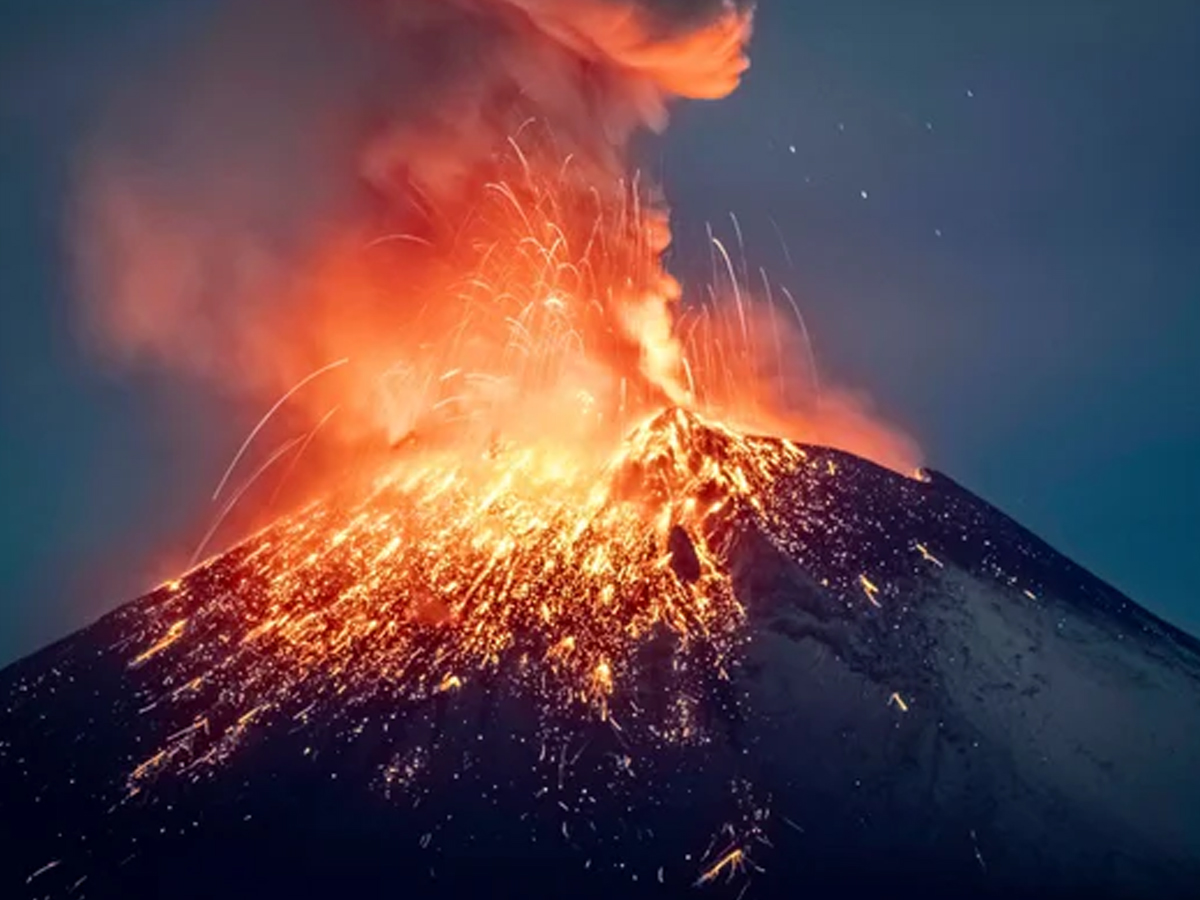
According to the experts, an 8.8 magnitude earthquake in the Far East region last week could be the reason for the first eruption of Russia’s Krasheninnikov volcano in more than 600 years. The eruption, which occurred overnight, has sent an ash plume rising 6,000 meters into the air. Though there are no populated areas in its immediate path, the ash has drifted eastward into the Pacific Ocean.
The volcano now carries an orange aviation code, signalling a high risk to aircraft in the region. This historic eruption, the first confirmed since 1463, follows an already active seismic week, raising broader concerns among experts.
First Confirmed Eruption in 600 Years
According to Olga Girina, head of the Kamchatka Volcanic Eruption Response Team, this is the first historically confirmed eruption of the Krasheninnikov volcano in 600 years. The last recorded lava effusion took place in 1463, give or take 40 years. Since then, the volcano has remained dormant until now.
Girina stated on the Telegram channel of the Institute of Volcanology and Seismology that the timing of this eruption may not be coincidental. The massive earthquake that struck Russia’s Far East last Wednesday could have disturbed the deep geological systems beneath the volcano.
ALSO READ: Baba Vanga 2025 Predictions: Quakes, Aliens & More
Earthquake-Eruption Link Under Investigation
The earthquake that shook the region earlier in the week triggered tsunami warnings in distant places like French Polynesia and Chile. Just days later, Klyuchevskoy—Kamchatka’s most active volcano—also erupted. Now, with Krasheninnikov waking up, scientists are examining whether seismic waves from the quake may have set off a chain reaction underground.
The eruption has caused no direct threat to human life, as no settlements lie along the ash cloud’s trajectory. However, the Russian emergency services ministry has warned aircraft operators of the orange code, meaning pilots should exercise caution while flying through affected airspace.
Climate Change & Seismic Unrest—Pattern Emerging?
Some volcanologists are worried that climate change is causing the Earth’s crust to erode in vulnerable regions. In polar & subpolar locations, mass redistribution brought on by glacier retreat and permafrost melting can increase volcanic pressure.
Long renowned for its geological instability, the Kamchatka Peninsula may be about to enter a phase of compounded risk, where environmental stress, volcanoes, and earthquakes all interact simultaneously. Scientists say the frequency and intensity of such episodes merit long-term observation and more research, even if the exact relationship to climate has not yet been demonstrated.
ALSO READ: Severo-Kurilsk Recovers After Tsunami, No Casualties Reported
No Immediate Risk, But Watch Continues
Despite not being one of Russia’s tallest volcanoes at 1,856 meters, Krasheninnikov’s eruption after millennia has attracted international scientific attention. For now, authorities confirm no threat to local populations.
But with the orange aviation code still active and seismic tremors ongoing in the region, both residents and experts remain alert. This eruption may mark just the beginning of renewed geological unrest in one of the world’s most volatile volcanic belts.