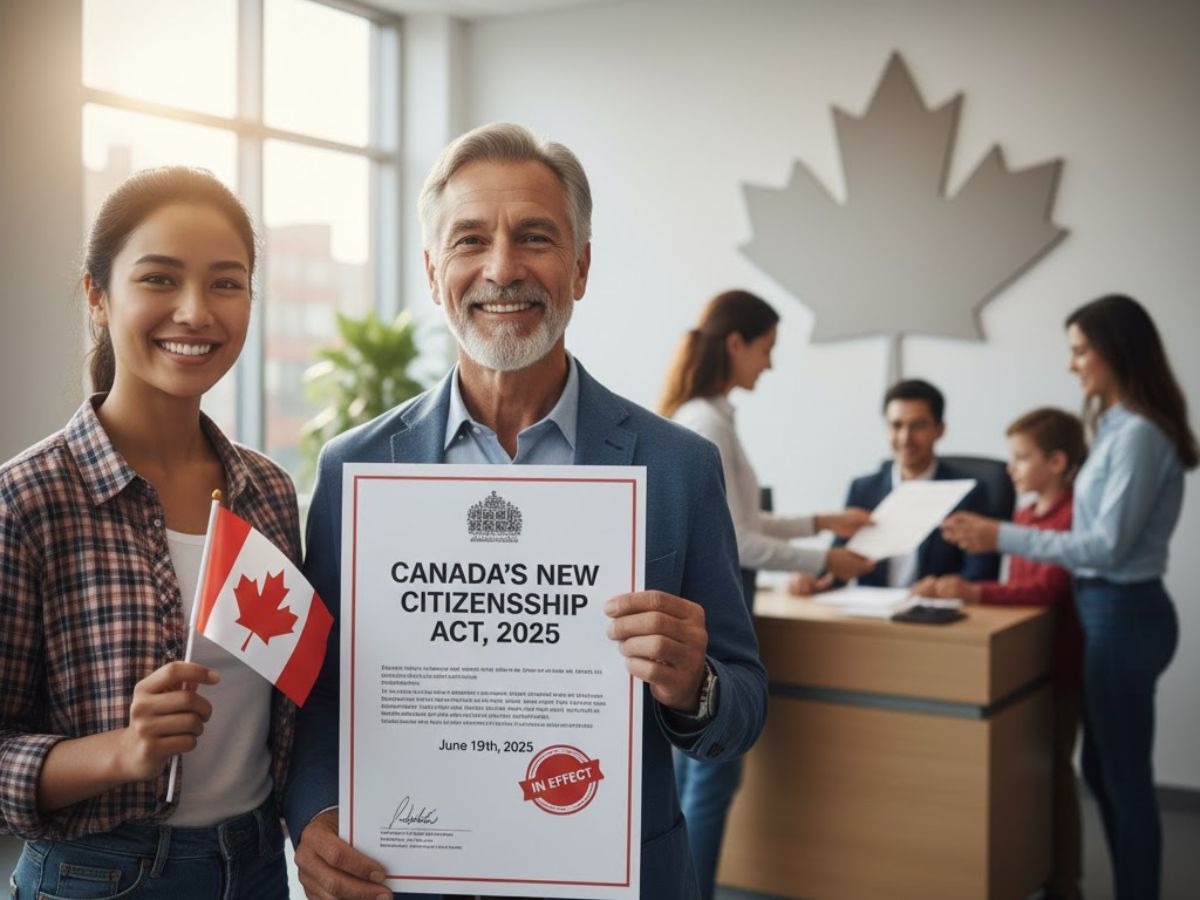
“These changes reflect how Canadian families live today,” a minister said, as new descent rules came into force. Canada has officially implemented a major update to its citizenship laws with Bill C-3 now active. The changes modernize how citizenship is passed to families living abroad and could recognize thousands of new citizens, including many with strong ties to India, who were earlier excluded by stricter rules.
What Exactly Did Bill C-3 Change?
The law focuses on two main categories. To begin with, it gives citizenship to those born before December 15, 2025, who were denied it only because of the old “first-generation limit.” They are now considered Canadian citizens and are eligible to apply for a citizenship certificate. Second, for the future, it creates a new pathway.Canadian parents born abroad themselves can now pass citizenship to children born overseas after the law took effect. The primary requirement is that the parent must show that they have a “substantial link” to Canada by things like previous employment, education, or housing. The previous broad ban is replaced by this.
Who Are the “Lost Canadians” and How Are They Affected?
“Lost Canadians” are those who were denied or lost citizenship because of flaws in past laws, including the 1947 Citizenship Act. Earlier reforms in 2009 and 2015 resolved cases for about 20,000 people, and Bill C-3 now addresses the final significant gaps. It specifically helps those impacted by the 2009 first-generation limit, which had prevented Canadian parents born abroad from passing citizenship to their own foreign-born children. The government chose not to appeal a 2023 court ruling that declared this limit unconstitutional, leading directly to this permanent legislative fix.
Why is This Particularly Significant for the Indian Community?
India is a top source country for Canadian immigrants, students, and professionals. Consequently, a large number of Canadian citizens of Indian origin live and work outside Canada, including in India itself. For these families, the reform is life-changing. Children who were previously stateless or held only foreign passports because of the old limit may now claim Canadian citizenship. This provides greater mobility, security, and a formal bond to Canada. The need to demonstrate a “substantial connection” is specifically intended for these international families who continue to have close cultural, familial, or financial links to Canada.
What Should Eligible Individuals Do Now?
The law is active, and Immigration, Refugees and Citizenship Canada (IRCC) is processing applications under the new rules. Individuals who believe they are newly eligible—especially those born abroad to a Canadian parent who was also born abroad—should apply for a citizenship certificate. It is not necessary for those who applied under previous temporary measures to reapply. The main resource for application forms, comprehensive instructions, and processing updates is the official IRCC website.
Key FAQs on Canada’s New Citizenship Rules:
Q: My Canadian parent was born in India. Am I now a citizen?
A: People born before December 15, 2025, are now likely regarded as citizens and can request proof. If born after that date, citizenship can only be passed on if a parent shows a “substantial connection” to Canada.
Q: What is considered a “substantial connection” to Canada?
A: Although the IRCC specifies the official requirements, they usually include having lived, worked, studied, filed taxes, or maintained strong family and cultural ties in Canada.
Q: Is there a deadline to apply under the new law?
A: There is no stated deadline for those now deemed citizens. However, applying for a citizenship certificate is necessary to obtain a passport and other benefits.
Q: Does this affect citizenship by birth within Canada?
A: No. The reform is limited to citizenship passed from parents to children born abroad. Anyone born in Canada still receives citizenship.
Also Read: Trump Files $5 Billion Defamation Lawsuit Against BBC Over Edited Capitol Speech Clip