Strike Terminates Following Tentative Pact
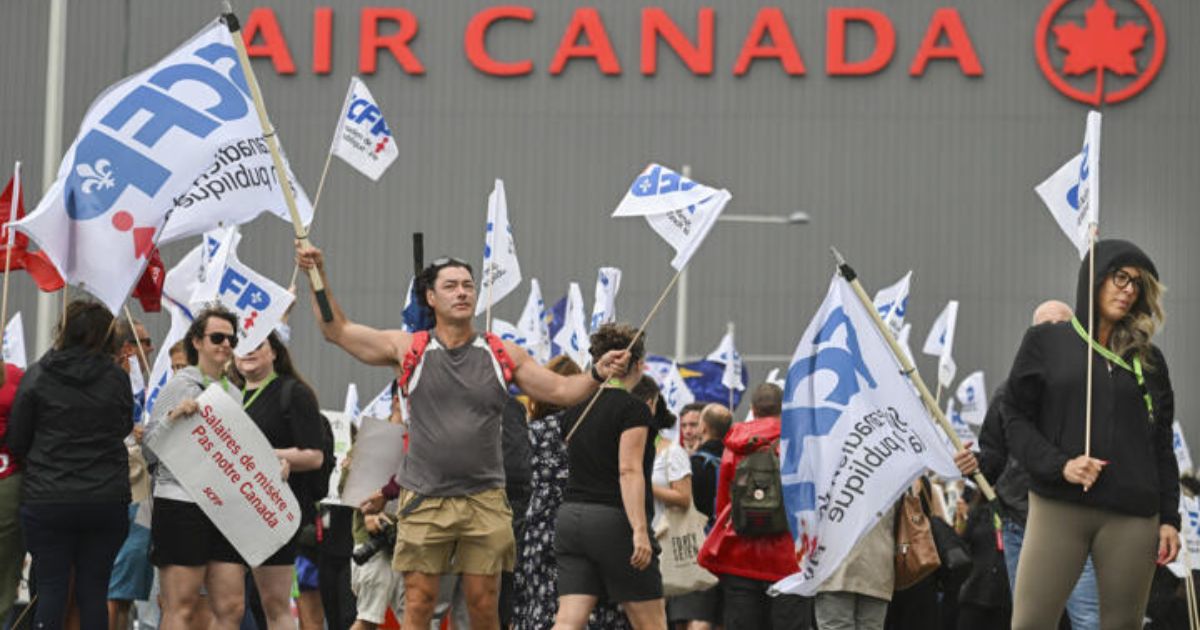
Air Canada flight attendants closed out their multi-day strike on Tuesday after reaching a tentative pact with the airline. The agreement follows when about 10,000 cabin crew members went on strike early Saturday morning to complain about low wages and recompense for unpaid ground work, such as boarding and readying for flight.
The Canadian Union of Public Employees (CUPE) union representing the flight attendants announced the end of the strike and stated that the tentative agreement would be brought to its members for ratification. CUPE urged its members to work fully with the resumption of operations.
Air Canada said it would gradually restart service for its 130,000 daily passengers, with the first flights resuming Tuesday evening. The airline warned that full operations may take seven to ten days to restore due to logistical challenges. “Restarting a major carrier like Air Canada is a complex undertaking. Full restoration may require a week or more,” said Air Canada President Michael Rousseau.
Key Issues and Industry Impact
The strike was waged over demands for greater wages and pay for unpaid work on the ground, a typical industry practice in which cabin crew are only paid to be in the air. CUPE characterized the tentative agreement as “transformational change for our industry,” claiming that unpaid work would no longer be the norm.
Although terms of the deal are not yet available, the union pointed out that the agreement is a huge victory for flight attendants. Air Canada reiterated that it would not release details until the ratification process is done, and CUPE has not yet announced a vote.
The walkout caused thousands of flights to be canceled, impacting about 500,000 passengers. Federal Labor Minister Patty Hajdu had already stepped in, using a legal provision to stop the strike and compel both parties into binding arbitration. The Canada Industrial Relations Board imposed two back-to-work orders at the weekend, but the union ignored both, keeping the service on hold.
ALSO READ: Air Canada Strike: Flight Attendants Defy Tribunal Order, Leave 500,000 Stranded
Operational Challenges Ahead
Air Canada communications vice president Christophe Hennebelle warned passengers that the airline would encounter operational challenges over the next few days. “Our aircraft are not where they need to be, our crews are not where they need to be,” he emphasized, pointing to the complexity of resuming nationwide flight schedules.
Industry analysts observed that CUPE had been able to capitalize on public support in its messaging initiative regarding unpaid labour, but only time will tell if the union was able to win substantial concessions elsewhere.
For travellers and the airline industry, the tentative agreement is a welcome return to normal, although flyers can anticipate ongoing disruptions as Air Canada returns to full operations incrementally.