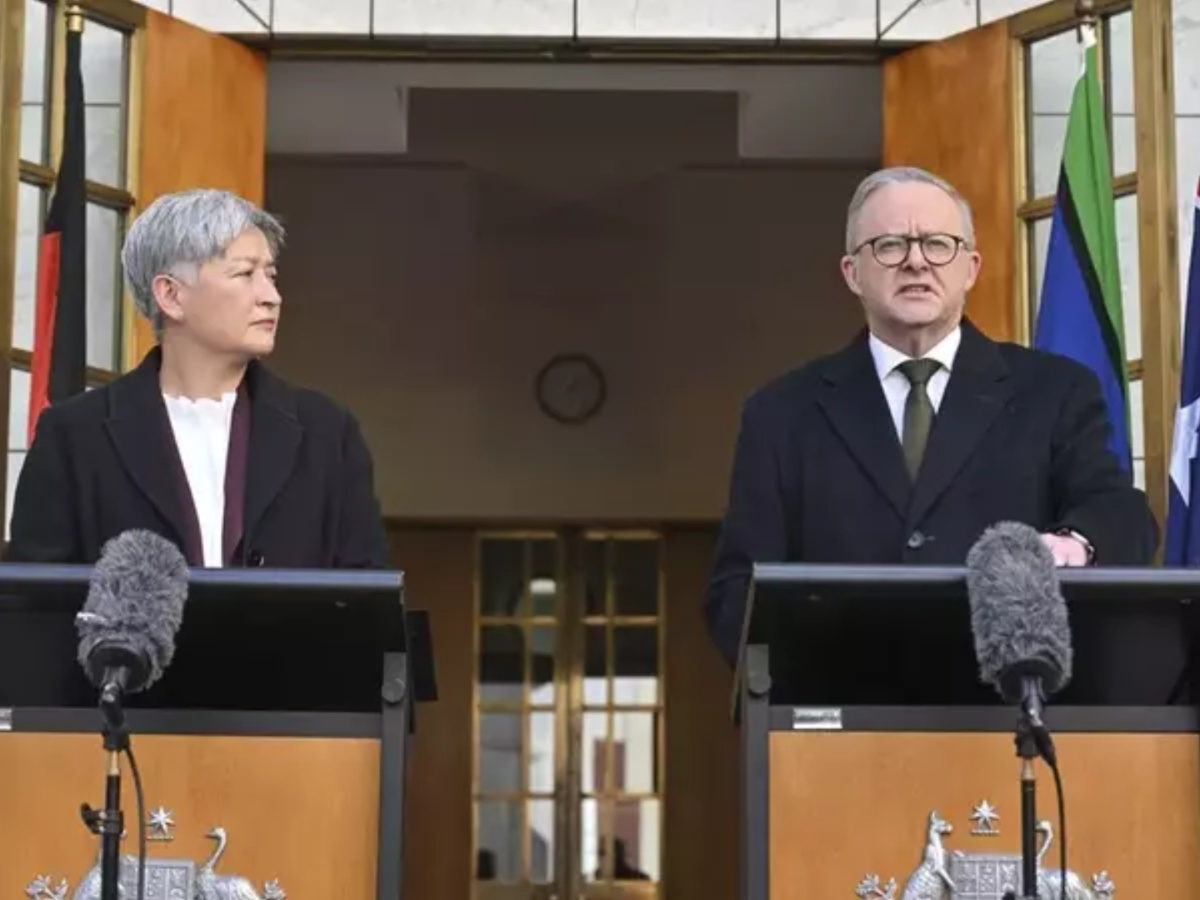
Australia will formally recognise the state of Palestine at the United Nations General Assembly in September this year. Prime Minister Anthony Albanese made the announcement on Monday, confirming that his government would support Palestinian statehood. The move comes as the crisis in Gaza worsens and amid mounting calls from within Australia to take a stronger stance. France and Canada have also indicated plans to recognise Palestine during the same UNGA session.
Albanese’s Announcement
Albanese said that Australia would recognise the Palestinian people’s right to a state of their own. He explained that the recognition would be “predicated on the commitments” his government had received from the Palestinian Authority. These commitments include a Palestinian government without Hamas, demilitarisation of Gaza, and the holding of elections. He pledged to work with the international community to make Palestinian statehood a reality.
Read More: UK Police Make 474 Arrests in Largest Crackdown on Palestine Action Protest in a Decade
Call for a Two-State Solution
The prime minister described a two-state solution as “humanity’s best hope” to end the cycle of violence in the Middle East. He stressed that recognising Palestinian aspirations also strengthens Australia’s commitment to Israel’s right to live in peace and security. Albanese emphasised that without permanent Palestinian statehood, peace in the region would remain temporary.
Global Recognition of Palestine
More than 147 of the UN’s 193 member states already recognise Palestine, representing around 75 per cent of the world’s countries and the majority of its population. According to Al Jazeera, this broad recognition underlines growing global support for Palestinian statehood. Like Australia, France and Canada recently announced plans to extend recognition during the September UNGA meeting.
Read More: London Arrests 200 As Protest Tests Limits Of Free Speech After Palestine Action Ban
Domestic and International Context
Albanese’s statement followed weeks of domestic pressure from his Cabinet and other officials. Many urged the government to act amid worsening humanitarian conditions in Gaza, including widespread suffering and starvation. The Australian government also criticised Israeli Prime Minister Benjamin Netanyahu’s proposal to expand Israeli occupation in Gaza. By making this decision, Australia positions itself among nations calling for a diplomatic path forward while rejecting militant influence in Palestinian governance.