
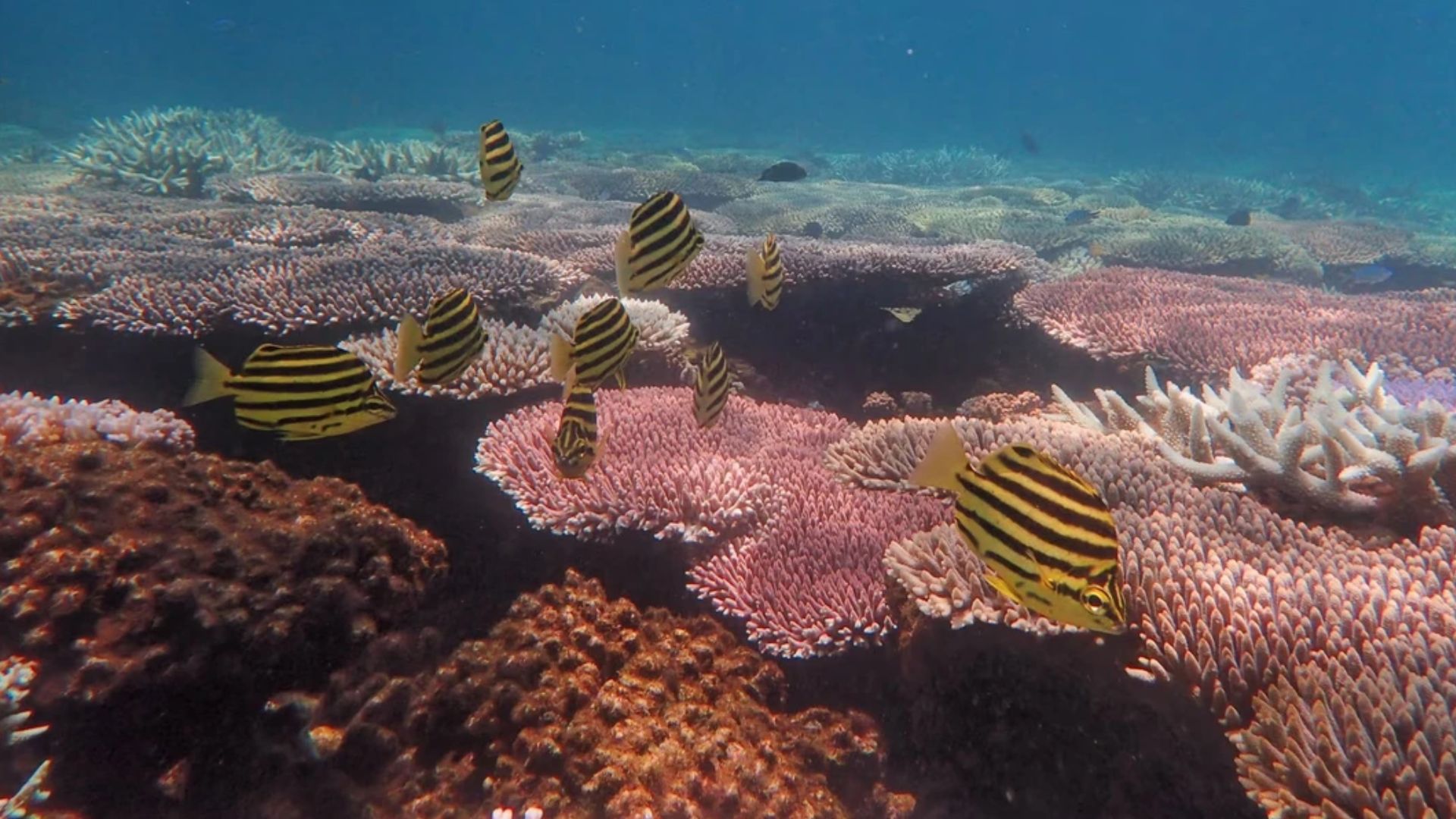
Australia’s Great Barrier Reef has just suffered its largest annual coral loss on record in two of its three major regions, according to new research released Wednesday. The Australian Institute of Marine Sciences (AIMS) reports that coral cover declined by 25% in the north and nearly one-third in the south, while the central region fell by 13.9%—the highest annual drops since monitoring began 39 years ago. The results follow the worst bleaching event recorded on the reef. “We are now seeing increased volatility in the levels of hard coral cover,” said Mike Emslie, head of AIMS’ long-term monitoring program.
“This is a phenomenon that emerged over the last 15 years and points to an ecosystem under stress.”
Bleaching Takes Record Toll in 2024
Stretching over 2,400 km off Queensland, the Great Barrier Reef is the largest living ecosystem on Earth. Since 2016, it has endured five mass bleaching events, and the 2024 event was the most extensive yet—impacting all three regions with severe heat stress leading to coral death.
The report also mentions additional threats from cyclones and crown-of-thorns starfish outbreaks, which worsened the bleaching’s impact.
Volatile Coral Health Signals Urgency
While the recent coral losses were steep, they came off a period of unusually high coral growth. This means that overall coral levels have returned to near long-term averages. Yet experts warn of growing instability:
-
The reef now swings between record highs and lows in coral cover within short timeframes.
-
Such fluctuations suggest an ecosystem under pressure from repeated stressors.
Global Bleaching Crisis Adds to Local Threats
AIMS’ findings are part of a broader global bleaching event affecting more than 80% of the world’s coral reefs across over 80 countries. Rising ocean temperatures are increasingly frequent and destructive, pushing coral systems toward doom.
Though the Great Barrier Reef still retains more coral than many other systems worldwide, its future remains precarious. Scientists urge swift climate action to curb further damage.
While the reef is not yet on UNESCO’s endangered list, the UN recommends its inclusion. Australia continues to oppose that listing, citing potential harm to tourism—it brings in A$6.4 billion annually.
Key Takeaways:
-
GBR experienced its worst coral loss in two regions since records began.
-
The 2024 bleaching event was the most widespread ever recorded on the reef.
-
Experts warn of rising volatility in coral health, signaling deep ecosystem stress.
-
The reef remains in better shape than many globally—but still faces an existential threat.
Also Read: US Health Department Cancels Funding for mRNA Vaccine Projects