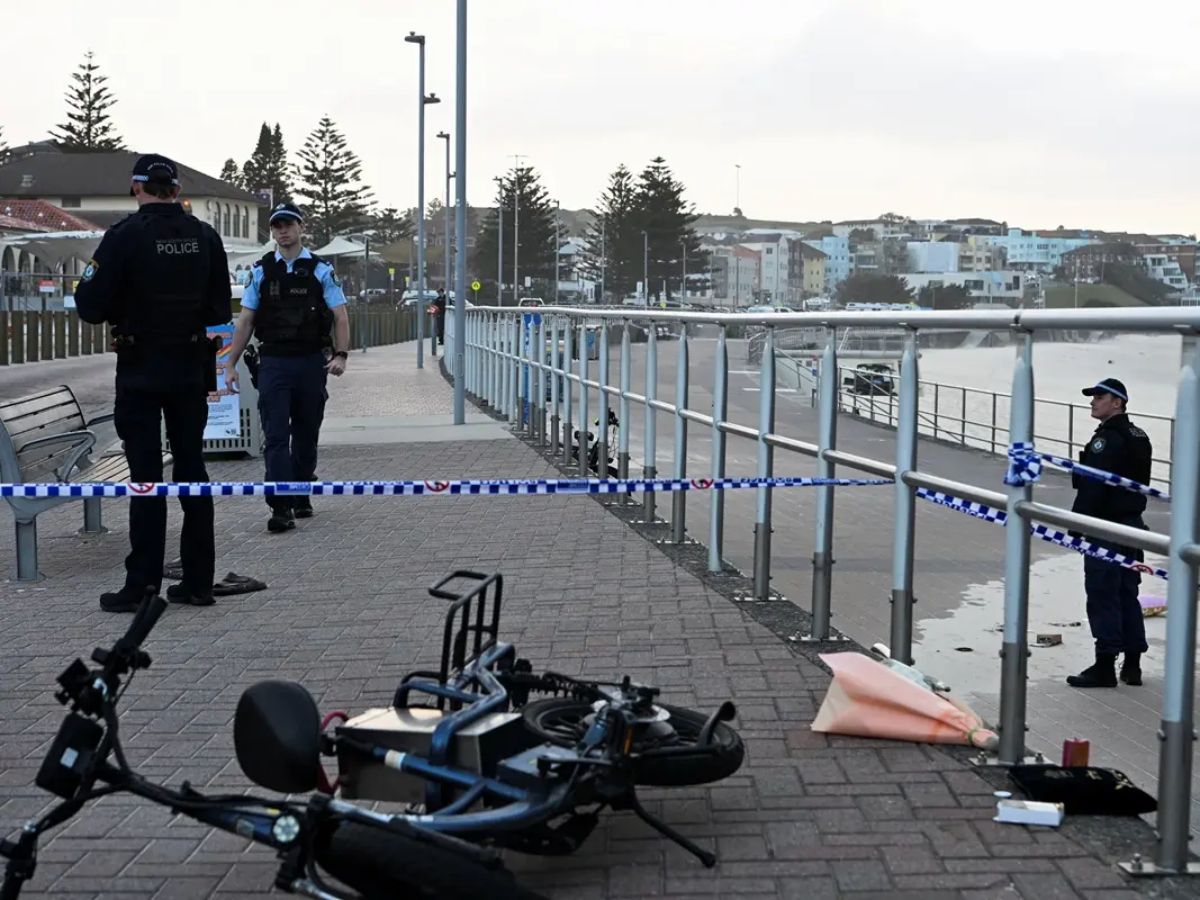
Australia is reeling after a deadly mass shooting at a Hanukkah celebration in Sydney’s Bondi Beach. On 14 December 2025, gunmen opened fire on a crowded holiday event, killing 15 people and injuring many others. The incident shocked the nation and sparked a fierce debate on extremism, hate speech and public safety.
In an unexpected message this week, the Islamic State (ISIS) described the attack as “a matter of pride” on its Telegram channel. However, the group did not formally claim responsibility for the shooting.
What Islamic State Said About the Bondi Shooting?
ISIS published a brief statement on its social media channel calling the attack “a matter of pride.” This reaction came days after the tragic incident. The group stopped short of taking responsibility, leaving authorities to investigate possible inspiration rather than direct involvement.
This has raised concern that the attackers may have been influenced by extremist ideology, even if they were not acting under direct orders from any terror network.
Attack Details: Father and Son Identified
Police say the shooting was carried out by a father-and-son duo, aged 50 and 24. One gunman, Sajid Akram, was shot dead by police at the scene. His son, Naveed Akram, survived and was later charged with dozens of offences, including murder and terrorism charges, after regaining consciousness in hospital.
Authorities believe both men were inspired by Islamic State ideology, though there is no clear evidence they were trained by ISIS or acting on direct instructions from the group.
Victims and Public Mourning
The victims ranged in age, and the attack left deep pain across communities. A 10-year-old girl was among those killed. Her funeral drew national attention as Australians grappled with grief and anger.
Many of the victims were Jewish attendees at the Hanukkah event. The attack was widely condemned as an act of antisemitic violence, adding to past tensions and raising questions about safety for minority groups in Australia.
Australian Government Response: New Hate Speech Laws
In the wake of the attack, Prime Minister Anthony Albanese promised stronger laws to counter hate speech and violent extremism. He said the government will make it easier to charge people who promote hatred and violence.
Albanese also said penalties would increase, and authorities would have more power to cancel or refuse visas for people promoting extremist views. “At times like these, Australians are shocked and angry,” said Albanese, stressing the need to “combat this evil scourge” more forcefully.
Police and Intelligence Investigations
Investigators are exploring the background of the shooters to learn how they became radicalised. Police found Islamic State-linked material and homemade flags in the suspects’ vehicle. Officials are also checking whether the pair travelled to extremist regions such as parts of the Philippines before the shooting.
Authorities say the younger suspect was previously known to intelligence services but was not considered an imminent threat at the time.
Community Impact and Calls for Change
The attack has intensified debate over extremism and social unity in Australia. Community leaders have called for more robust action against hate speech and radicalisation. Some activists have also voiced concern about balancing security with civil liberties.
The tragedy has also sparked calls for stricter gun laws, better screening of extremist networks and increased public education to counter hateful ideologies.
What Comes Next?
As Australia mourns and investigates, officials will continue to probe links between the shooters and extremist groups, while setting new legal frameworks to stop similar attacks in the future. The nation watches closely, determined to prevent violence and protect all communities.