
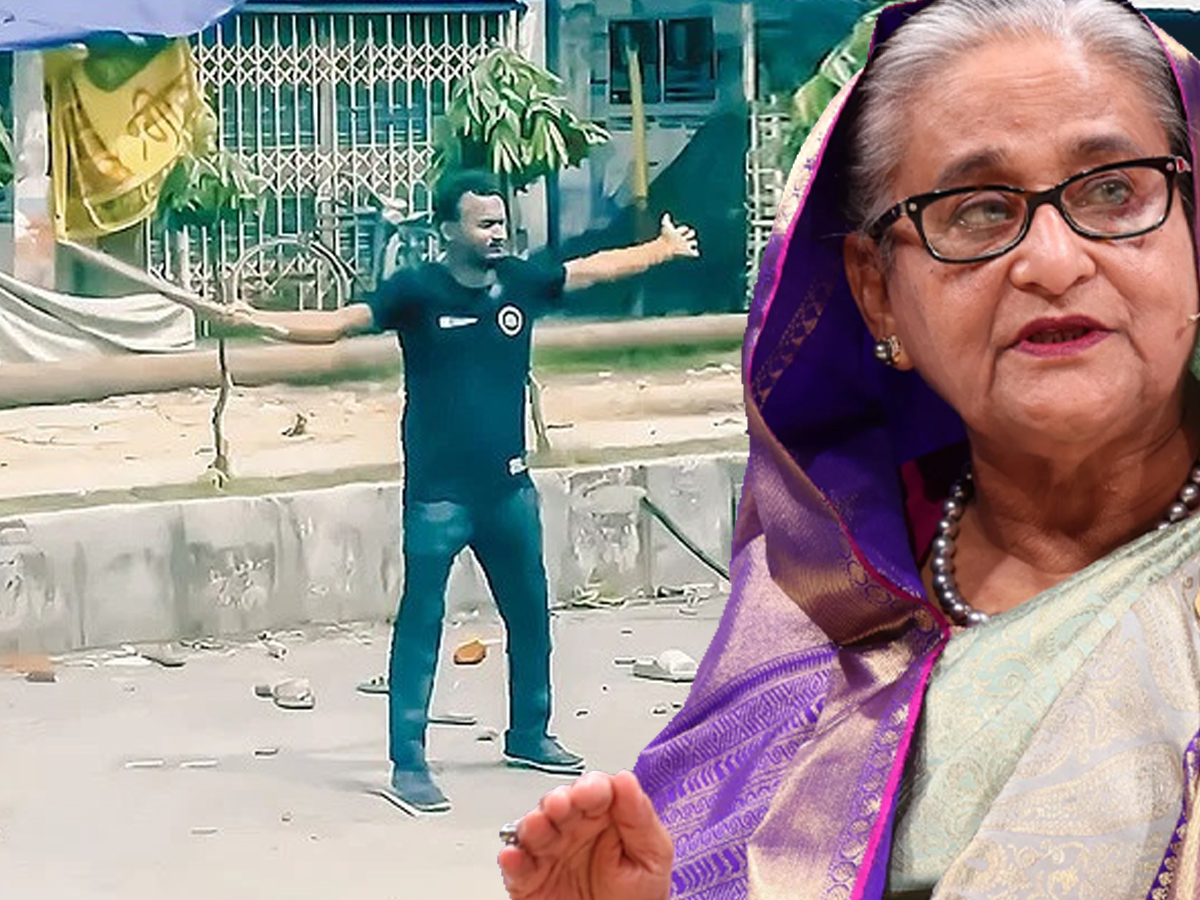
Bangladesh’s July Revolution of 2024 left a deep scar on the country, but no moment shaped the movement more than the death of 25-year-old student Abu Sayeed. His final stand—arms stretched wide in defiance—became the defining image of resistance against state violence. As protests spread across the nation and the government launched harsh crackdowns, Sayeed’s story stood out as a tragic example of how a peaceful student movement turned into a deadly nationwide uprising.
Sheikh Hasina Verdict: Death Sentence to Former PM
Bangladesh entered a tense new chapter on Monday after a special tribunal delivered a historic verdict against former Prime Minister Sheikh Hasina. The court ruled that Hasina committed ‘crimes against humanity’ during the violent unrest that erupted across the country last year. Her conviction came after months of hearings, witness statements, and evidence presented by prosecutors.
She was charged with five charges, which included the murder of student activist Abu Sayed.
Who Was Abu Sayeed? Young Student Caught in a National Storm
Abu Sayeed was a student of the English department at Begum Rokeya University in Rangpur. He was the youngest of nine siblings in an extremely poor family from Babnapur village in Pirganj. Despite poverty forcing his brothers and sisters to drop out of school, they all contributed to support his education. He became the first in the family to enter university.
Sayeed dreamed of becoming a civil servant, as he believed that a government job would change his family’s future. That dream led him to join the quota reform movement. His family said he had no political agenda—only hope for fair competition.
His friend recalled that “his desire was only to reform the quota system so that his chances of success would increase. There was no other agenda as is now being alleged.”
The Day Everything Changed: 16 July 2024
On 16 July 2024, the protests in Rangpur intensified. Students gathered outside Begum Rokeya University as part of the nationwide movement. The police formed a line at the main gate. Protesters stood behind Sayeed.
Then, the clash began.
Videos recorded by media outlets show police positioned directly in front of Sayeed. He stood unarmed, with his arms spread open. His posture echoed the slogan “Buk petechi guli kor” (“Shoot me, I bare my chest”), a phrase that had come to represent defiance against injustice.
From a distance of 14.2 meters, police fired lead birdshot—ammunition designed for hunting. Sayeed was shot in the chest and face. He collapsed instantly.
Blood poured from his nose and wounds. Protesters rushed to lift him, despite the ongoing chaos.
Attempts to Save Abu Sayeed Failed
Students carried Sayeed through the clashes to Rangpur Medical College Hospital. Doctors said he was dead on arrival.
Hriday Ranjan Roy, head of the surgery department, said, “There were multiple rubber bullet wounds on his body, and blood was flowing from his nose.” He added that only an autopsy could confirm the exact cause of death.
His friend Anjan Roy said, “Abu collapsed to the ground after being hit by rubber bullets. The ongoing clash caused delays in getting him to the hospital.”
Sayeed became the first reported death in the movement. His death triggered a wave of anger and grief across Bangladesh.
A Photograph That Changed a Nation
A photo captured moments before his death showed him standing before the police, arms stretched wide. This image spread rapidly across social media and news outlets.
It became the most powerful symbol of the July Revolution.
For many, Sayeed represented the suffering of ordinary students who demanded reform but faced state violence instead.
Government Claims and Contradictions
Former Prime Minister Sheikh Hasina made three claims about Sayeed’s death:
- He was killed by a rock thrown by protesters.
- Police used only rubber bullets.
- Protesters delayed his treatment.
She said, “Protesters took 4–5 hours to take him to the hospital, and their negligence contributed to his death.”
However, videos from the scene contradicted these claims. Footage showed police firing directly at Sayeed, while protesters tried to pull him away quickly under heavy fire.
Medical officers reported multiple wounds consistent with rubber bullets or lead birdshot. Investigations later revealed that police used various forms of ammunition during the protests.
A Movement Fueled by Grief and Rage
Sayeed’s death came during one of the deadliest weeks of the July Revolution. A UN report estimates that around 1,400 people died during the protests—killed by police, paramilitary units, and the ruling party’s student wing.
His story became a rallying cry for thousands of students and citizens. Marches carried his photo, and his last stand became the central symbol of state brutality.
For his family, the loss was unbearable. Sayeed’s father said the entire family had hoped he would rise through the civil service and lift them out of poverty. Instead, they were left with grief and shattered dreams.
Aby Sayeed’s Last Facebook Post
The night before he died, Sayeed wrote on Facebook about Syed Mohammad Shamsuddoha, a Rajshahi University proctor killed in 1969 while protecting students.
He wrote, “Sir, we needed you the most at this moment.”
This post, now widely shared, is seen by many as a sign that Sayeed understood the danger but stood firm for what he believed in.