
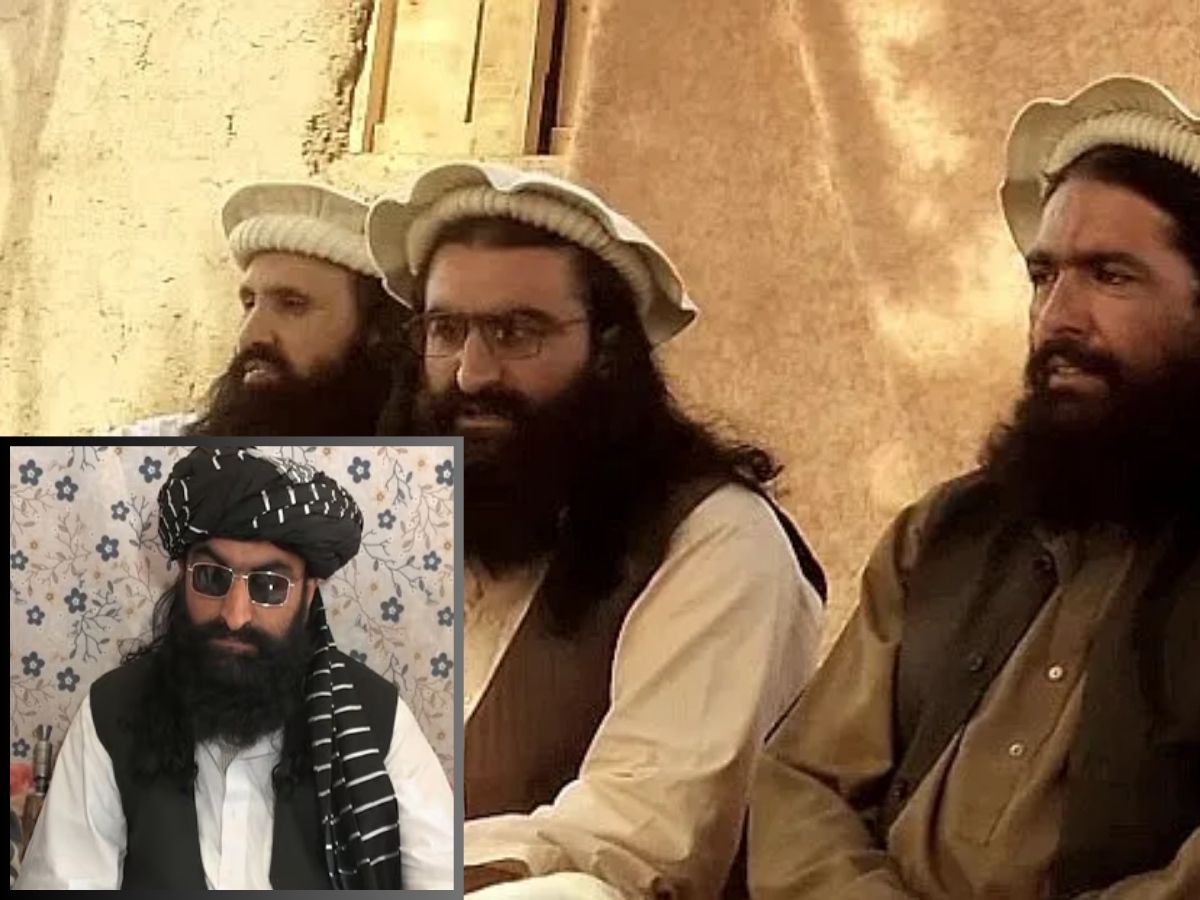
A recent, temporary ceasefire has done little to calm the severe military clashes between Pakistan and Afghanistan. At the heart of this escalating tension is a single, pivotal issue for Islamabad: the presence of Tehreek-e-Taliban Pakistan (TTP) leader Noor Wali Mehsud on Afghan soil. Pakistani officials believe he’s hiding in a safe haven and leading continuous attacks on Pakistan. This was highlighted recently when an airstrike in Kabul reportedly targeted Mehsud, sharply raising cross-border tensions.
Who is Noor Wali Mehsud?
Who is the man now central to a regional conflict? Noor Wali Mehsud is the leader of the banned militant group, the TTP. He rose to power in 2018 following the deaths of his predecessors in drone strikes. By that time, the TTP had been largely pushed out of Pakistan by military operations and had found a new base in Afghanistan. With Mehsud in charge, the group has seen a major revival instead of fading away. He’s praised for uniting split factions through his sharp diplomacy, turning the TTP into a more powerful and dangerous force.
What is His Strategy and Ideology?
How has Mehsud managed to rebuild a weakened militant organization? He has masterfully shifted the group’s messaging. While the TTP was born from religious extremism, Mehsud links the TTP’s aims with the rights of Pashtun tribes spread across the Afghan-Pak border. Known for his ideological depth, he has written at least three books tracing the group’s roots back to anti-colonial times. This combination of religion and ethnicity became even more influential after the Taliban regained power in 2021, offering the TTP greater support.
How Has the Taliban’s Rise Affected the TTP?
For Mehsud and the TTP, the Afghan Taliban’s resurgence in Kabul in 2021 marked a turning point. It gave the gang unrestricted mobility over the wide, porous border, increased operational freedom, and access to resources never before possible. Attacks on Pakistani security forces have steadily and noticeably increased as a result of this increasing strength. The Afghan Taliban, however, officially deny providing a safe haven for the TTP. In a counter-accusation, they claim Pakistan is sheltering their rivals, the Islamic State group.
What Makes His Leadership Different?
Under Mehsud, the TTP has changed its strategy. Unlike in the past, when the group carried out large-scale attacks on civilians such as the 2014 Peshawar school massacre, he now directs its focus toward military and police targets. His speeches often accuse Pakistan’s military leaders of being anti-Islamic and corrupt—messages that have found strong support within the group. The Pakistani military, in turn, accuses the TTP of distorting Islam and alleges the group has ties with India—a claim that New Delhi strongly denies.
What Does the TTP Actually Want?
A combination of Pashtun tribal identification and religious fervor forms the basis of Mehsud’s rebellion. His goal is to implement a fundamentalist Islamic rule in Pakistan’s border regions, just like the Afghan Taliban did. Tribal leaders mediated recent informal discussions that made clear the TTP’s particular demands. These comprised:
- The imposition of Islamic law in Pakistan’s tribal areas.
- The complete withdrawal of the Pakistani military from these regions.
- Permission for TTP fighters to return to their former strongholds.
Pakistani officials have firmly rejected these demands, creating a stalemate. Despite Mehsud’s leadership and ideological drive, the TTP is noted for its lack of widespread public support within Pakistan, even in the northwestern areas where it was once dominant.