Bangladesh has officially asked India to send back former Prime Minister Sheikh Hasina after a special tribunal handed her the death sentence for “crimes against humanity” linked to last year’s violent student uprising. Dhaka says its request falls under the extradition treaty signed by both countries in 2013. But the same treaty also gives India clear legal grounds to refuse.
This puts Hasina’s fate entirely in New Delhi’s hands, at a moment when political tensions in Bangladesh remain extremely high.
Dhaka Sends Extradition Request to India For Sheikh Hasina
Bangladesh’s foreign ministry has sent a formal Note Verbale to the Indian government, asking for the immediate handover of Sheikh Hasina. The ministry called her a “fugitive accused” and said India must cooperate under the bilateral extradition pact.
The letter also warned that sheltering her would harm diplomatic ties.
“Providing refuge to these individuals, who have been convicted of crimes against humanity, by any other country would be a highly unfriendly act and a disregard for justice,” the letter said.
The request came hours after the International Crimes Tribunal sentenced Hasina and former Home Minister Asaduzzaman Khan Kamal to death. Both were found guilty of directing a violent crackdown on students during the July–August 2024 uprising that forced the fall of the Awami League government.
Why Sheikh Hasina Received a Death Sentence?
The tribunal examined a series of charges related to the deadly crackdown on young protesters demanding political reforms. The court found Hasina and Kamal guilty on multiple counts, including incitement, order to kill, and failure to prevent atrocities.
Bangladesh saw one of its biggest mass movements in decades when students took to the streets in mid-2024. More than 1,400 people were reportedly killed during the unrest, which brought down the Hasina government in August.
Hasina fled the country and has lived in India since then.
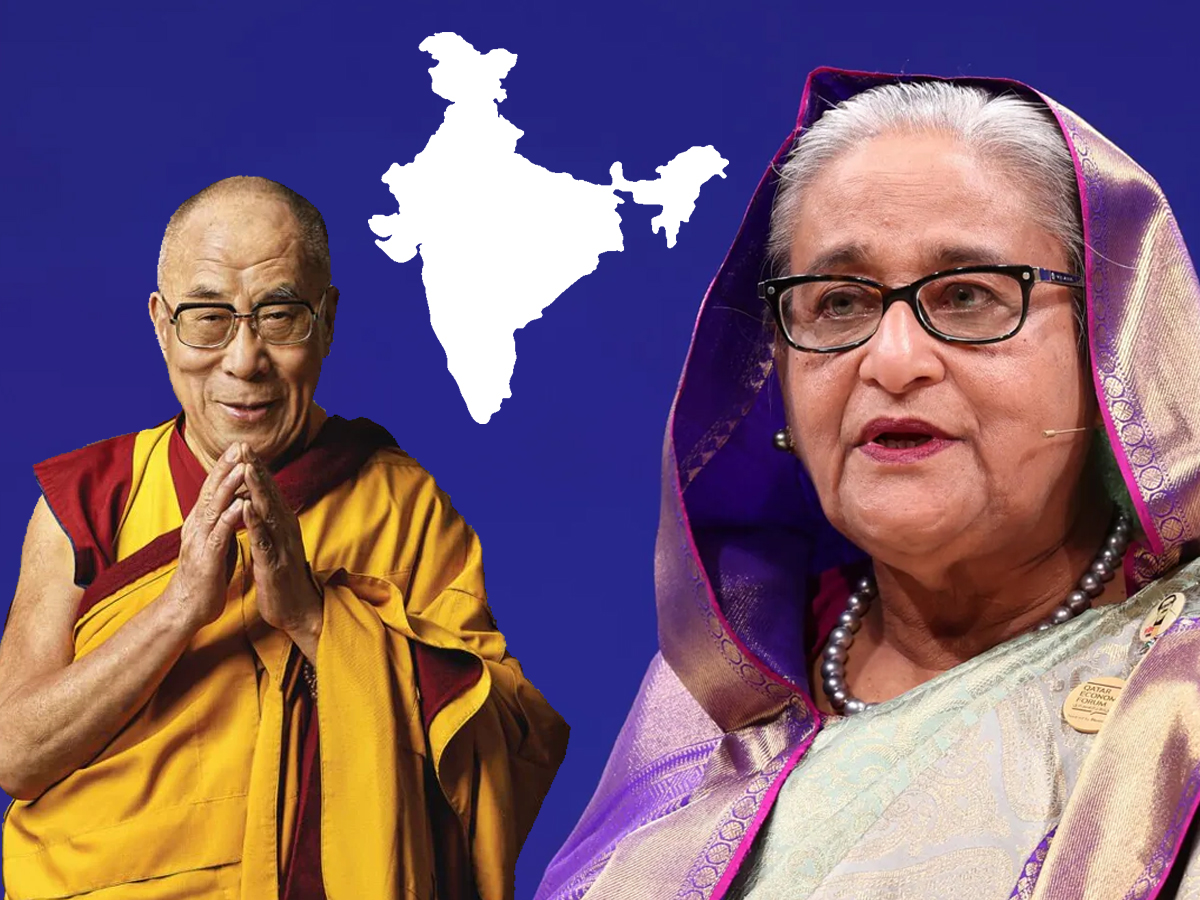
Dalai Lama’s Long Asylum in India: A Parallel to Sheikh Hasina’s Exile?
The comparison with the Dalai Lama adds another layer to the debate around Sheikh Hasina’s future in India. The Dalai Lama fled Tibet in 1959 after a failed uprising against Chinese rule and entered India as a refugee. New Delhi granted him asylum, and he has lived in Dharamshala ever since, without ever returning to Tibet.
China has repeatedly criticised India for hosting him and calls him a “separatist,” but Beijing has never made a formal extradition request for his return.
This unresolved decades-long asylum case now draws parallels to Sheikh Hasina, who has been living in India since her ouster in 2024 and is facing a death sentence in Bangladesh.
The question many are now asking is whether Hasina’s stay will also turn into a long-term refuge shaped by geopolitics, legal hurdles, and diplomatic sensitivities.
What the India–Bangladesh 2013 Extradition Treaty Says
India and Bangladesh signed their extradition treaty in January 2013, when Hasina herself was prime minister. The treaty explains when a country must comply and when it can refuse.
The most important clause is Article 6, also known as the Political Offence Exception.
The treaty states, “Extradition may be refused if the offence of which it is requested is an offence of a political character.”
Hasina has repeatedly said that all charges against her are politically motivated. Her lawyers and party leaders argue that the interim government is using the tribunal to settle scores.
However, the same treaty lists offences that cannot be treated as political in nature. These include:
- Murder
- Manslaughter or culpable homicide
- Incitement to murder
- Enforced disappearance
- Torture
This places the current case in a legally grey zone.
Other Grounds for India to Refuse to Hand Over Hasina
Article 8 of the treaty gives additional reasons to reject an extradition request. These include:
- Cases where accusations are not made in good faith,
- Situations where extradition would go against the interests of justice and,
- Military offences that do not fall under normal criminal law.
Legal experts say these provisions give India considerable flexibility.
India’s Known Position So Far
India has acknowledged receiving the extradition request. However, New Delhi has not announced any decision.
MEA spokesperson Randhir Jaiswal said, “We confirm that we have received a Note Verbale from the Bangladesh High Commission today in connection with an extradition request. At this time, we have no comment to offer on this matter.”
India allowed Hasina to enter the country in August 2024 on short notice. Back then, External Affairs Minister S Jaishankar said she sought permission “for the moment.” She has remained in India for over a year since then.
Her son, Sajeeb Wazed, has said Hasina is living at a safe house in Delhi.
What Happens Next for Sheikh Hasina?
Hasina’s future now depends almost completely on India’s decision. New Delhi may consider:
- whether the tribunal conducted a fair, impartial trial
- whether Hasina risks mistreatment, an unfair appeal process, or revenge attacks
- whether returning her would violate India’s human rights obligations
These concerns have grown after incidents of violence around Bangladeshi courts, including attacks on former ministers and senior officials.
India now has three broad options:
- Approve extradition if it believes the judicial process in Bangladesh meets international norms.
- Refuse extradition on legal or humanitarian grounds, citing risk of persecution or denial of fair trial.
- Delay the decision, seeking proof and assurances from Dhaka regarding Hasina’s safety and rights.
For now, Sheikh Hasina waits in India, and the next steps rest solely with New Delhi’s careful and politically sensitive evaluation.