Singha Durbar is one of Nepal’s most enduring landmarks, not only because of its architectural splendor but also because of its historical and political connotations. It has been the seat of government for well over a century and has seen some of Nepal’s most pivotal moments in politics. The recent Gen Z protests, however, again focused the limelight on this ancient building, with fears regarding the destruction of crucial documents. In this article, we will delve into the history of Singha Durbar, its significance for Nepalese citizens, its function in the governance of the country, and the reality behind the reports of document destruction during recent protests.
What is Singha Durbar?
Singha Durbar, or “Lion Palace,” is a large building situated in the center of Kathmandu, Nepal. Constructed in 1893 under the rule of Chandra Sekher Upadhyaya, it originally served as the royal palace of the Rana rulers. Through time, it became the seat of government of the Prime Ministers and eventually the icon of Nepal’s political influence. The building, which was erected using a combination of European and Newar architectural designs, is a national monument and a symbol of the nation’s history and government.
Read More: What is the Kumari Tradition in Nepal? The Living Virgin Goddess | Real Story
Why Is Singha Durbar Important for Nepalese?
Singha Durbar is extremely significant to Nepalese and being the seat of government, it has been the place where key decision-making has taken place, which has transformed the country while numerous landmark political occurrences, including the fall of the Rana regime and the advent of the parliamentary system, have taken place here. Not just an architectural beauty for Nepalese people, Singha Durbar is a representation of the nation’s political identity, symbolizing the hardships, victories, and continuous progress in Nepal’s governance.
History of Singha Durbar
Constructed in the late 19th century, Singha Durbar’s history is deeply intertwined with Nepal’s political evolution and after being built by Chandra Sekher Upadhyaya, the Prime Minister at the time, Singha Durbar served as a royal residence. However, its transformation into the seat of government marked a new chapter in Nepal’s history while it has been the home of numerous political events, from the administration of the Rana dynasty to the transition to a democratic republic.
Singha Durbar’s importance extends beyond its political significance while it represents Nepal’s cultural heritage and people’s resilience. The building, commonly known as the heart of Nepal’s government, has weathered wars, regime shifts, and political unrest. Its survival is a testament to the strength and resilience of Nepal’s political system.
What Happened in the Recent Gen Z Protest?
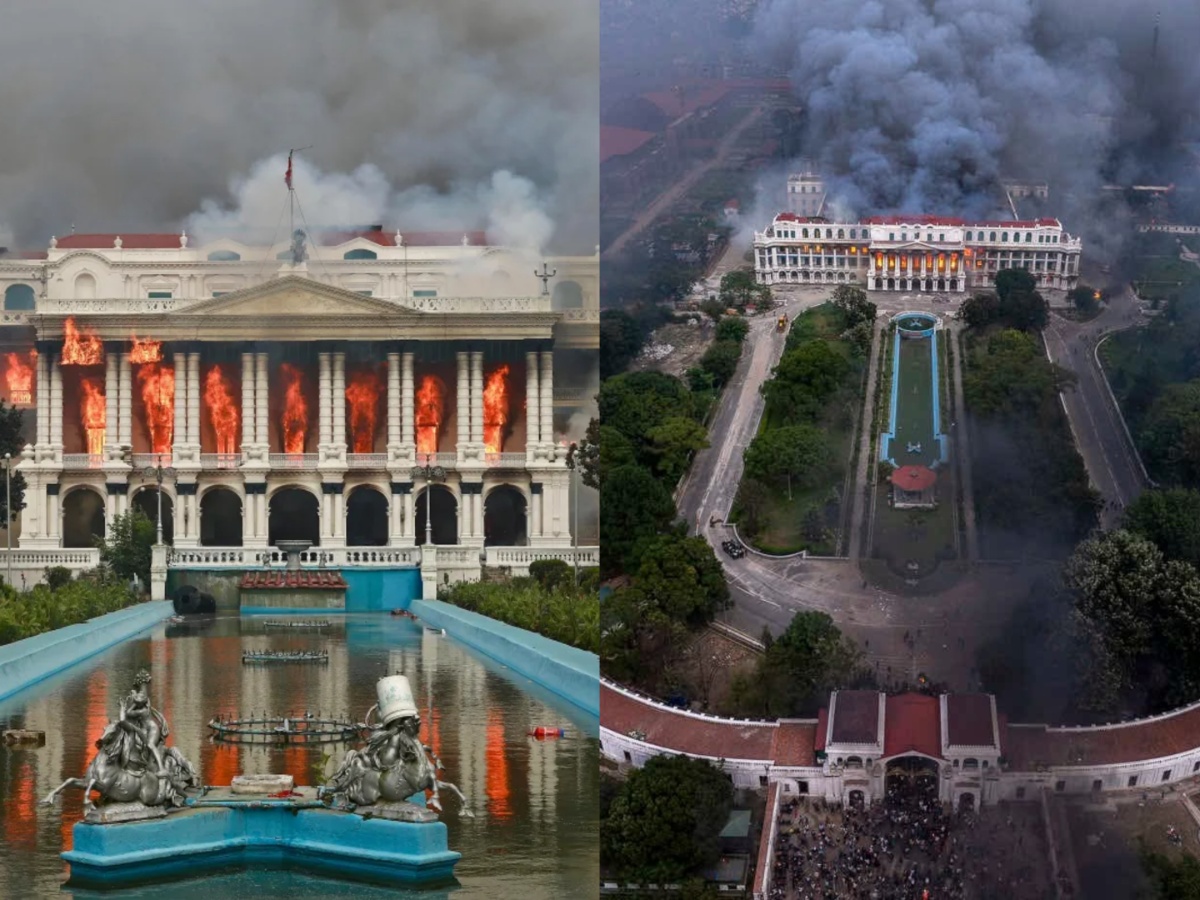
The recent protests by Gen Z in Kathmandu revived Singha Durbar to the center stage of concern, including doubts regarding its safety. Rumors circulated during the protests that a fire had severely damaged the building. This sparked fears of losing vital government papers with some even suggesting that precious archives had been lost. The situation was not as dire as first thought, though. Although some areas of Singha Durbar were impacted by the fire, the most essential areas, such as those containing sensitive documents, were not much damaged by the blaze and the protests were serious, but they did not have the level of damage that would result in the loss of national documents.
Did Important Documents Really Burn?
Although several reports indicated that essential government documents were burnt during the Gen Z protests, investigations have shown that the reports were exaggerated also the structure was damaged, but the vital documents were protected, and a majority of the crucial documents were kept in fire-resistant parts of the building or stored digitally. Hence, there is no considerable evidence to indicate that key documents were entirely destroyed. In reality, a majority of the vital archives are still intact, which guarantees the continuity of governance and documentation in Nepal.
What Would Happen If Singha Durbar Was Destroyed?
If Singha Durbar was to be fully destroyed by fire, it would be a Nepalese tragedy. The building has cultural and historical status as the seat of political authority for more than a century. It would not just eliminate a crucial part of national architectural heritage but also interfere with a central location in Nepal’s political life also many significant records, such as national archives, have been kept here, and the destruction of such documents would be disastrous for Nepal’s administration and history.
Though such a loss is risky, Nepal’s government has made efforts to safeguard its most important documents in digital form or in fireproof buildings so that such a loss would have lesser consequences. Still, the emotional and symbolic value of the loss of Singha Durbar would hit the country hard.
What If There Was No Singha Durbar?
Singha Durbar serves as a living connection between Nepal’s political past and its present and without Singha Durbar, Nepal would lack a central symbol of governance and historical continuity. The building not only houses government offices but also represents the nation’s political struggle and triumphs while its loss would leave a gap in Nepal’s political identity, making it harder for future generations to connect with the country’s past.
Read More: How Bhat Bhateni Owner Min Bahadur Gurung Plans to Recover Loss After Nepal GenZ Protest?
Ideally, the government would conserve and protect Singha Durbar as a reminder of Nepal’s strong political legacy while it is part of the country’s heritage, and thus it is important that measures are put in place to ensure its protection against further deterioration.
The Strength of Nepal’s Political Heritage
Singha Durbar is still a symbolic reminder of Nepal’s politics, governance, and history. While recent occurrences, like the Gen Z protests, have threatened its future, the building and its archives have been mostly preserved and the survival of Singha Durbar, either physically or collectively in the people’s memory, is essential to Nepal’s political and cultural heritage also the durability of the building reflects the character of Nepal itself, firm in adversity and committed to safeguarding its rich heritage.