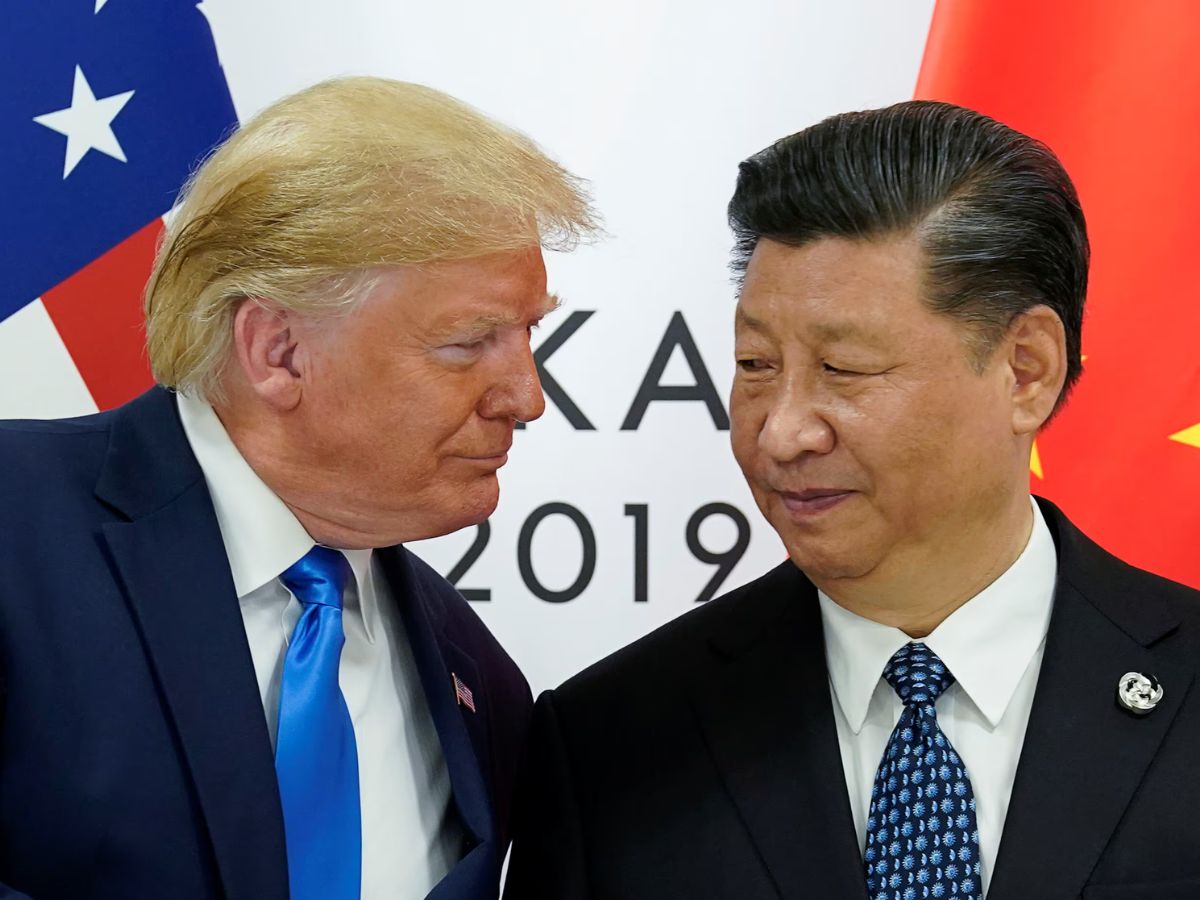
At the Busan Summit on Thursday, Chinese President Xi Jinping publicly contested U.S. President Donald Trump’s recent claims of singlehandedly ending multiple global conflicts. The exchange came just a day after Trump boasted that he had stopped hostilities between India and Pakistan — and even brokered peace between Thailand and Cambodia.
Xi, however, had a different story to tell. According to the South China Morning Post, the Chinese leader told Trump that Beijing had been “quietly assisting” Thailand and Cambodia to de-escalate their border tensions “in our own way.” His remarks placed China squarely in the mix of Southeast Asia’s most sensitive peace developments — signaling that Beijing’s diplomatic influence is not to be dismissed.
Who Said What at the Busan Summit?
At their meeting, Xi praised Trump’s “great contribution to the recent conclusion of the Gaza ceasefire agreement,” but was quick to defend China’s regional role. His statement seemed aimed at countering Trump’s narrative that China had no hand in resolving the Thailand-Cambodia dispute.
For context, the Thailand-Cambodia conflict has long been a flashpoint in Southeast Asia, rooted in decades of territorial tension. During the peak of confrontation earlier this year, Chinese Foreign Minister Wang Yi reportedly held closed-door discussions urging both sides to step back from the brink of war.
Also Read: After Failed Talks, Pakistan and Afghanistan Recommit to Ceasefire Under Turkish Mediation
What Exactly Did Trump Claim?
During his Asia tour, Trump presided over what he called a “historic” peace deal between Thailand and Cambodia — signed in Malaysia as the Joint Declaration of Relations. The document outlined initial steps toward de-escalation, including:
- Withdrawal of heavy weapons from disputed zones
- Joint efforts to remove landmines
- Border marking initiatives
Despite this, Thai Foreign Minister Sihasak Phuangketkeow downplayed its scope, calling it “a pathway to peace,” rather than a final settlement. Still, Trump continued to claim personal credit for “bringing peace” between the two nations — just as he had done earlier with India and Pakistan.
How Did India and Pakistan Enter the Picture?
At the APEC CEO Summit in South Korea on Wednesday, Trump once again asserted that he had halted military confrontation between India and Pakistan. “I called Prime Minister Modi. I said, we can’t make a trade deal with you… You’re starting a war with Pakistan. We’re not going to do it,” Trump said, describing Modi as “a killer” and “tough as hell.”
According to Trump, after speaking with both Modi and Pakistan’s army chief, Field Marshal Asim Munir, the two sides stopped fighting “within two days.” Since May 10, when Trump posted online that a “full and immediate ceasefire” had been reached, he has repeatedly cited Washington’s mediation as the key reason behind the truce.
However, India has maintained that the ceasefire understanding came through direct military talks — not American intervention. The Indian government has consistently clarified that its Directors General of Military Operations (DGMOs) led the discussions resulting in the cessation of hostilities.
Also Read: King Charles Severs Ties: Prince Andrew to Lose Titles and Royal Residence Over Epstein Scandal
What Does Xi’s Pushback Mean?
Xi’s remarks underline China’s growing assertiveness in claiming diplomatic credit in Asia — a region where Washington and Beijing are vying for influence. Southeast Asia, in particular, has been central to China’s outreach through trade, security cooperation, and quiet mediation.
Xi’s remark implies Beijing is unwilling to allow Washington to control the “peacemaker” spotlight, even though Trump’s peace narrative aligns with his international reputation as a negotiator. This subtle competition—over who “stops wars”—reflects a broader fight for strategic dominance in the area as well as for credit.