403
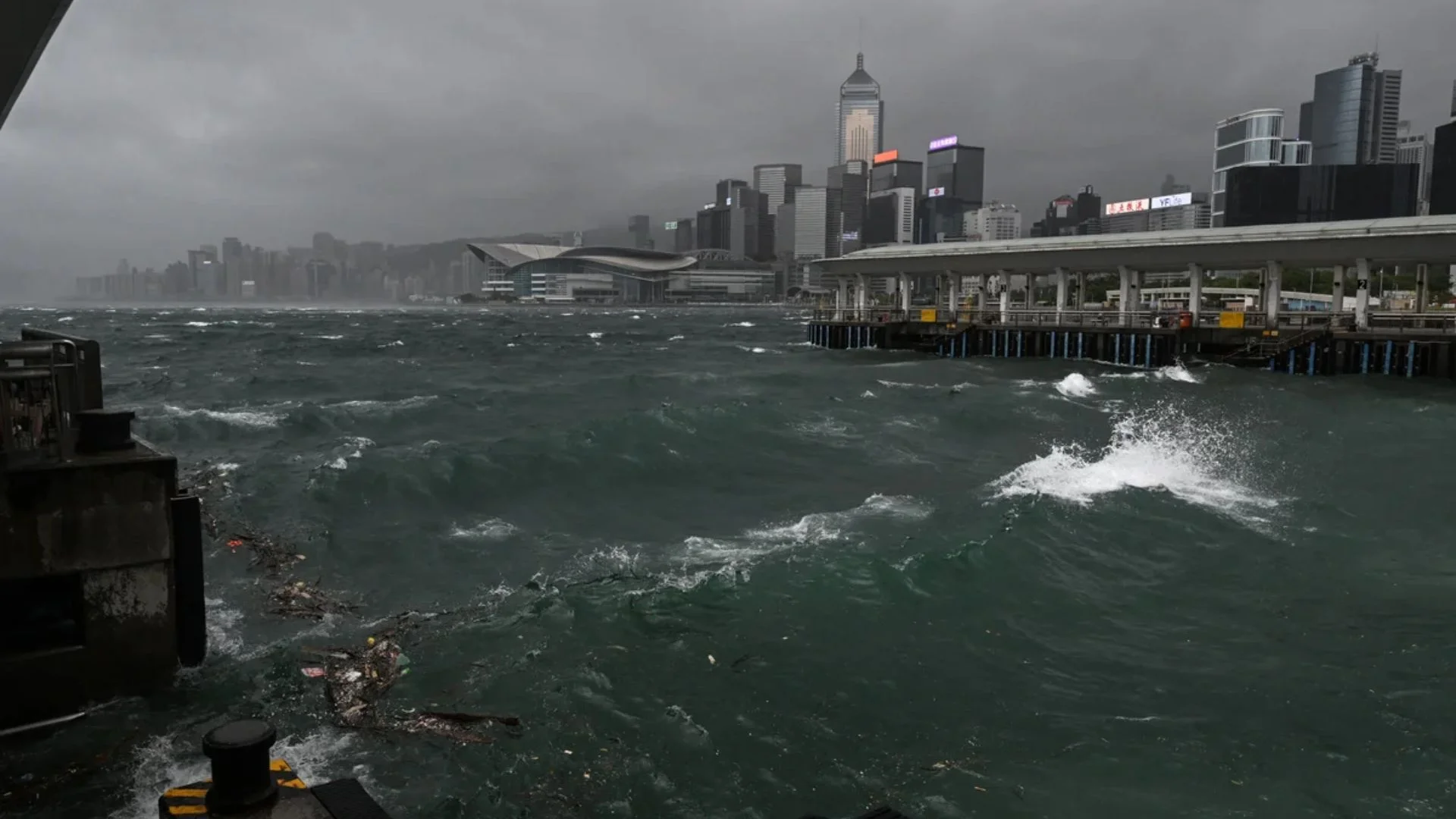
Hong Kong returned to normal on Sunday night after Typhoon Wipha had pummeled the metropolis with strong winds and heavy rains, triggering the unusual No. 10 hurricane warning signal for seven hours and inducing large-scale disruptions.
The No. 8 or above signal was operated for 19 hours before the signal was lowered to No. 3 at 7:40 pm. A total of 33 individuals were injured during the storm 18 males and 15 females and received medical attention.
Over 270 residents sought refuge in the government’s 34 temporary shelters. More than 700 cases of toppled trees were reported by 8 pm, some of which knocked off vehicles and obstructed roads. Five sections of bamboo scaffolding also fell in the city, and the Buildings Department received 21 damage reports, mostly blown-off windows.
Public transport was suspended for the most part, with 500 flights being cancelled, leaving thousands stranded at the airport and West Kowloon rail station. Indonesian tourist Amy was stuck for over 30 hours at the airport when her flight to Bali was cancelled, and others such as Kelvin Qiao from mainland China found it difficult to get information and rebook travel.
There were winds gusting to 234 km/h at Ngong Ping. Sustained winds of more than 118 km/h were measured in Waglan Island, Cheung Chau, Green Island, Tate’s Cairn, and Ngong Ping.
Over 70mm of rain was recorded throughout the city, with over 140mm at some areas of Wong Tai Sin and the New Territories. Seven cases of flooding were confirmed by the Drainage Services Department, although no landslides were reported. A red rainstorm warning was issued briefly in the afternoon.
One floating boat collided with the China Merchants Wharf in Kennedy Town, although it’s unknown if there was anyone on board. Some ride-hailing drivers have been reported to have inflated fares while at it.
Storm chasers and interested spectators braved the bad weather at popular coastal areas such as Tsim Sha Tsui and Kennedy Town. They included Indian tourist Picasso Sahil, who said the experience was “very interesting.”
Hong Kong resident Johnny Chung took his daughter outside to watch the storm, explaining that he wanted her to realize nature’s strength.
Though Wipha’s wind speed at its center was 140 km/h down from previous super typhoons the effect on Hong Kong was still strong.
The Observatory predicts the No. 3 signal to hold for some time. Wipha landed at Taishan, Guangdong, earlier Sunday night, triggering more than 266,000 evacuees from land and sea locations.
Rain and thunderstorms are predicted to prevail early in the week, before improving gradually later.