Typhoon Kalmaegi has left massive destruction across Southeast Asia, killing at least 188 people in the Philippines and five in Vietnam, according to the latest official reports. The storm, which brought strong winds and heavy rains, is now moving west toward Cambodia and Laos after battering central Vietnam on Thursday with gusts reaching 149 km/h (92 mph).
Typhoon Kalmaegi: Vietnam Battles Floods and Destruction
Vietnam’s central coast woke up to scenes of devastation after the typhoon made landfall overnight. Roads were blocked with debris, trees were uprooted, and homes were torn apart by the fierce winds. Thousands of residents took refuge in schools and community centers as the army was deployed to assist rescue and relief operations.
Authorities have warned of possible flooding in low-lying areas. The region has already faced record rainfall over the past week, which has killed 50 people even before the typhoon hit.
DON’T LOOK AWAY!
This is Cebu, Philippines, where the death toll from Typhoon Tino (Kalmaegi) has climbed to 92.
Homes destroyed. Entire neighbourhoods swept away. These are people like you and me, children, parents, families, their lives changed forever.
Why do some disasters… pic.twitter.com/1qcpAtzXdy
— Volcaholic 🌋 (@volcaholic1) November 5, 2025
Prime Minister Pham Minh Chinh held an emergency meeting to coordinate the response.
“We must reach isolated areas and ensure people have food, drinking water, and essential supplies,” he said.
“No one should be left hungry or cold.”
Vietnam Deploys Massive Relief Effort
Ahead of the typhoon, the Vietnamese military had mobilized over 260,000 soldiers, 6,700 vehicles, and six aircraft for relief work. Airports, highways, and ports were temporarily closed. Hundreds of thousands of people were evacuated from high-risk areas.
In Dak Lak province, about 350 km northeast of Ho Chi Minh City, residents reported homes collapsing and streets flooding as the storm struck. Hundreds of people called for help as heavy rain and strong winds continued overnight.
Philippines Hit Hard Before the Storm Moved West
Before reaching Vietnam, Typhoon Kalmaegi, known locally as Tino, caused catastrophic damage in the Philippines. The storm unleashed torrential rains, triggering flash floods and landslides across the central region.
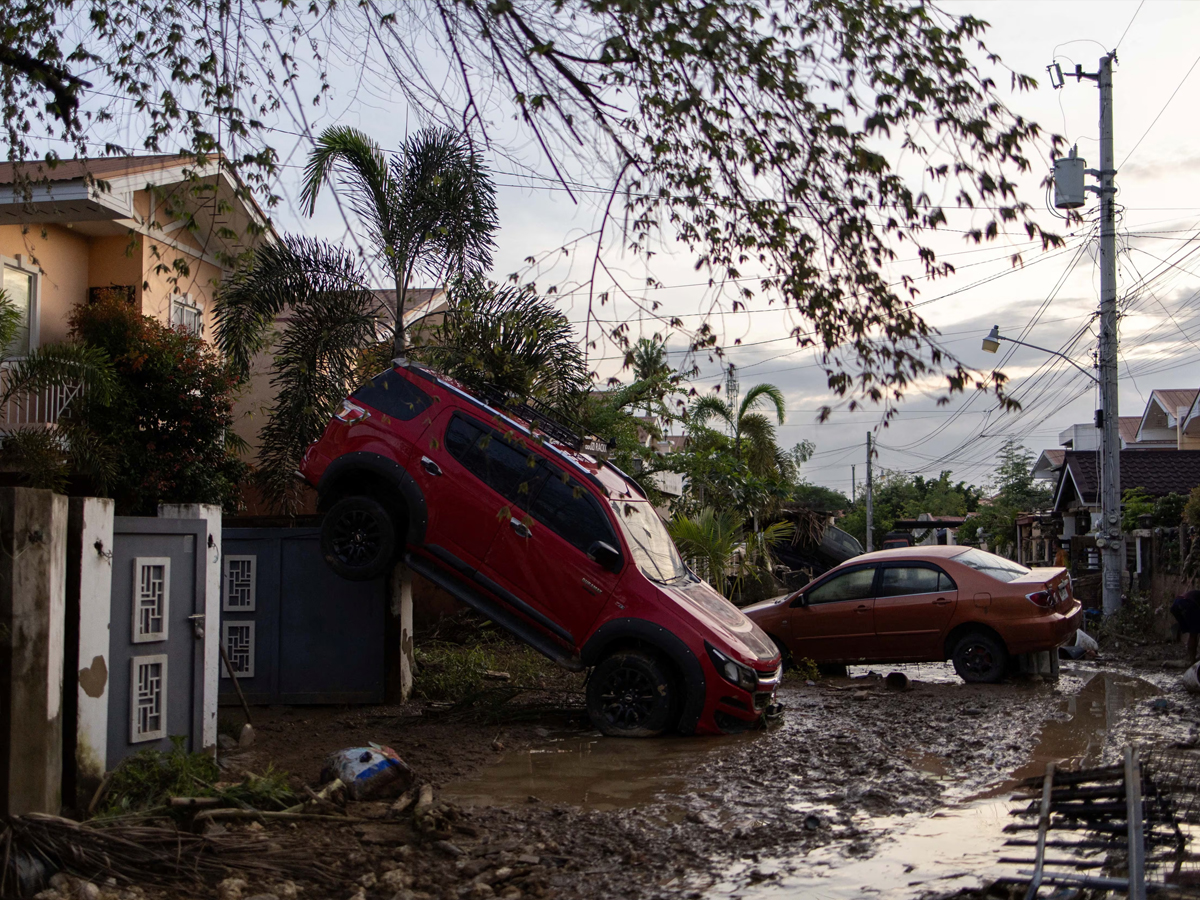
Entire villages were washed away, and many poorer neighborhoods were destroyed as floodwaters surged through. Cars, buses, and even shipping containers were swept away in cities like Cebu and Talisay.
The death toll jumped to 188, while 135 people remain missing. The government declared a state of calamity across the country to speed up emergency relief and recovery efforts.
Cleanup and Recovery Underway
In many parts of the Philippines, survivors have begun the tough task of cleaning up. People are digging through the mud, searching for lost belongings, and trying to rebuild whatever remains of their homes.
President Ferdinand Marcos Jr. declared a state of emergency early Thursday to mobilize aid and resources. The declaration covers areas where mass casualties, property damage, and disruption to daily life have been reported.
As the storm heads toward Cambodia and Laos, regional authorities have issued warnings for possible flooding and landslides in affected areas.
Ongoing Danger Across Southeast Asia
Typhoon Kalmaegi is one of the deadliest storms to hit the region this year. Rescue teams continue to search for the missing, while governments brace for more heavy rain and potential secondary disasters.
The devastation has left thousands homeless and entire towns cut off, highlighting the increasing impact of extreme weather across Southeast Asia.