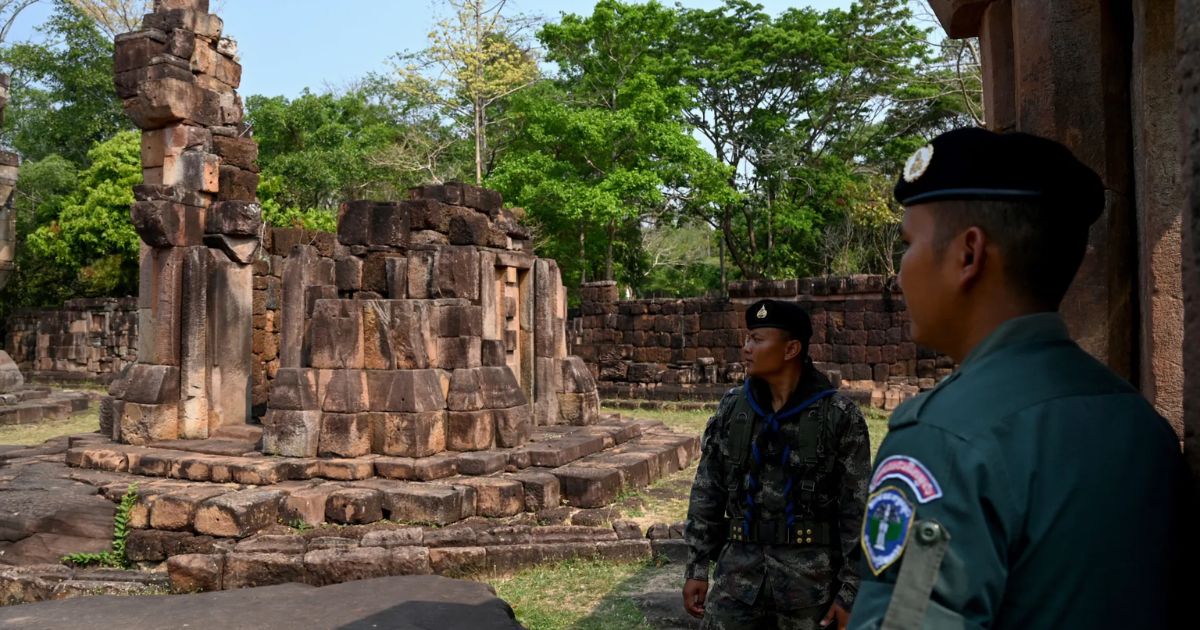
Thailand warned Cambodia of increased self-defence measures if violence across the border persists, after a deadly exchange of gunfire occurred near the contested Prasat Ta Muen Thom temple. The fighting started on July 24, with both armies accusing each other as clashes occurred close to the Surin-Oddar Meanchey border.
It quickly spread to six locations, leading Thai fighter aircraft to bomb Cambodian military targets. Thailand has now shut the border and blamed Cambodia for breaching international law. It has indicated a willingness to send additional military forces if the aggression continues.
Ancient Temple Turns Flashpoint
The conflict started near the centuries-old Prasat Ta Muen Thom temple, which is located on the border between the provinces of Oddar Meanchey in Cambodia and Surin in Thailand.
In the past, the temple has been at the epicentre of border conflicts. Both sides accused one another of firing the first shot as the gunfight quickly escalated. As shooting escalated, Thailand closed the border, citing civilian safety and security concerns.
Thailand Issues Stern Warning
Rear Admiral Surasant Kongsiri called for the border to be closed instantly in reaction to the hostilities. Thai Foreign Ministry spokesperson Nikorndej Balankura announced a stern warning to Cambodia. According to him, “The Royal Thai government calls on Cambodia to stop its incessant actions which amount to serious breaches of international law.” He also condemned Cambodia’s actions as a threat to “good neighbourly relations” and harmful to its international reputation.
Balankura clarified that Thailand considers the rocket attacks on its soil to be intentional acts of aggression. “As it was a rocket launch, there were no alternatives but to use the Royal Thai Air Force to defend ourselves,” he explained. He emphasized that Thailand’s actions were squarely within international law and the principle of self-defence.
Thai Air Force Fires Back
When rockets descended upon Thai soil and injured civilians, Thailand retaliated with airstrikes. F-16 fighter jets entered Cambodian airspace to strike military targets. The army later affirmed that the airstrikes were conducted by a pre-approved plan.
Thai army deputy spokesperson Richa Suksuwanon explained to journalists, “We have used air power against military targets as planned.” She also affirmed that additional fighter planes were on standby for use if necessary.
Thai Premier Demands Ceasefire First
Thailand’s interim PM, Phumtham Wechayachai, called for restraint but stood firm. “There must be a cessation of fighting first between Thailand and Cambodia before negotiations can be held,” he asserted. His statement implied that Thailand would be willing to negotiate but not at the cost of its sovereignty.
The situation is still volatile. There is mobilization of troops by both sides, and the possibility of further escalation hangs in the balance. Diplomatic channels remain ajar—if both sides are willing to utilize them.