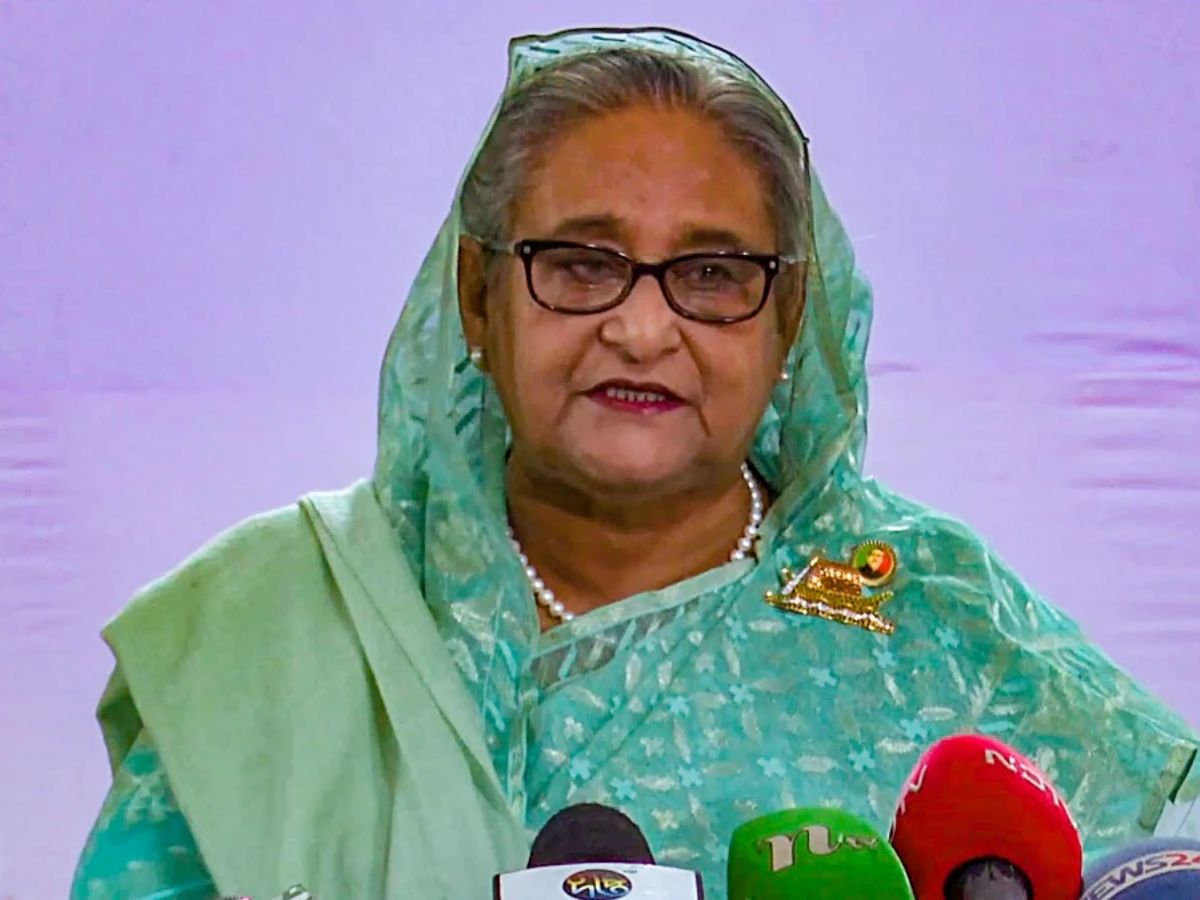
Bangladesh’s political crisis has deepened after former Prime Minister Sheikh Hasina broke her silence on the student-led uprising that forced her out of office. Speaking amid renewed violence and instability, Hasina claimed the protests were not spontaneous but driven by extremist forces. She directly accused interim leader Muhammad Yunus of empowering radicals and destabilising democratic institutions as the country struggles with unrest and attacks on minorities.
The remarks come as Bangladesh faces fresh clashes, rising political uncertainty, and growing international concern ahead of elections scheduled for 2026.
Sheikh Hasina Calls Student Protests a Planned Insurrection
Sheikh Hasina rejected the narrative that the 2024 protests were peaceful student movements. She said the agitation quickly turned violent and targeted the state.
“The 2014 student uprising was an orchestrated insurrection by radicals rather than a peaceful student movement,” Hasina said. She added that it evolved into “a violent mob” that attacked police stations and destroyed public infrastructure.
Hasina claimed her government initially allowed protests and even addressed student demands. She said the situation later spiralled out of control due to extremist influence.
Why Sheikh Hasina Says She Left Bangladesh
Addressing her decision to leave the country, Hasina said it was meant to prevent further bloodshed.
“It was not an easy decision to leave… but it was a decision I took to minimise any further loss of life,” she said.
Hasina said her return to Bangladesh depends on restoring democratic norms. “For me to return, Bangladesh must restore constitutional governance and the rule of law,” she said, while demanding the lifting of “the unlawful ban on the Awami League” and holding “genuinely free elections.”
Hasina Accuses Yunus of Shielding Extremists
Hasina launched a sharp attack on interim leader Muhammad Yunus, accusing him of legitimising violent elements.
“Yunus immediately dissolved this inquiry, released convicted terrorists, and granted blanket immunity to those he now glorifies as ‘July warriors,’” she said.
She further alleged that extremists now hold positions of power. “He has placed extremists in cabinet positions. You cannot claim democratic legitimacy while banning the party elected nine times by the people.”
Hasina also warned that radicals were using Yunus “to project an acceptable international face while they radicalise our institutions domestically.”
Fresh Violence After Student Leader’s Killing
Bangladesh has witnessed new unrest following the killing of radical student leader Sharif Osman Hadi. Violent protests erupted in several cities. His organisation, Inqilab Manch, blamed the Yunus-led administration for his death.
The violence also claimed the lives of two Hindu men, Dipu Chandra Das and Amrit Mondal, raising concerns over minority safety. Hadi was known for his strong anti-India views and played a visible role during the 2024 protests.
Political Stakes Rise Ahead of 2026 Elections
Bangladesh is now moving toward elections in February 2026 amid deep political divisions. BNP leader Tarique Rahman recently returned to Dhaka after 17 years in exile, strengthening his party’s position as a frontrunner.
At the same time, Sheikh Hasina’s Awami League has announced a boycott, raising questions over the credibility of the electoral process. Hasina also criticised Yunus’s growing outreach to Pakistan, calling it “a desperate search for any international validation.”
Bangladesh stands at a critical crossroads. Political instability, radical influence, and communal violence threaten democratic recovery. As global attention grows, the country’s next steps could shape its future for years to come.