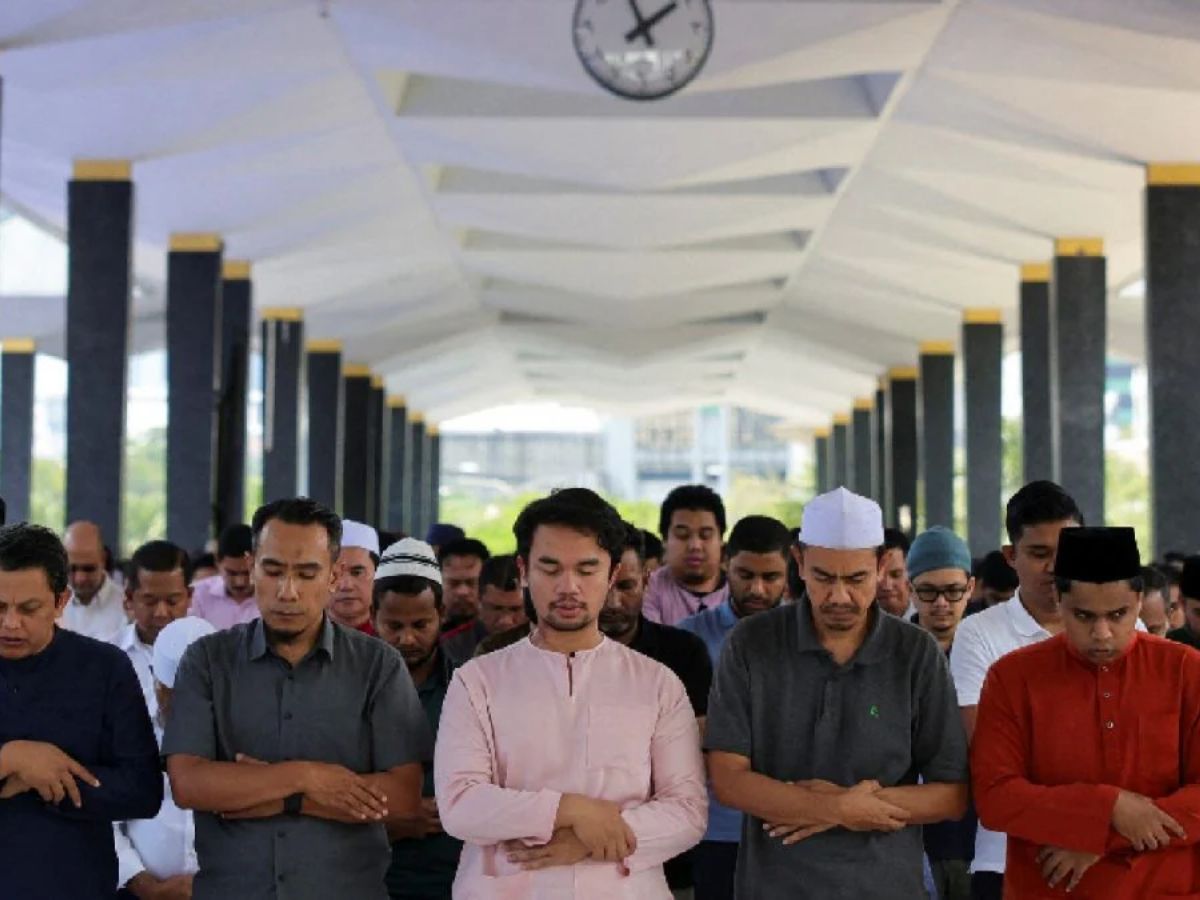
The Malaysian state of Terengganu has introduced tough new punishments for Muslim men who miss Friday prayers without a valid reason. Under the new rules, first-time offenders can face up to two years in prison, a fine of 3,000 ringgit, or both. The penalties took effect this week under the Shariah Criminal Offences (Takzir) Enactment law.
The ruling has spurred discussion over whether religion should have such a strong influence on the law, particularly when it conflicts with individual liberties, throughout Malaysia.
What the Law Says?
The updated law makes even missing one Friday prayer a punishable offence. Earlier, penalties applied only if a man skipped three consecutive Friday prayers. Under the old law, the punishment was up to six months in jail or a fine of 1,000 ringgit.
Now, the penalties are three times stricter. Enforcement will rely on public reports, religious patrols, and reminders placed in mosques to encourage attendance.
Supporters Defend the Move
The change was pushed by the ruling Pan-Malaysian Islamic Party (PAS). PAS lawmaker Muhammad Khalil Abdul Hadi said the punishments would be used only in serious cases. He stressed that the goal was not to punish but to remind Muslims about the importance of Friday prayers.
For PAS leaders, the law is part of their effort to strengthen sharia-based rules in a conservative state that already enforces several Islamic regulations alongside civil law.
Critics Raise Concerns
Human rights groups strongly oppose the new law. Phil Robertson, a rights advocate, argued that the rules harm Islam’s image and restrict personal freedoms.
Critics contend that one’s faith should be based on personal convictions rather than a fear of retribution. Additionally, they have called on Prime Minister Anwar Ibrahim to intervene, lift the additional sanctions, and defend constitutionally guaranteed individual liberties.
Larger Sharia Debate in Malaysia
The Terengganu decision coincides with a broader discussion in Malaysia over the function of sharia law. The nation is governed by two different systems, which are civil law and Islamic law.
Terengganu first passed its sharia rules in 2001 and expanded them in 2016 to cover offences such as harassment of women and disrespecting Ramadan. With PAS holding a strong majority in the state assembly, it has been able to pass stricter laws without opposition.
Lessons from Kelantan’s Court Defeat
The case also recalls a 2024 decision in neighbouring Kelantan. In February, Malaysia’s top court struck down several expanded sharia laws, ruling that the state had overstepped into federal authority.
The case demonstrated distinct limitations on the state’s authority to enforce religious law, notwithstanding Kelantan’s efforts to bring the rules back to life. Later, PM Anwar Ibrahim explained that the decision established limits for legislative power rather than undermining Islam.