
Unemployment, corruption, and weak governments had frustrated Nepal’s youth for years, and the final spark came when the government suddenly banned social media. This decision pushed young people onto the streets in huge numbers.
The protests soon turned violent, and set government offices and politicians’ houses on fire. Roads became battlegrounds as protesters fought police. Security forces opened fire, killing 19 people. Prime Minister KP Sharma Oli resigned under pressure, but the unrest only grew worse.
Protests Go Viral on Social Media
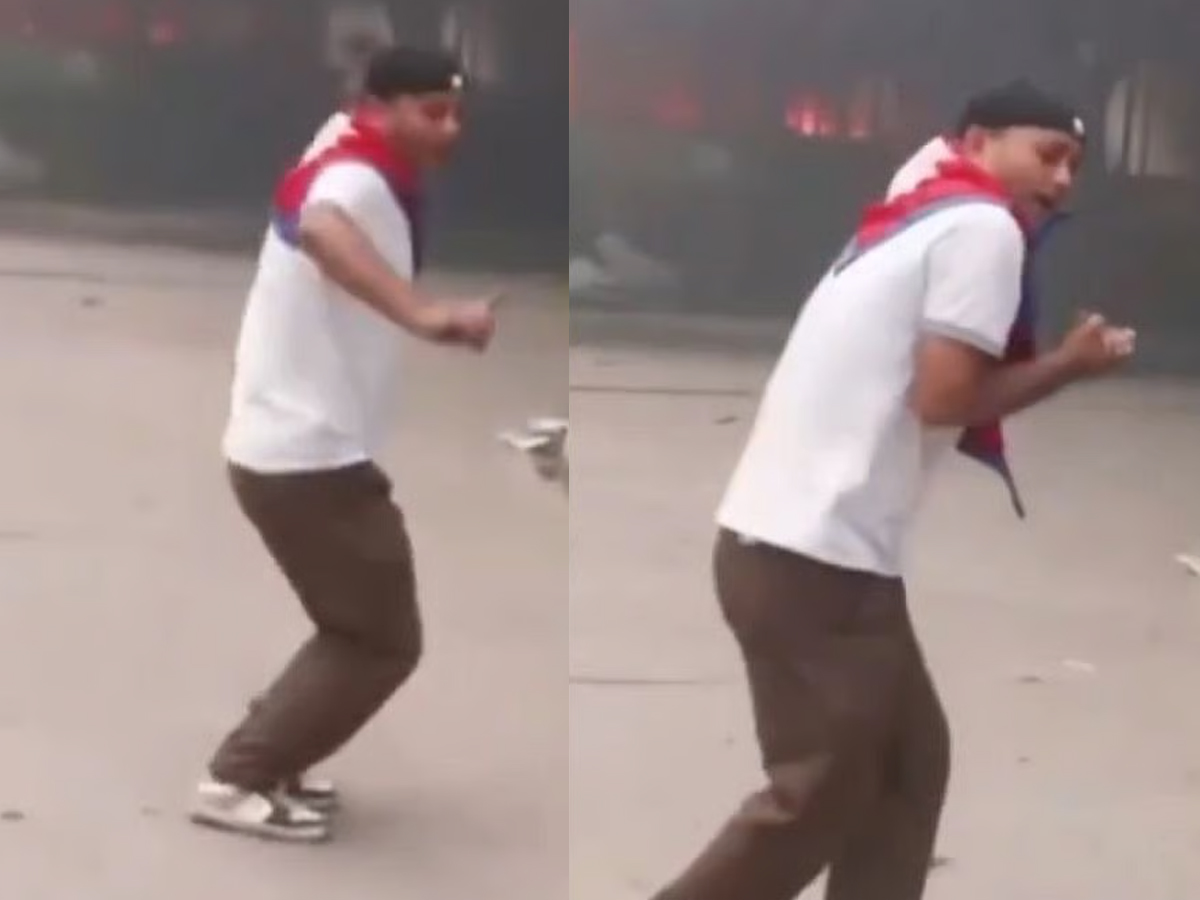
Nepal’s Gen Z made the protests look different from anything seen before. Once the ban was lifted, videos flooded TikTok and Instagram. Young men danced in front of burning buildings. Some wrapped the national flag around their shoulders. Others banged buckets and plates to show their anger.
One viral video showed a youth dancing while smoke from a fire covered the frame, and for many, the protests became both a fight for change and a performance stage.
Politicians and Families Targeted
The anger did not stop at slogans. Protesters directly attacked top leaders. Former Prime Minister Sher Bahadur Deuba and his wife, Foreign Minister Arzu Rana Deuba, were beaten by mobs.
ALSO READ: Who is Sushila Karki? From Nepal’s First Female Chief Justice to Interim Leader
In another shocking case, the wife of former Prime Minister Jhala Nath Khanal suffered burns when their home in Dallu was set on fire. She later died in the hospital.
Homes of President Ramchandra Paudel, former PM Pushpa Kamal Dahal, and several ministers were also attacked. Deputy Prime Minister and Finance Minister Bishnu Paudel was chased and assaulted. Hours before Oli quit, protesters burned down his private home in Balkot.
Deaths, Injuries, and Destruction
The violence left behind fear and destruction. Along with 19 deaths, many protesters and security officers were injured. Videos showed flames spreading through government buildings. Police struggled to control the mobs in Kathmandu and other cities.
ALSO READ: Nepal’s Gen Z Protests Mirror Bangladesh: Could PM Oli Seek Refuge in India Like Hasina?
Even after Oli resigned, young protesters kept marching. They demanded long-term changes, not just another leader.
Calls for Talk
Some experts urged dialogue to end the chaos. Constitutional expert and former Supreme Court judge Balaram K.C. told Reuters: “Gen Z should set up a negotiation team.”
He added that the President should talk to this youth team, along with civil society and the army. Before leaving office, Oli promised an investigation into the shootings. He also said families of the dead would get compensation.
Nepal at a Crossroads
What started as anger over a social media ban has become one of the biggest youth movements in Nepal’s history. Frustrated by corruption and broken promises, Gen Z has taken to the streets in rage. Their protests—mixed with rebellion, viral videos, and violence—have shaken Nepal’s political system.
With Oli gone and leaders under attack, Nepal faces a critical moment. The question now is whether dialogue can bring peace—or if the youth uprising will grow even bigger.