
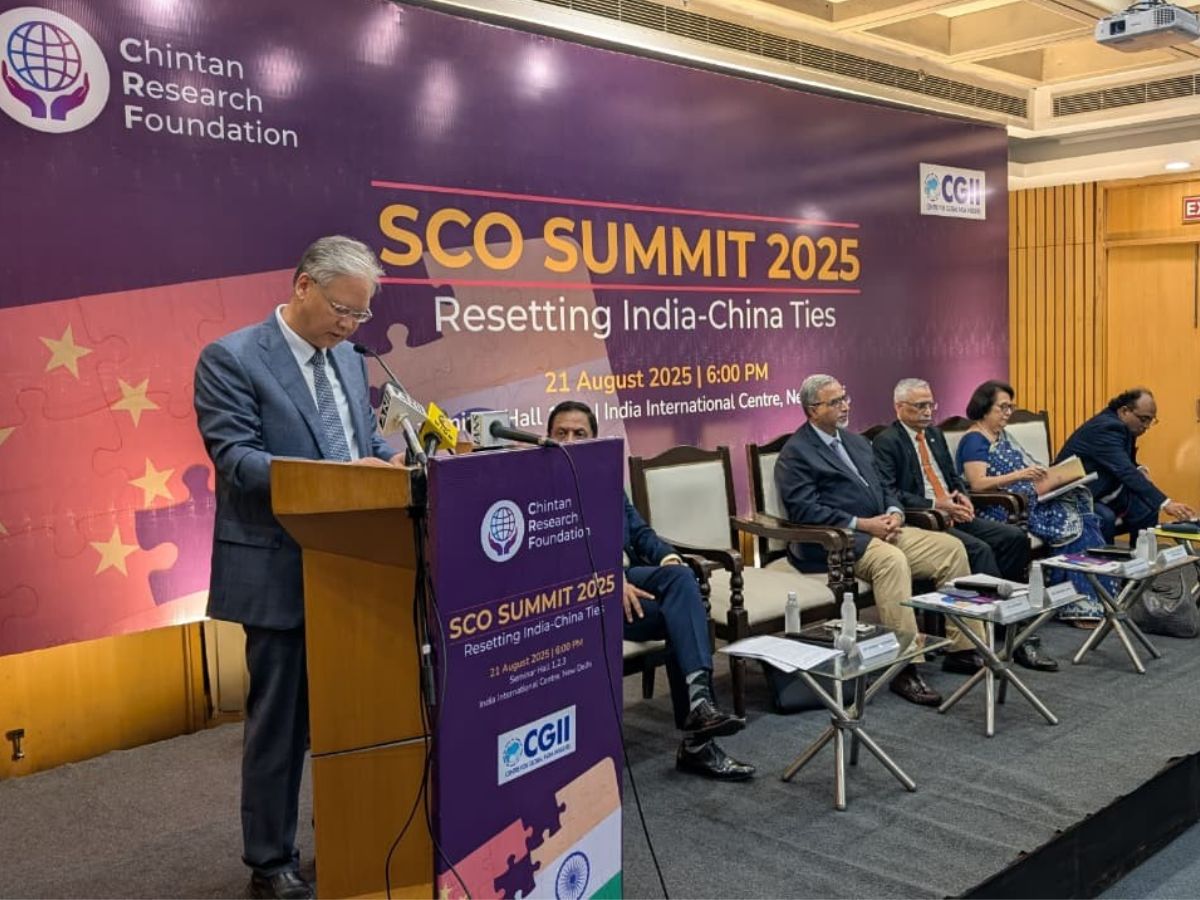
Chinese Ambassador to India Xu Feihong on Thursday said Prime Minister Narendra Modi’s planned visit to China later this month for the Shanghai Cooperation Organisation (SCO) Summit will carry “great importance,” not only for the multilateral grouping but also for the future of bilateral ties between the two Asian powers.
PM Modi is expected to travel to Tianjin on August 31 and September 1 to attend the summit. Xu emphasized that Beijing is attaching “great importance” to the visit, and both sides are working closely to ensure its success.
“The visit of Prime Minister Modi to China will be a very important event not only for the SCO but also for the bilateral relationship between the two countries. A working group from China and India are preparing to make this visit a successful one,” Xu told reporters.
Background: Wang Yi’s India Visit
Xu Feihong’s comments came just days after Chinese Foreign Minister Wang Yi visited New Delhi. During his trip, Wang co-chaired the 24th round of the Special Representatives’ dialogue on the Boundary Question with India’s National Security Advisor (NSA) Ajit Doval on August 19.
Wang also met with External Affairs Minister S. Jaishankar and called on PM Modi, underlining Beijing’s efforts to set a cooperative tone before the summit. Xu noted that the discussions during Wang’s visit led to the adoption of a 10-point consensus on managing the complex boundary dispute between the two nations.
The 10-Point Consensus
According to Xu, the consensus reached by both sides includes:
- Formation of two new groups: one for border delimitation and another for management of border areas.
- Establishment of General-Level Mechanisms in the Eastern and Middle sectors, alongside the existing Western sector mechanism.
- Agreement to maintain peace and tranquility along the boundary through “friendly consultations.”
- Plans for the next General-Level meeting in the Western Sector at the earliest possible date.
A commitment to take a political perspective on bilateral ties while seeking a fair and mutually acceptable framework for boundary settlement, guided by the 2005 Agreement on Political Parameters and Guiding Principles.
Also Read:L Active Shooter Reported at Villanova University, Police Urge Students to Shelter in Place
Trade and River Cooperation
The Ambassador further revealed that both sides also discussed expanding cooperation beyond border issues:
- Agreement to re-open three traditional border trade markets—Renqinggang-Changgu, Pulan-Gunji, and Jiuba-Namgya.
- Resumption of talks on trans-border rivers, with both sides agreeing to fully utilize the China-India Expert Level Mechanism on river cooperation.
- Renewed communication on pending memoranda of understanding (MoUs) relating to water-sharing.
- Plans for the 25th round of boundary talks in 2026 in China.
‘Border Issue Shouldn’t Define Ties’
Xu stressed that while the boundary question remains unresolved, it should not overshadow the broader relationship between India and China.
“The border issue is one side, but cooperation between our nations is another. Both sides reiterated the importance of promoting the overall development of bilateral ties while managing disputes properly,” he said.
He also highlighted that progress made in implementing past leader-level consensus from Kazan was acknowledged during the discussions, adding that both sides are keen on strengthening diplomatic and military-level dialogue to prevent escalations.
PM Modi’s visit to Tianjin comes at a critical juncture in India-China relations, where tensions remain over unresolved border disputes but economic and multilateral cooperation continue to provide opportunities for engagement. The visit is likely to be closely watched globally, given the broader geopolitical stakes at play within the SCO framework.