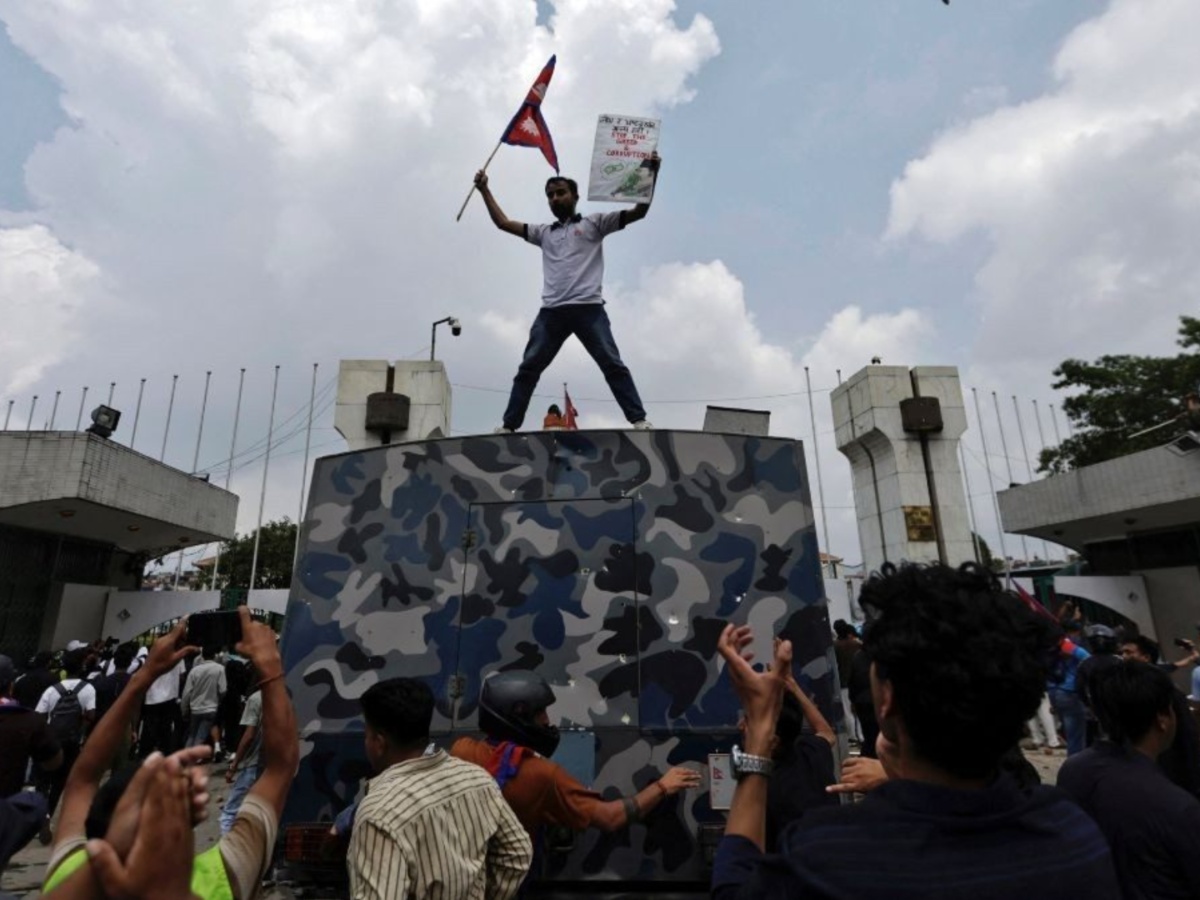
Nepal Gen Z protests have engulfed the country after the KP Sharma Oli government banned over two dozen social media apps. At least 14 people have died and 42 others sustained injuries in violent clashes between young demonstrators and police in Kathmandu. The government has now imposed a day-long curfew in parts of the capital, while the army has also been deployed. However, demonstrations have already spread to other parts of Nepal. Protesters are furious about losing access to platforms like Facebook, YouTube, X, WhatsApp, and Signal. They are also targeting what they call a deep-rooted culture of corruption within the government.
How the Protests Began?
On Monday, thousands of school and college students marched through Kathmandu. Many carried national flags and placards that read “Shut down corruption and not social media” and “Unban social media.” They used TikTok, which remains online, to coordinate the uprising. Tensions escalated when protesters moved towards the parliament building and surrounding restricted areas. Some broke through barricades and entered parliament compounds.
#WATCH | Nepal | Protest turned violent in Kathmandu as people staged a massive protest against the ban on Facebook, Instagram, WhatsApp and other social media sites, leading to clashes between police and protesters. pic.twitter.com/YWNj3R0wUG
— ANI (@ANI) September 8, 2025
Read Now: Why Nepal Banned Several Social Media Platforms that Triggered Nationwide Protests?
A Violent Crackdown
Police responded with tear gas, rubber bullets, and water cannons. Protesters retaliated with water bottles and tree branches. Reports confirmed that police fired live bullets as well. One protester in New Baneshwor died after sustaining injuries. Journalist Shyam Shrestha was also injured by a rubber bullet while covering the clashes. Witnesses accused police of firing above the knees and aiming indiscriminately at demonstrators.
Expanding Curfews and Nationwide Unrest
Authorities extended the curfew beyond New Baneshwor to several high-security zones. These included the President’s residence, the Vice-President’s residence, Singha Durbar, and the Prime Minister’s residence. Officials defended the curfew as necessary to control violence. Meanwhile, protests spread outside the capital. In Damak, demonstrators burned an effigy of Prime Minister Oli, clashed with police, and vandalized property.
Why Was Social Media Banned?
The government banned unregistered platforms after they failed to appoint local grievance officers, as directed by a Nepal Supreme Court ruling last year. About 90 percent of Nepal’s 30 million citizens use the internet. Facebook alone has 13.5 million users. The sudden ban cut off millions from daily communication, news, and business. Some platforms, including TikTok, Viber, and Telegram, have complied or submitted applications. Protesters argue that the fight extends beyond internet freedom. They demand transparency and accountability from leaders.
Voices From the Streets
Protesters openly accused leaders of institutionalising corruption. Twenty-four-year-old student Yujan Rajbhandari said they were triggered by the social media ban but are also fighting against entrenched corruption. Another student, Ikshama Tumrok, said her generation refuses to endure authoritarianism any longer.
Read Now: Nepal Gen Z Protests Turn Violent: Army Deployed in Kathmandu, 10 Latest Updates
Oli’s Defiance and Possible Backtrack
Prime Minister Oli defended the ban, claiming that global platforms disrespected Nepali law and refused to pay taxes. He called the uprising a “Gen Z rebellion” against national self-respect. Still, government spokesperson Prithvi Subba Gurung signaled that the ban could be reconsidered. He admitted that protecting lives matters more than holding onto policy decisions.