
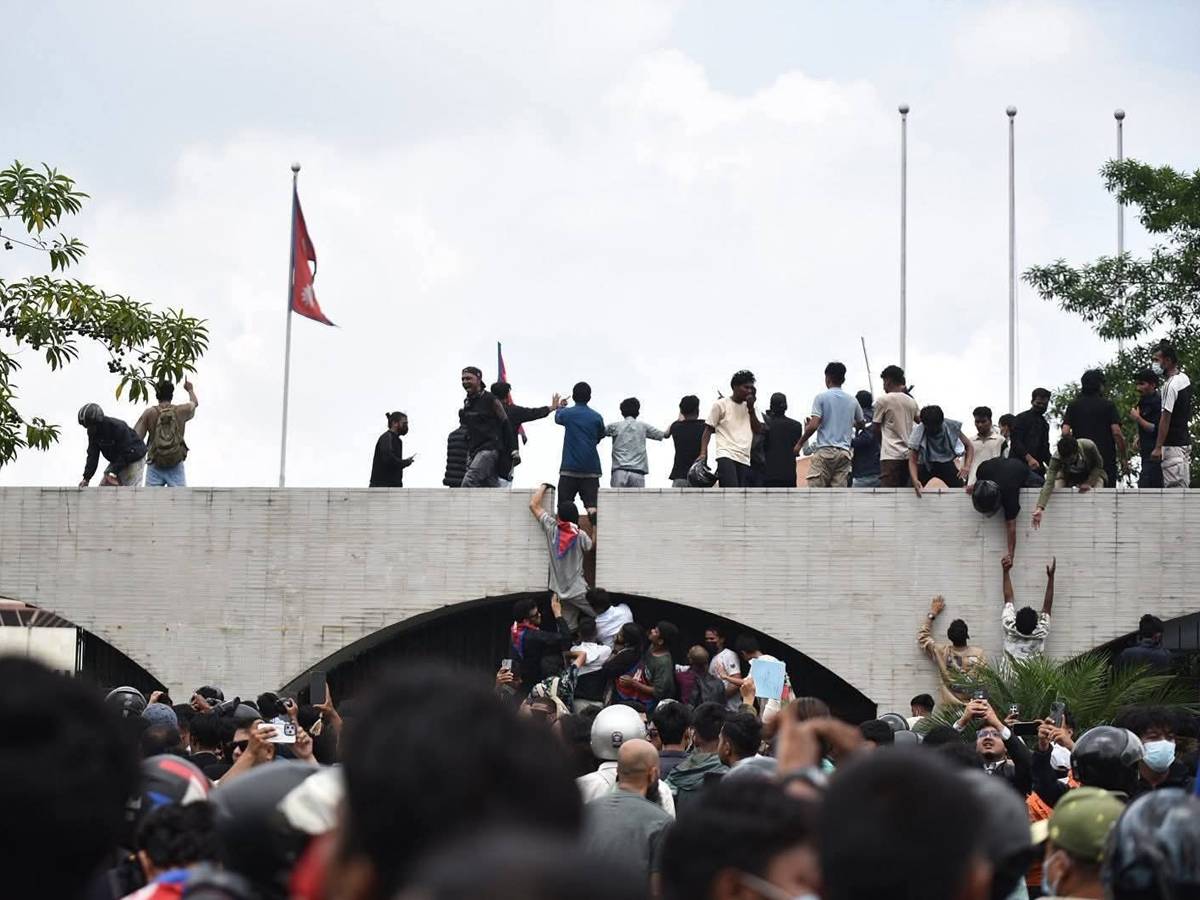
The Nepal Army has been deployed outside the residences of Prime Minister KP Sharma Oli and President Ram Chandra Paudel after violent protests spread across the country. Demonstrations erupted against the government’s ban on social media platforms.
Officials confirmed that the army entered the Parliament premises in New Baneshwor after protesters repeatedly attacked the compound. Although the Armed Police Force normally guards Parliament, the army was called in after curfew orders were issued by the District Administration Office. The army has now taken charge of security inside the Parliament complex.
Protesters Set Fire to Parliament Gate
The Gen Z-led protests took a violent turn when demonstrators set fire near Gate No. 2 of the Parliament building. Flames spread quickly, and security forces failed to douse the fire immediately, exposing gaps in preparedness.
Violence Leaves One Dead, Hundreds Injured
According to The Himalayan Times, one protester has died and several others were injured during Monday’s nationwide demonstrations. Reports suggest that more than 800 people were hurt in clashes earlier in the week.
While chanting anti-government slogans, protesters threw branches, stones, and water bottles at security personnel. In response, police used tear gas, water cannons, and opened fire in several locations. Despite the strict security, a few demonstrators were able to access the Parliament building.
Artists and Public Figures Join Movement
Nepali actors, artists, and entertainers have voiced their support for the youth-led protests. Their involvement has amplified the movement, which is now being called Nepal’s “Gen Z Revolution.” Thousands of students and young professionals, many wearing school uniforms, have joined marches across Kathmandu.
Why Did Nepal Ban Social Media Platforms?
26 social media sites, including Facebook, Instagram, WhatsApp, YouTube, X, and Reddit, were outlawed by the Oli administration. According to authorities, those using phony accounts were committing fraud, disseminating false information, and promoting hate speech.
Defending the move, Prime Minister Oli said, “Any attempt to undermine the nation can never be tolerated.” The government claims the ban is a matter of law and national security, while protesters view it as censorship meant to silence critical voices.
Curfew in Kathmandu as Protests Continue
Following violent skirmishes, a curfew has been enforced in several important parts of Kathmandu, including the Parliament zone. Protesters continue to speak online, and an end to corruption despite constraints.
The situation remains tense as Nepal faces one of its biggest youth uprisings in decades.