
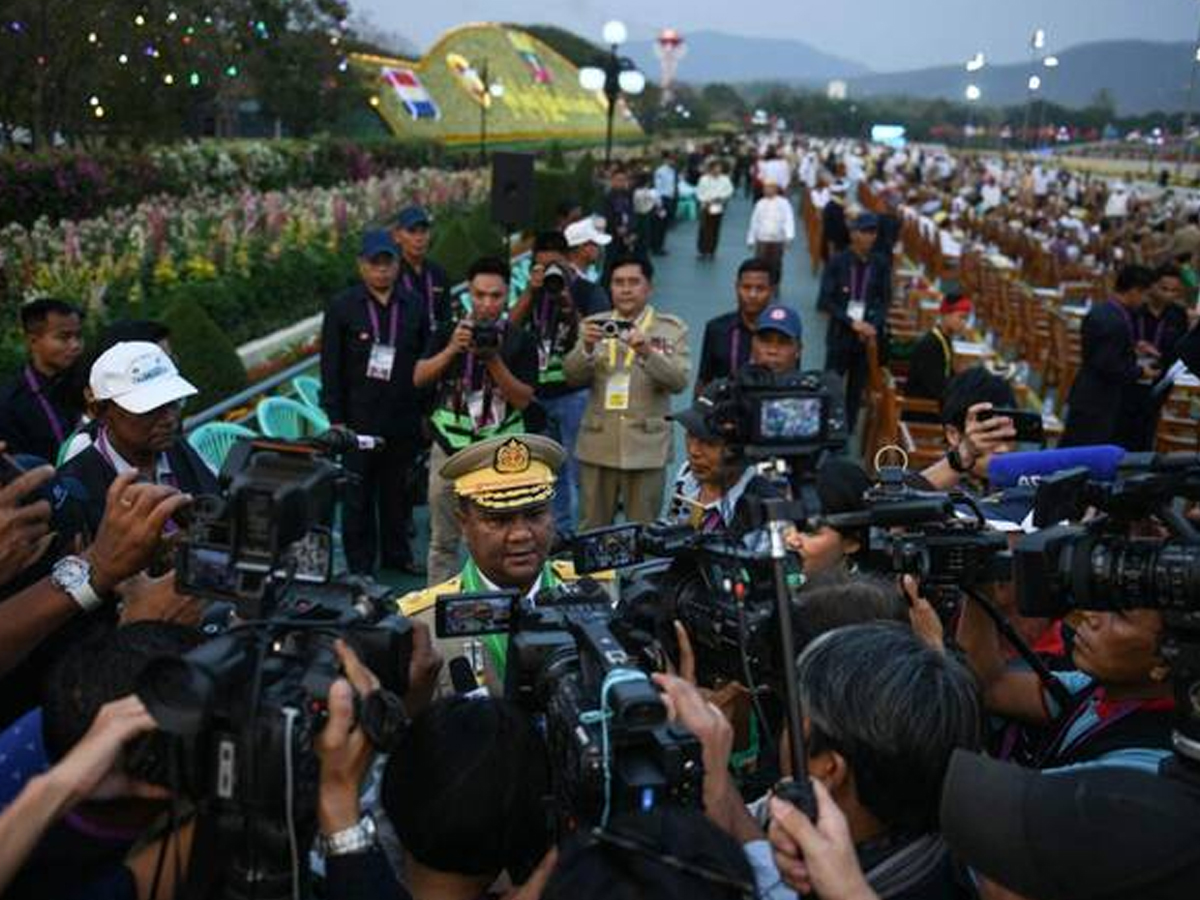
In a politically strategic move, Myanmar’s military junta government has formally declared an end to the state of emergency across the country, indicating its commitment to conduct general elections in December. The declaration, issued on Thursday, is a landmark in the nation’s political crisis that started in 2021 when there was a military coup.
The junta, which removed the democratically elected regime of Aung San Suu Kyi more than two years ago, had invoked emergency powers to give paramount power to its leader, Min Aung Hlaing. Now, the junta describes the revocation of those powers as a step towards “multiparty democracy.”
The state of emergency is dissolved today so that the nation can conduct elections towards a multiparty democracy,” junta spokesperson Zaw Min Tun stated.
Opposition Forces Reject Elections as Ungenuine
Beneath the regime’s rhetoric, international monitors and Myanmar’s opposition forces are still skeptical. Anti-coup resistance forces and former lawmakers have vowed to boycott the vote, which they describe as an attempt at legitimizing further military control.
A UN adviser recently denounced the planned elections as “a fraud”, cautioning that they are not being held in free or fair circumstances. Experts opine that the elections will only help reinforce military authority.
Min Aung Hlaing Seeks Ongoing Rule
Commander-in-Chief Min Aung Hlaing, likely to hold on to power either as president or army chief following the election, referred to the election as the “second chapter” in Myanmar’s politics.
We have already written the first chapter,” he stated at an honorary ceremony. “Now, we are beginning the second chapter.”
State media quoted him as saying that efforts would be made to allow all people who are eligible to vote, although no election date has been communicated.
Security Loopholes and Censorship Acts Raise Alarm
Even while planning is ongoing — including training on electronic voting machines and party enrollments — critical issues persist. A 2023 census did not record data from 19 million of the country’s 51 million citizens, citing “significant security restrictions.”
In one of the latest in a series of moves that have further fueled alarm, the junta recently enacted a law requiring up to 10 years in jail for speech or demonstration intended to “destroy a part of the electoral process.” Human rights organizations have condemned the legislation as an intimidation measure.
Rebel Resistance and Amnesty Offers Ahead of the Vote
Experts predict that the anti-junta factions will step up military attacks as the election draws close, showing their defiance of what they consider to be a fake election.
The military has responded by initiating cash rewards for rebels who are willing to “return to the legal fold” by laying down weapons — all part of a larger effort to establish normalcy and increase participation.
In deep suspicion, restricted voting access, and constant military conflict, Myanmar’s December election is turning out to be one of the most disputed and contentious events in recent history in the country.