In a bold move symbolising political transformation, the Bangladesh government is converting the former residence of ousted Prime Minister Sheikh Hasina into a museum. Once a highly secure VIP complex, Ganabhaban, located in Sher-e-Bangla Nagar, Dhaka, is set to reopen as the July Revolution Memorial Museum on August 5, marking the first anniversary of the toppling of Hasina’s government.
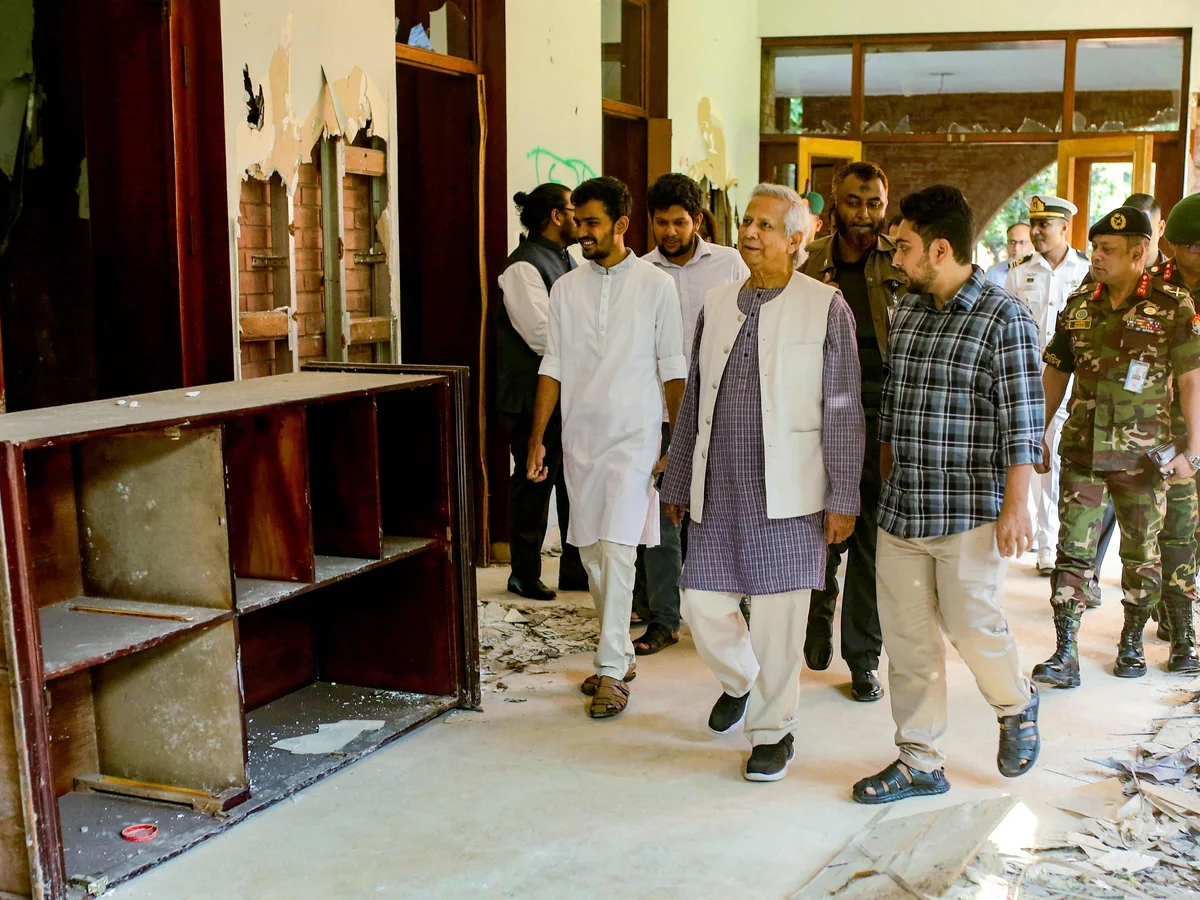
The museum aims to capture the turbulent events that unfolded during and after Hasina’s ouster, and it will house artefacts, protester memorials, and even remnants of the looting that occurred when an angry mob stormed the estate.
Historic Royal Estate to Political Epicentre
The estate, originally known as Estate Rajbari, once served as the palace of the Maharajas of Dighapatia during British and Pakistani rule. Post-independence, the palace became the official residence of Bangladesh’s prime ministers. Sheikh Hasina’s father, Bangabandhu Sheikh Mujibur Rahman, Bangladesh’s founding leader, had established Ganabhaban as a functional seat of executive power.
Sheikh Hasina made it her residence during her 15 years in power, having moved in on March 6, 2010, more than a year after her electoral win. It remained her official home until August 5 last year, the day she fled the country amid nationwide unrest.
Mob Violence and Looting After Hasina’s Exit
The transformation of Ganabhaban into a museum also immortalises the chaos that followed Hasina’s downfall. On August 5, just minutes after Sheikh Hasina fled, a violent mob stormed the gates of Ganabhaban, allegedly intent on killing her. Though she had narrowly escaped, her residence was looted extensively.
The crowd, fuelled by accusations that Hasina had overseen extrajudicial killings and ruled with a fascist grip, ransacked everything, from sarees and clocks to televisions, luxury handbags, and even fish and women’s underwear. The bizarre nature of the loot quickly became viral meme material on social media. Authorities later stated that many of the looted items were returned, though no official inventory has been published.
From Political Residence to Public Memorial
The Ministry of Cultural Affairs is overseeing the transformation and has already proposed nearly 200 staff positions to operate the museum. The site will feature not just preserved rooms and looted relics, but also graffiti left by protesters, and artefacts belonging to those killed during last year’s clashes.
An interim government led by Chief Adviser Muhammad Yunus had initially proposed the conversion of the Ganabhaban into a museum, a move many saw as an effort to document what they called the “misrule” of Sheikh Hasina.
The current facility, constructed in 1984, lies just minutes from the Bangladesh National Parliament. As work nears completion, the July Revolution Memorial Museum is expected to open to the public after final approval from regulatory authorities.
This museum doesn’t just mark the fall of a leader; it seeks to memorialise a moment of mass resistance, political upheaval, and a people’s cry for change, all within the walls of a once-powerful residence now frozen in time.