
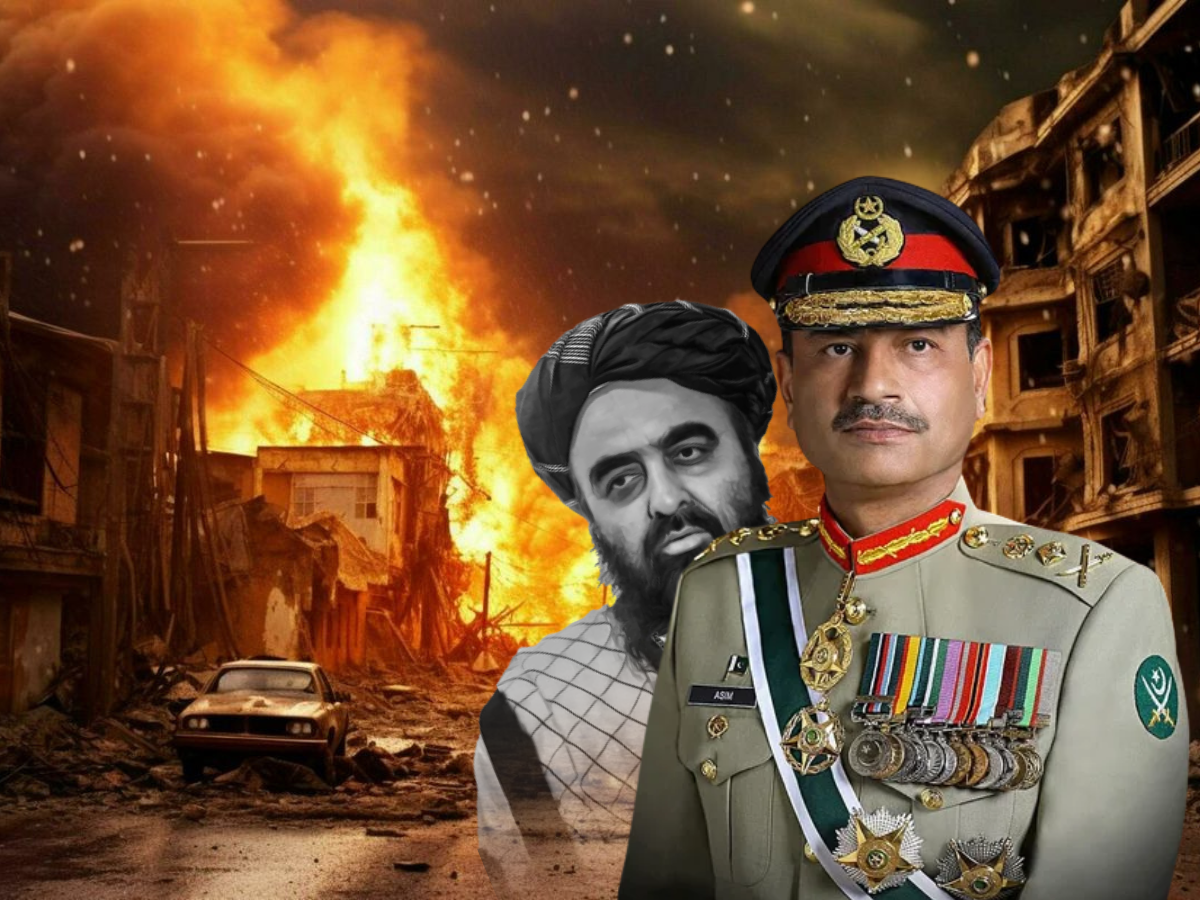
In October 2025, Pakistan began a series of air raids deep within Afghan territory alleging to have gone after Tehreek-i-Taliban Pakistan (TTP) militants. These strikes opened up a fierce conflict between Pakistan and Afghanistan, reverberating with artillery duels, drone strikes and war of words.
The situation worsened for Pakistan with civilian casualties in provinces such as Khost and Paktika turning from a fragile border to a militarized zone signaling the advent of a long-sovereignty-stripped strategic fiction.
What is the Origins of a Grim Relationship
Pakistan’s complicated involvement in Afghanistan’s affairs goes back to the 1970s with Inter-Services Intelligence (ISI) operated actively during the Soviet Afghan War, training and arming Mujahideen fighters with U.S. and Saudi assistance. The Mujahideen later turned into the Taliban, whom Pakistan supported with great fervor until the late 1990s and Islamabad envisaged a compliant Afghan government granting it strategic depth against India. The very forces nurtured by it would lay rebellion against and confront their creator.
How is the Changing Stance of Taliban
After its entering back to power in 2021, the Taliban, once the closest Pakistan proxy, reversed its intended agenda of cooperation with Pakistan claims over the Durand Line the disputed border dividing the Pashto tribes-the Taliban started sheltering TTP militants that waged attacks inside Pakistan. A deadly ambush in Pakistan’s Kurram district in October 2025 that killed eleven soldiers incited Pakistani air strikes and are now being followed up by Taliban retaliatory raids across the border.
Domestic Pandemonium & Mixed Signals
Amid the conflict, Pakistan’s political and military leadership exhibited mixed signals while ex-prime minister Imran Khan was calling for dialogue and restraint from jail with the military and prime minister Shehbaz Sharif are pressing aggressive retaliation. Pakistan itself was internally weakened by this split in its response and internationally exposed for its inability to create a synergy between force and diplomacy in an overtly politicized and economically unstable environment.
Economic Doldrums & the Refugee Dilemma
The internal turmoil of Pakistan touches much more than mere battlefield realm. Its internal affairs lay wasted with inflation, energy shortages and unemployment authorities have instead been pointing an accusatory finger at Afghan refugees, departing from their inherent duties, now massacre deportation programs denounced by the Taliban as collective punishment. This action slyly turns popular outrage against the domestic economic woes toward external enemies with vocal anti-Israel rhetoric dominating present political discourse although it is utterly devoid of impact in covering the increasing discontent at home.
Potential Maturation of the Taliban & Emerging Dimension of India
Taliban of 2025 will be waving sophisticated weapons, having disciplined forces with a clear vision set when they decided to halt operations towards New Delhi, rather than Islamabad, it denotes a tectonic shift in the regional paradigm. India has cautiously again engaged the Taliban, trying to create its role in Afghanistan to balance Pakistan’s influence while this attempt may seem cautious, it provides a major geopolitical window that openly contests Pakistan’s hegemony in Kabul.
The Durand Line & Pakistan’s Strategic Blind Spot
This crisis is the unnuanced question of the dispute related to the Durand Line, which drew colonial era lines with scant regard meted out to tribal realities. The very national boundary in question is being treated in this manner by Pakistan illegitimacy of that boundary remains at the very core of the thought process of Afghanistan and the Taliban. This kind of fundamental disagreement ensures a continuous supply of hostility and violence.
The country, nursing hostility toward Afghanistan, has stamped itself with odium wherever it stands, Pakistan’s long-standing strategy consisting in manipulating Afghanistan through proxies backfired spectacularly, leaving the country isolated and vulnerable to threats it helped create. The border war reflects on Pakistan’s broader identity crisis an urgent reckoning with the consequences of decades of foreign policy miscalculations.
ALSO READ: Who Is Miriam Adelson? Trump Praises Key Ally in Israel Speech Amid Gaza Truce Talks