
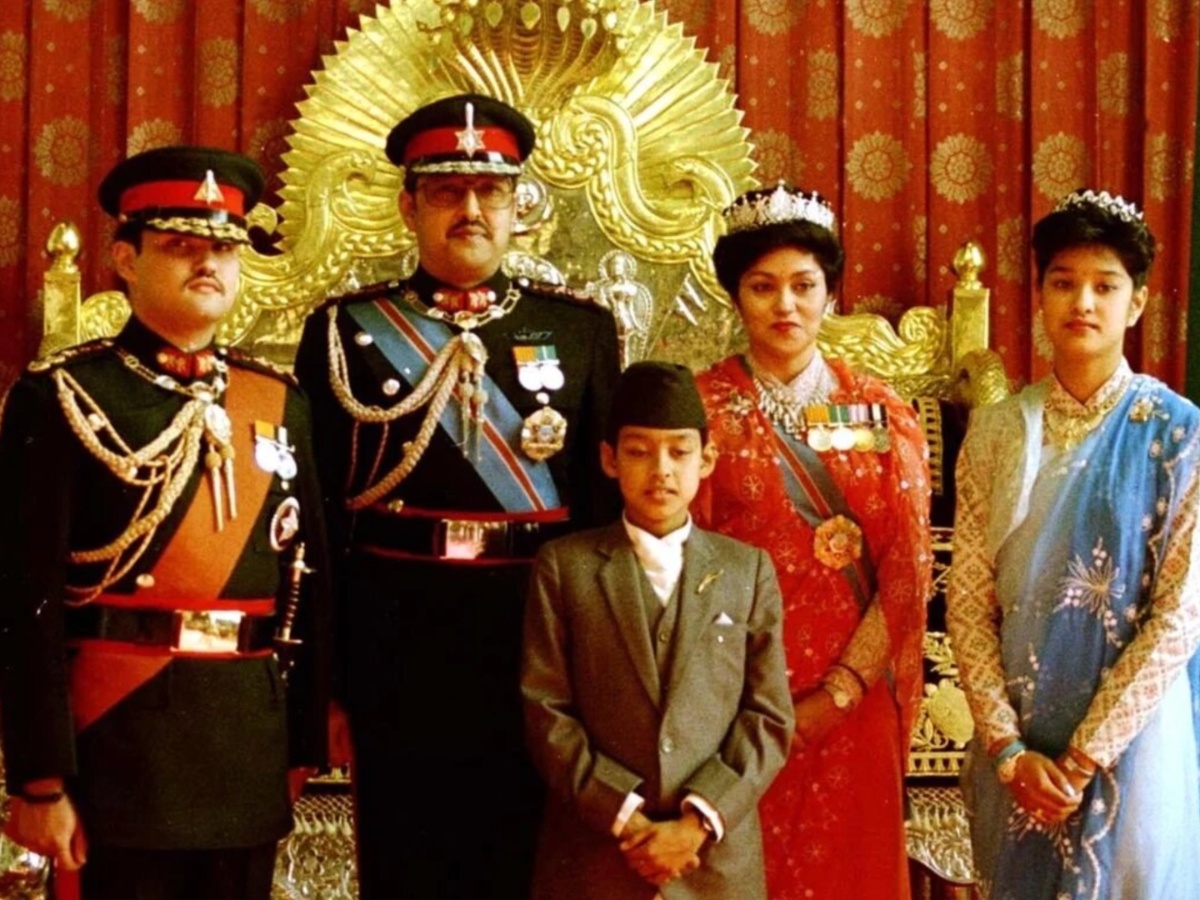
The story of King Birendra and the Nepal royal massacre is one of power, mystery, and tragedy, born to Crown Prince Mahendra and Crown Princess Indra at Narayanhiti Darbar in Kathmandu, Birendra was the eldest of six children. His reign promised peace, stability, and reverence from the people. Yet, the royal family’s fate turned deadly on 1 June 2001, leaving Nepal shocked, questioning conspiracies, and marking the monarchy’s rapid decline.
A Royal Legacy Born in Shadows
King Birendra Bir Bikram Shah Dev, was born at Narayanhiti Darbar in Kathmandu, carried a royal legacy marked by both grandeur and secrecy, as the eldest son of Crown Prince Mahendra and Crown Princess Indra, Birendra grew up in a palace steeped in tradition. Mahendra, son of King Tribhuvan, ruled Nepal from 1955 until his death in 1972. Despite his royal status, Mahendra had a secret relationship as a teenager with Geeta Gurung, resulting in a child at just 13.
Read More: What If Lord Krishna Was Born in 2025? A Modern Take on His Life
Social norms prevented marriage due to caste differences. Later, Mahendra married Indra in 1940 and had six children: Birendra, Gyanendra, Dhirendra, Shanti, Sharada, and Shobha. After Indra’s death in 1950, Mahendra married her younger sister Ratna, who bore no children.
A King Educated in the West
Birendra’s education began at St. Joseph’s School in Darjeeling and continued abroad. He returned to Nepal following King Tribhuvan’s death in 1955, as Mahendra ascended the throne. Nepalese rules dictated that the last rites of the previous king could not be performed until a new king was crowned. Once Mahendra was crowned, Birendra became Crown Prince. In 1970, he married his second cousin, Aishwarya Rajya Lakshmi Devi, from the Rana family and the wedding reportedly cost $9.5 million, making it one of the grandest royal ceremonies of its time.
The Peaceful Reign and the Tradition of Royal Gatherings
King Birendra focused on peace, unity, and stability and his reign faced minimal corruption, earning him public reverence. The royal family held a monthly Friday gathering for dinner, games, and discussions on national and political matters. This tradition strengthened family bonds and maintained national unity.
Read More: Zelenskyy Heads to Berlin to Rally Support Before Trump–Putin Summit
1 June 2001: Nepal’s Darkest Night
On that fateful evening, King Birendra invited the family to dinner. Gunfire erupted inside Narayanhiti Palace. Almost all family members, ministers, servants, and staff were killed. The public learned of the massacre at 4 a.m., causing national shock. Crown Prince Dipendra was found in a coma and declared king for three days before dying. Gyanendra, Birendra’s younger brother, then became king.
Was It Really Dipendra… Or Someone Else?
The official report blamed Dipendra for the massacre, citing a family dispute, possibly over marriage but however, rumors persisted and many suspected Gyanendra, citing his closeness to Queen Ratna and the suspicious death of their brother Dhirendra.
The Fall of the Monarchy
Gyanendra’s reign faced unrest, corruption, crime, and escalating Maoist insurgency and in 2005, he assumed absolute power, dismissing the government. Mass protests forced him to reinstate parliament in 2006 and Nepal abolished monarchy in 2008, establishing a federal democratic republic.
The Controversial Prince Paras
Prince Paras, Gyanendra’s son, worsened the monarchy’s image. His alleged crimes, including rape, drug trafficking, and assault, eroded public trust and fueled anti-monarchist.
A Chilling Sign: The Sweating Idol of Machhindranath
Locals say that Machhindranath Temple’s idol sweats before major events and the idol reportedly sweated before the 2001 massacre and again before Gyanendra’s public return, sparking fears and speculation.
Has History Come Full Circle?
After two decades, Gyanendra has re-emerged and mystical signs, unresolved mysteries, and political instability make Nepalans wonder what lies ahead. History seems poised to repeat itself as the royal shadow lingers.