
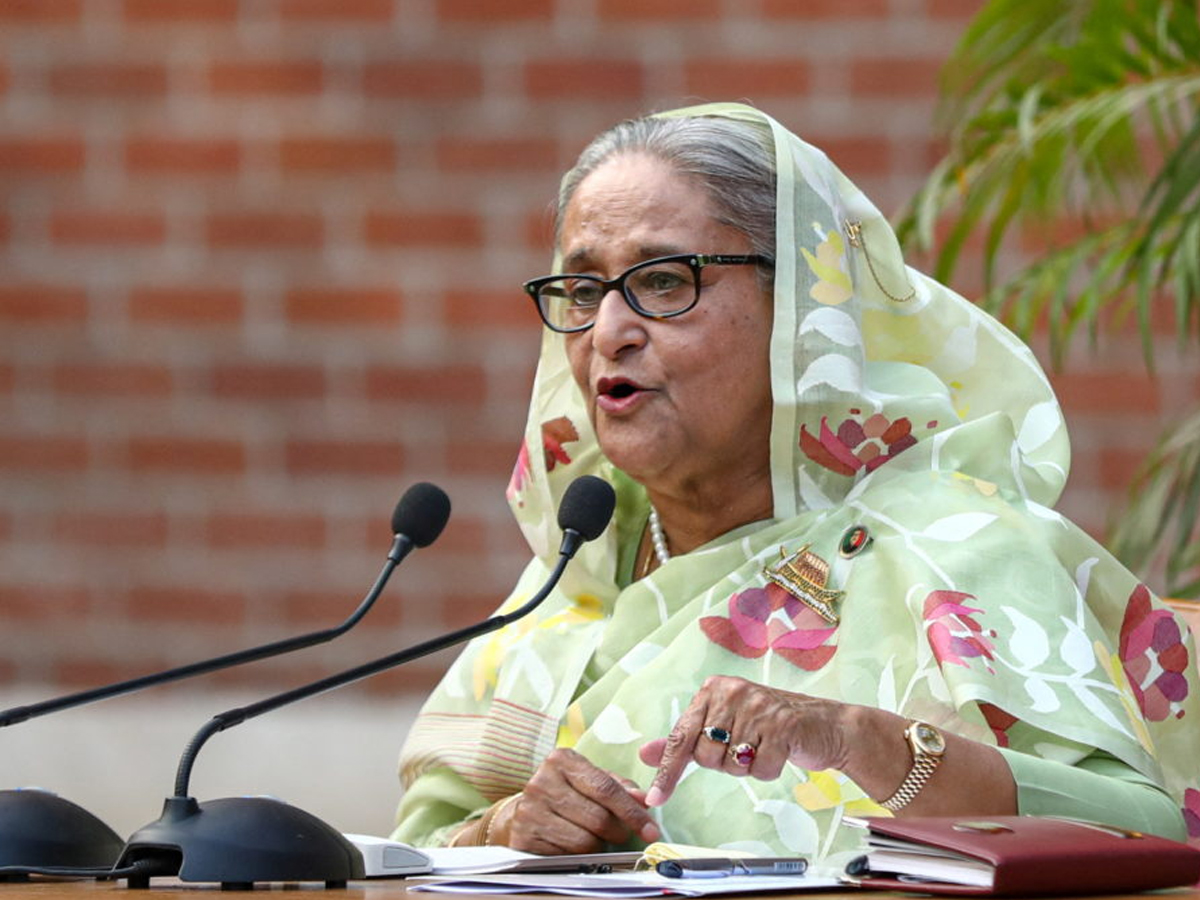
China has avoided taking a firm position on the recent death sentence handed to former Bangladesh Prime Minister Sheikh Hasina. The Chinese government said that the court ruling was an internal matter of Bangladesh and refused to make any additional remarks. The statement came a day after Bangladesh’s International Crimes Tribunal announced the verdict against Hasina for her alleged role in last year’s violent crackdown.
The tribunal sentenced Sheikh Hasina to death in a case linked to “crimes against humanity” during the massive student protests of 2024. The verdict has triggered strong global reactions, even as Hasina continues to live in India after fleeing Bangladesh last year.
China Calls It Bangladesh’s Internal Issue
During a media briefing in Beijing, Chinese Foreign Ministry spokesperson Mao Ning responded briefly when asked about the decision. “It is Bangladesh’s internal affair,” she said, declining to elaborate further.
Mao also expressed Beijing’s broader hope for the country’s future, adding that China wishes to see “solidarity, stability, and development” in Bangladesh. She assured that China will continue to follow its policy of good neighbourliness and friendship with the people of Bangladesh.
Details of Sheikh Hasina’s Death Sentence
The tribunal court in Dhaka delivered its judgment on Monday, holding Sheikh Hasina guilty of overseeing a brutal response to the 2024 student-led uprising. The protests erupted after months of tension, and international human rights bodies reported a severe crackdown across the country.
Alongside Hasina, former Home Minister Asaduzzaman Khan Kamal also received the death sentence. Another accused, former Inspector General of Police Chowdhury Abdullah Al-Mamun, admitted to his role earlier and cooperated with investigators. The court therefore gave him a five-year prison sentence, much lighter than the punishment handed to the others. He was the only accused present in court during the verdict.
Hasina was tried in absentia because she has been living in India since August 2024. She left Bangladesh after massive demonstrations forced her to step down and flee for safety.
According to UN estimates, nearly 1,400 people died between July 15 and August 15 during the violent period of unrest.
UN Reacts to The Verdict
The United Nations welcomed accountability for victims but strongly criticised the use of the death penalty. During the daily press briefing, the spokesperson for UN Secretary-General Antonio Guterres, Stephane Dujarric, addressed the development.
He said the UN chief “fully” supports the view of UN Human Rights High Commissioner Volker Turk that the organisation opposes capital punishment in all cases.
Dujarric noted that while justice for victims is significant, the death penalty remains “regrettable.”
Where Sheikh Hasina Lives Today
Hasina, now 78, has remained in India since fleeing on August 5, 2024. Reports say she has been living under security protection at an undisclosed location. Her political future remains uncertain as the Bangladeshi government proceeds with legal actions against her.
For now, China’s restrained reaction highlights its cautious diplomatic approach, while the UN’s comments underline the international divide over the death penalty.