
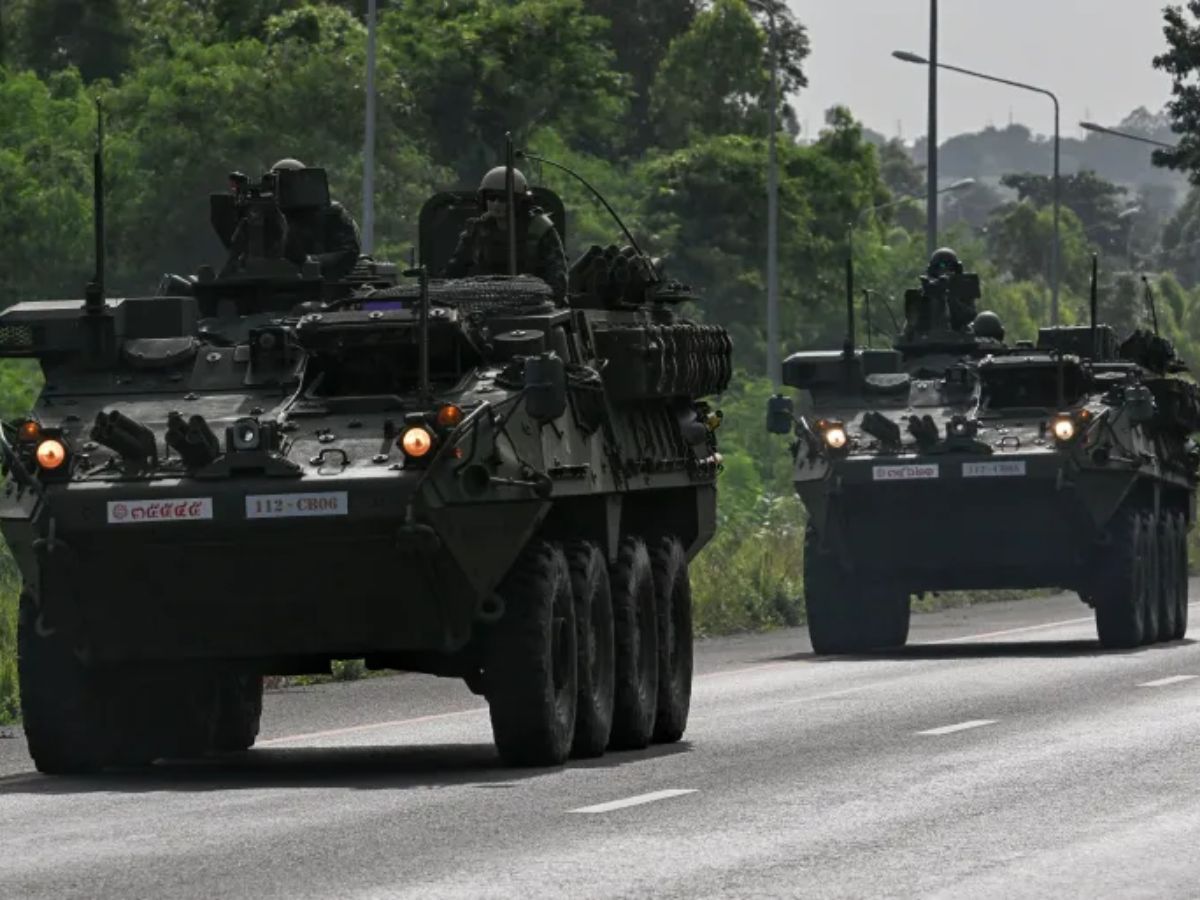
The border truce between Cambodia and Thailand has stopped the guns, but the real battle has just begun. Officials from both countries met in Malaysia this week to iron out the details of a ceasefire, following five days of deadly clashes that killed dozens and displaced over 260,000 people.
Yet, beyond the surface of diplomacy, new tensions are rising—over captured soldiers, propaganda claims, and political posturing in Phnom Penh. While both nations reaffirmed their intent to hold the peace, the talks revealed a deeper power struggle, one that’s being waged just as fiercely as the war that preceded it.
Ceasefire Talks Move to Neutral Ground
Malaysia, as the current ASEAN chair, is hosting the four-day General Border Committee talks. Originally meant to take place in Cambodia, the venue was moved to maintain neutrality. Monday’s meeting was the first formal negotiation since the July 28 truce, which came under pressure from U.S. President Donald Trump. Trump had warned that trade deals with both countries would be suspended if fighting continued. Soon after the ceasefire, Washington slashed import duties on Cambodian and Thai goods from 36% to 19%.
The goal now is to prevent further conflict. Both sides are avoiding discussions on historic land claims and instead focusing on logistics and oversight. An ASEAN monitoring team is expected to emerge from the talks, with observers from the US, China, and Malaysia attending.
ALSO READ: India Slams Trump’s Tariffs, Exposes ‘Western Hypocrisy’ on Russian Trade
Border Tensions Run Deep
Cambodia and Thailand have fought over their shared border for centuries. In 1962, the International Court of Justice (ICJ) handed Cambodia control of the Preah Vihear temple. This inflamed Thai sentiment. After fighting broke out in 2011, the ICJ reaffirmed its decision in 2013. Tensions flared again this May when a Cambodian soldier was shot in a disputed zone. The violence spiralled in July after landmines injured Thai soldiers. Both sides blamed each other for starting the war.
Since the ceasefire, both nations have led foreign diplomats through ruined battle sites. They accuse one another of targeting civilians, using illegal weapons, and breaking humanitarian law. The information war, fought online and in international media, now rivals the battlefield.
POWs Become the New Flashpoint
Cambodia has accused Thailand of torturing its captured soldiers. Two wounded men were sent back last Friday. But Thailand insists the others are prisoners of war and will only be released once the conflict formally ends.
Rear Admiral Surasant Kongsiri said Thailand has invited the ICRC and the UN’s OHCHR to visit the detainees. Cambodia had demanded such access. As of Monday, neither international body confirmed any communication.
Hun Sen’s Return to Military Command Raises Eyebrows
In a surprise move Monday night, Cambodian King Norodom Sihamoni issued a royal decree authorizing former Prime Minister Hun Sen to help lead military and defense affairs alongside his son, Prime Minister Hun Manet. The king rarely intervenes in politics, making this an unusual development.
The decree cited “serious violations” of Cambodia’s territory by Thai forces as justification. However, analysts suggest the real motive was to quash growing international speculation that Hun Sen was overstepping his son. On Facebook, Hun Sen said he had every right to “fight the thieves who invaded my country” and cited his five-star general status.
ALSO READ: Why the Naval BrahMos Is the Game-Changer for the Philippines’ Maritime Defense?
Nationalism as a Political Tool
Behind Cambodia’s rhetoric lies more than anger—it’s a calculated use of nationalism. Hun Sen is leveraging the border war to reassert influence. The royal decree legitimizes his role in military affairs. This may not just be about Thailand but also about reinforcing power domestically. His reappearance sends a message: Cambodia’s defense still runs through him, not just his successor.
The war has become a rallying cry. Cambodia has framed the conflict as a defense of sovereignty, while Thailand remains focused on border control. The prisoner issue and ceasefire oversight may soon get overshadowed by internal political narratives.
Fragile Peace Under Watchful Eyes
While both governments say they want peace, the situation remains delicate. The presence of foreign observers adds pressure. But if political games outweigh diplomacy, the ceasefire could unravel.
The spotlight is now on Thursday’s main session of the border committee. That’s when senior leaders from both sides will face off—this time across a table, not a battlefield.