
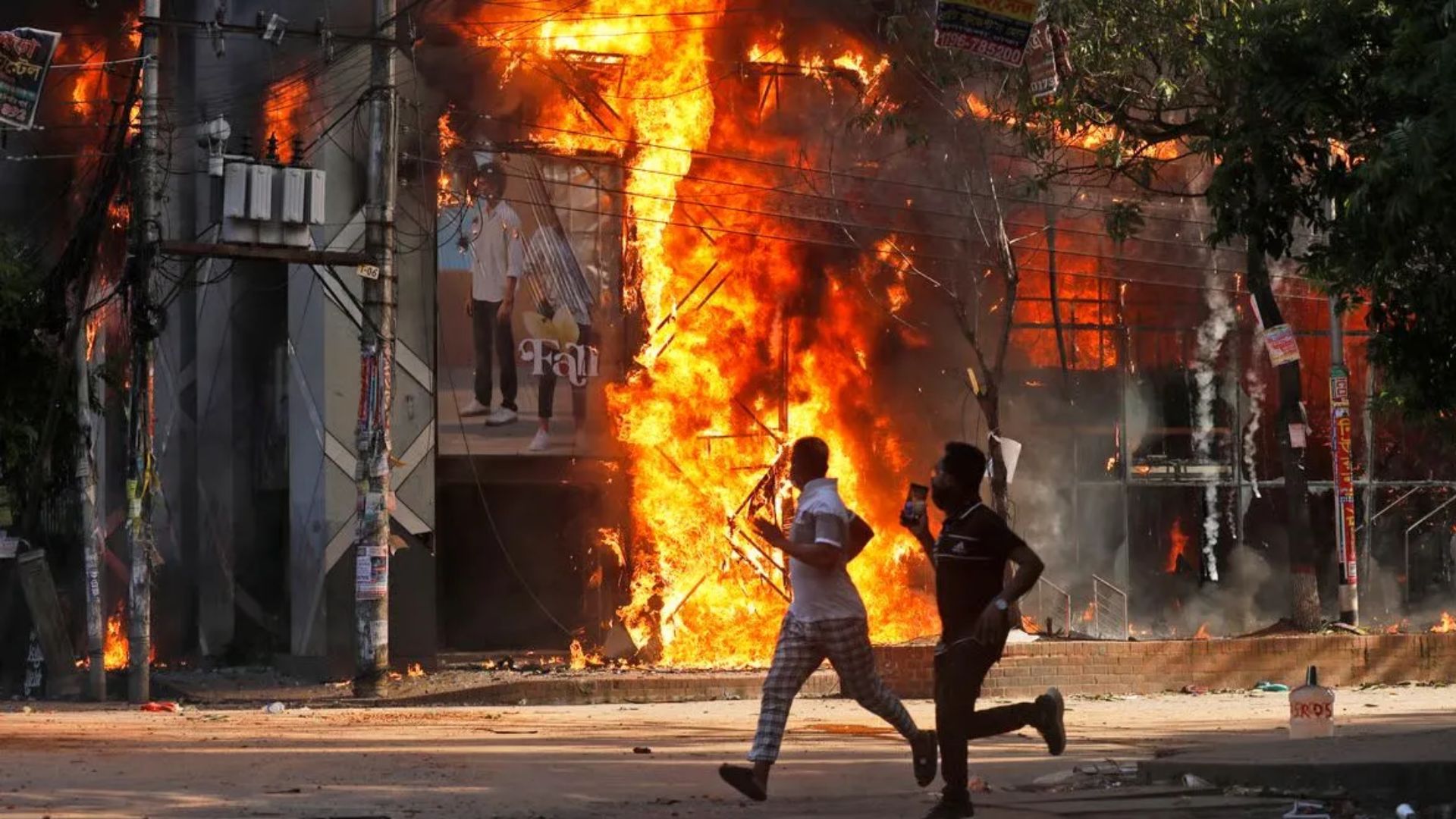
Hundreds of students in Dhaka, Bangladesh, hit the streets on Saturday to protest the horrific lynching of a scrap trader. They accused the interim government of failing to stop rising mob violence, according to PTI.
Scrap Dealer Killed in Public
The victim, Lal Chand Sohag, a trader dealing in scrap materials, was lynched on Wednesday in broad daylight. The attack took place near Mitford Hospital in Old Dhaka. According to the report, the assailants were alleged extortionists.
A disturbing video of the incident quickly spread across social media the following day. It showed Sohag being violently beaten with concrete blocks, and the attackers danced on his body after confirming he was dead.
Police Make Arrests, But Anger Grows
So far, five suspects have been arrested in connection with the brutal killing. But this has done little to calm public outrage.
In response, students from different universities in the capital city held protest rallies on their campuses. Demonstrations were reported at Dhaka University, Jagannath University, and several private universities, including BRAC University, North South University (NSU), East West University, and Eden Mohila College.
Witnesses said the students chanted powerful slogans like, “Who gave you beasts the right to kill people? What is the Interim (government) doing when extortionists are carrying out mayhem?”, demanding accountability from those in power.
Many Named in FIR, BNP Youth Wing Accused
According to Prothom Alo, the official police complaint lists 19 named individuals and mentions 15 to 20 unknown suspects.
Meanwhile, BDNews24 reported that the killing may be linked to members of the youth wing of the Bangladesh Nationalist Party (BNP), led by former Prime Minister Khaleda Zia. The party responded by immediately expelling four individuals allegedly involved in the lynching.
Mob Killings on the Rise After Political Unrest
Mob violence has seen a disturbing rise in Bangladesh since August 2024, when the long-standing government led by Prime Minister Sheikh Hasina and her Awami League party was overthrown after 16 years in power. The abrupt change in leadership created a power vacuum, unleashing widespread political instability and social unrest.
With law enforcement stretched thin and the interim government struggling to maintain order, the country has witnessed a surge in violent mob attacks, public lynchings, and targeted assaults—many of them caught on camera and circulated online.
On July 10, 2025, the Bangladesh Hindu Buddhist Christian Unity Council issued a stark warning. The group reported that between August 4, 2024, and July 2025, there were at least 2,442 incidents of communal violence—averaging nearly seven attacks per day over the course of 330 days.
“Most of these violent incidents happened from August 4 to August 20 last year,” the council stated. This two-week period, immediately following the political upheaval, was marked by chaos, lack of governance, and what human rights groups have described as “targeted violence” against minority communities.
According to the council, the attacks included arson, physical assault, property damage, forced evictions, and harassment based on religious identity. Temples, churches, and monasteries were reportedly vandalized, while several families from minority groups were driven out of their homes in fear.
Despite repeated pleas from civil society groups and international watchdogs, the interim authorities have been slow to respond, further intensifying public frustration.
Rights activists and analysts argue that the collapse of strong central authority has emboldened extremist groups and local criminals who now exploit the political vacuum for personal and ideological gain.
The lack of accountability and delay in justice for many of these incidents have raised concerns that Bangladesh is sliding into a prolonged period of lawlessness and instability—unless firm steps are taken to restore rule of law and rebuild public trust.