
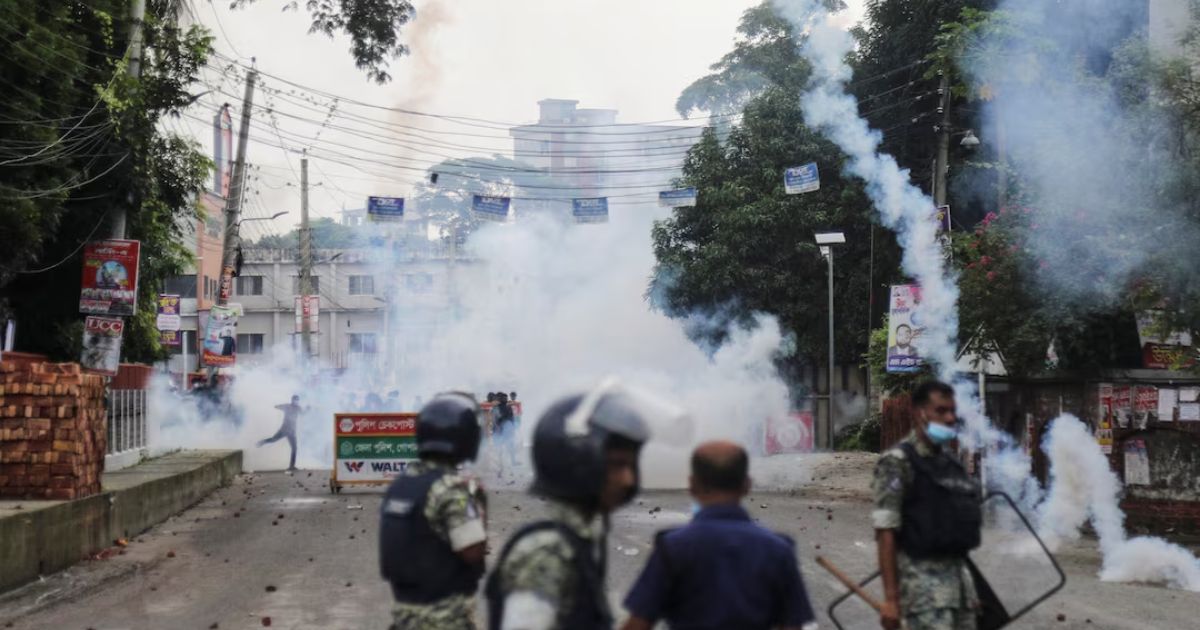
Fatal fighting in Gopalganj, former PM Sheikh Hasina’s home town, has attracted global headlines after genocide and human rights abuses claims were made at the United Nations. On July 16, four people were reported dead and 15 hurt when fighting broke out at an NCP rally. But the death toll is much greater, according to an NGO, the International Crimes Research Foundation (ICRF), which accuses the Bangladesh Army of unleashing deadly force against civilians.
In a letter to the UN Ethical Office, ICRF characterised the violence as a politically motivated assault, heritage desecration, and state-sponsored violence and demanded an international probe and accountability under international law.
Gopalganj Rally Turns Violent
The violence erupted when the NCP held a rally at Gopalganj on July 16. The NCP members’ convoy was attacked, reports indicate, at around 2:30 PM (local time) while returning from a rally. The attack took place near the Gopalganj Government College, where the launch ghat area is located.
Earlier, around 1:30 PM, there were also individual attacks before the start of the rally. The fight intensified on the rally stage in the municipal park area, causing pandemonium throughout the town. The Dhaka Tribune reported that several passersby were targeted by the violence.
ICRF Takes Case to the United Nations
An independent NGO, the International Crimes Research Foundation (ICRF), had written a letter to the UN Ethical Office. It had blamed the NCP for advancing on Gopalganj to desecrate and demolish the grave of Bangladesh’s founder, Sheikh Mujibur Rahman.
The ICRF also observed that NCP is not registered with the Election Commission and does not have any legal status as a political party. The protesters insisted that locals attempted to halt the rally, but the Bangladesh Army backed up the NCP and fired on civilians with live ammunition.
At least 21 individuals were killed, according to the ICRF, many more than the four fatalities reported officially. The organization also complained that security forces detained and tortured at least one civilian in the crackdown.
Army’s Role and Demands for Accountability
The ICRF called for a separate international inquiry into the Gopalganj incident. It called on the United Nations to answer for potential extrajudicial killings and acts of torture committed by the Bangladesh Army. The violence is presented in the letter as an organized attack on a national cultural site and a quelling of civilian opposition.
The NGO charged the military with disobeying international human rights principles, stating that state violence may worsen unchecked without international monitoring.
Government Reacts, Critics Express Worry
A day after the rioting, the Mohammad Yunus-led interim government declared an inquiry committee. The committee, led by Nasimul Ghani, the senior secretary of the Ministry of Home Affairs, will probe the Gopalganj unrest.
However, critics question the neutrality of the probe. With state forces allegedly involved in the violence, many argue that only an international investigation can deliver justice.
As tensions grow and evidence mounts, the Gopalganj violence threatens to become a test case for international action on state-led violence and heritage protection in Bangladesh.