The Thai-Cambodian border, which extends close to 800 kilometers, has been a long-standing site of conflict and hostility. There was new violence in the area recently, causing the deaths of at least 15 individuals, primarily civilians. Reactions from Thai officials have involved the displacement of more than 100,000 citizens from four border provinces around the disputed border.
The Preah Vihear Dispute
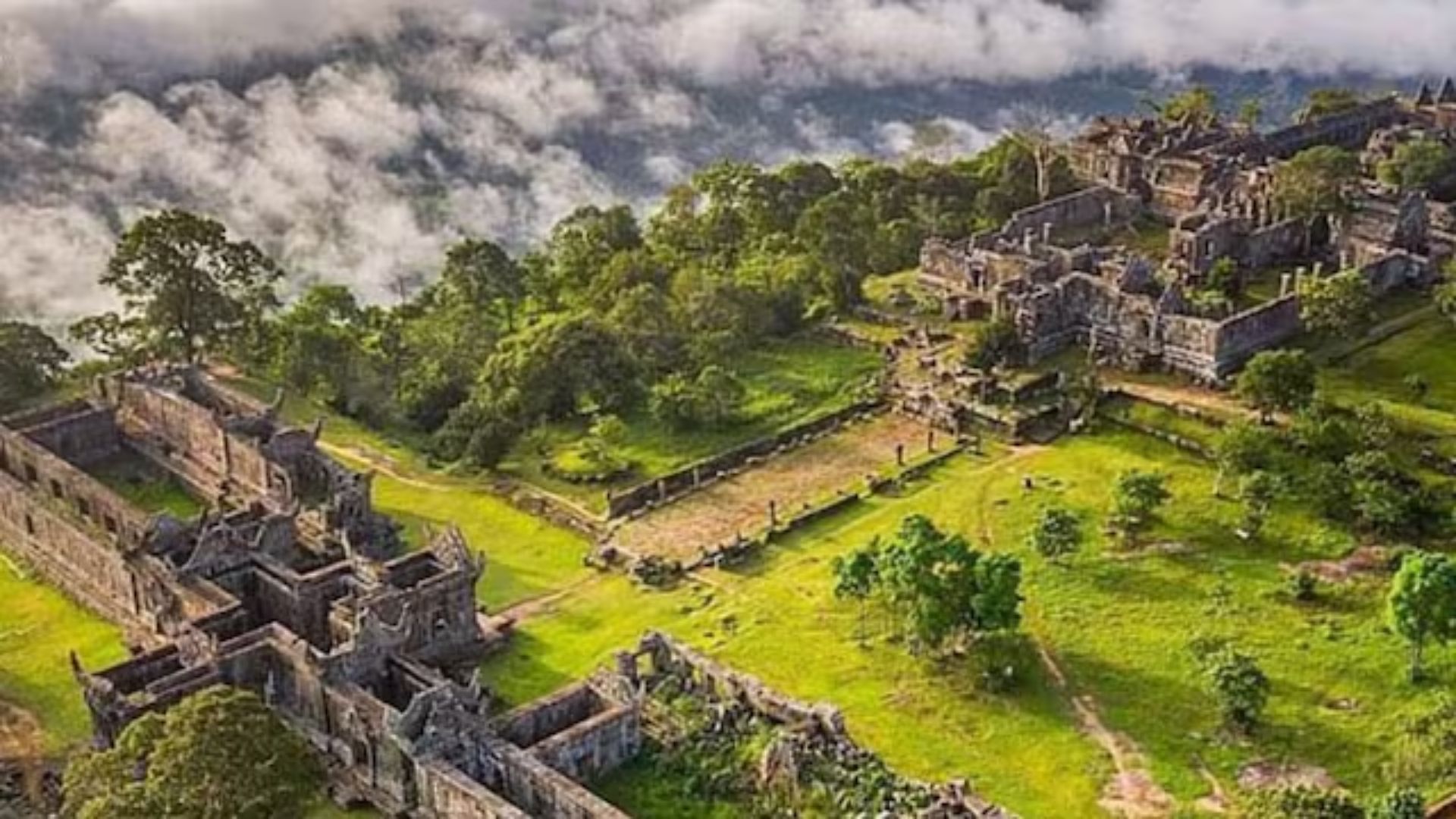
At the center of this ongoing dispute is the Preah Vihear Temple, an 11th-century Hindu temple devoted to Lord Shiva. The temple, which is located on the Dangrek mountain range, exists on the border between Cambodia’s Preah Vihear province and Thailand’s Sisaket province, a region that both countries claim.
The origins of the conflict lie in a 1907 French-drawn map from Cambodia’s colonial period. Cambodia holds this map as the foundation of its claim, with Thailand rejecting its clarity and validity.
Cambodia and Thailand are fighting for ownership of the Preah Vihear Temple, a 1,100-year-old Lord Shiva temple. pic.twitter.com/BY8IJQ48U7
— Garuda (@garudazhwar) July 24, 2025
In 1962, the issue came to the International Court of Justice (ICJ), which concluded in Cambodia’s favor, affirming the temple was within Cambodian land. Still, Thailand argued the contiguous 4.6-square-kilometre area was in dispute.
Tensions reignited in 2008 when UNESCO designated Preah Vihear a World Heritage Site at Cambodia’s request, sparking backlash in Thailand. In 2011, deadly clashes again erupted, killing over a dozen people and displacing thousands.
The case went back to the ICJ, which reaffirmed in 2013 Cambodia’s sovereignty not only over the temple, but also the surrounding territory. The court also suggested a demilitarised zone around the temple, but, as reported by Associated Press, this proposal was never implemented. Thailand eventually refused the ICJ’s jurisdiction, and the matter was left unresolved.
Architectural Significance and India’s Role
Originally built in the 9th century and added in the 11th century by the Khmer Empire, the temple reflects typical Khmer architectural features. It was constructed mostly by King Suryavarman I and later added by King Suryavarman II.
The temple complex consists of the main shrine Prasat Ta Muen Thom, constructed of sandstone and containing a shivalinga, as reported by The Indian Express. Added to it are other buildings such as Prasat Ta Muen, a Buddhist pilgrim rest stop, and Prasat Ta Muen Tot, used as a hospital shrine.
India has been backing the conservation of this ancient site. India and Cambodia entered into an MoU in 2018 to support restoration works of the Lord Shiva temple, a move that reaffirmed mutual cultural heritage.
Pride, Politics, and an Unsettled Border
For Cambodia, the temple is a symbol of Khmer identity and national pride. For Thai nationalists, however, the disputed land is naturally Thai and losing it would be a loss of national face.
In spite of numerous bilateral agreements, confusion persists regarding the exact border along the temple. Troops from both sides are regularly sent into the region, increasing the danger of confrontation. “There have been many meetings and talks,” but tensions still persist owing to the absence of demarcation.
Cultural Sites as Conflict Zones
The Thailand-Cambodia standoff is reflective of a number of other global disputes with origins in history, identity, and heritage:
India-China: Border disputes over Aksai Chin and Arunachal Pradesh continue to reflect colonial maps and national pride.
Israel-Palestine: Historic animosity arises from superimposed historical and religious claims, particularly in Jerusalem.
Russia-Ukraine: Conflict continues to reflect national identity and historical claims within Crimea and Donbas.
Ethiopia-Eritrea: Border problems continue despite better relations.
Georgia-Azerbaijan: The David-Gareja Monastery is a source of tension between the two.
Pakistan-Afghanistan: The British colonial powers’ Durand Line still separates the two countries.
Sudan-South Sudan: The Abyei area is still a controversial region after the independence of South Sudan.