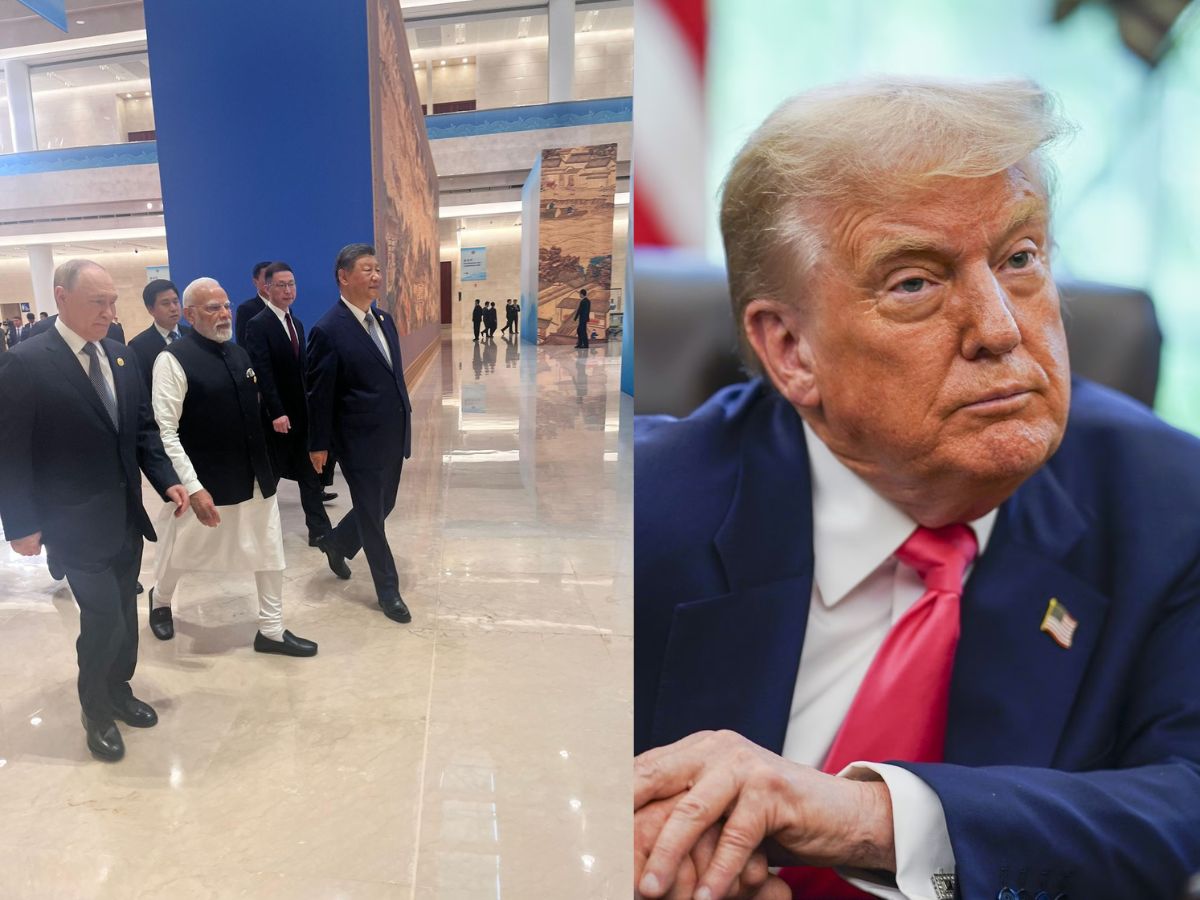
The ongoing Tianjin ongoing SCO meet poses a critical point in global diplomacy, especially in the engagements between Prime Minister Narendra Modi, Russian President Vladimir Putin, and Chinese Premier Xi Jinping. The significance of this gathering lies not only in its willingness to reset regional relationships but also in demonstrating unity against foreign pressures, especially those apparently bullied by U.S. President Donald Trump’s tariffs, amid political intimidation. On the other hand, the political rhetoric unity and coordinated trade-ties aim to benefit SCO countries mutually.
Modi, Xi, and Putin: New Collaboration and New World Order
PM Modi’s arrival in China marks his first trip in seven years, signalling India’s intent to recalibrate its diplomatic engagement with both China and Russia. Bilateral talks between Modi and Xi Jinping described as cordial, with both leaders emphasising mutual trust and the need to strengthen border stability, a notable step after years of friction. PM Modi displays the pleasure at the meet from his X handle, tweeting several pictures of meeting the leaders of SCO nations.
Interactions in Tianjin continue! Exchanging perspectives with President Putin and President Xi during the SCO Summit. pic.twitter.com/K1eKVoHCvv
— Narendra Modi (@narendramodi) September 1, 2025
Putin, on his part, is on a four-day trip to Tianjin, affirming the “best in history” relations with China and emphasising Moscow’s alliance with New Delhi. The trilateral tuning is evident as the leaders deliberate common stakes in multipolarity, diversification of trade, and technology cooperation.
Message to POTUS: United Front Against Tariffs
One of the most dramatic aspects of this summit is expected to be a pushback against Trump’s punitive tariffs, particularly the 50% tariffs imposed on Indian exports and caps resulting from India’s Russian oil imports. As Trump sought to isolate and intimidate, he has inadvertently coaxed Eurasian behemoths closer together. Chinese think tank experts, widely cited in Indian media, call Trump “the biggest kid in the classroom stealing people’s lunch money,” dismissing his actions as “bullying”.
The united front created by Modi, Putin, and Xi looks to challenge American bully attitude. Their collective actions, from boosting ASEAN trade corridors to launching new security initiatives may signal the resistance against tariff-based coercion and aggression rather than submission. Modi’s posts on X further amplifies this message, highlighting how “developing countries must stand together for fair, rule-based trade”.
Implications towards Multipolar World
The outcome of the Tianjin summit can be a classic example of the emergence of the Global South, where new friendships are formed out of compulsion. The SCO’s consolidation puts India, China, and Russia at the centre of an economic group determined to write its own script, unaffected by U.S. pressure. The tone at the summit, as echoed by PM Modi suggests that the days of Western bullying and discriminatory tariffs could be coming to an end as Eurasian unity comes to the fore.
This collective action, in response to real grievances and common desires, is going to haunt Donald Trump’s legacy with rising difficulty for any one power to control international trade by bullying and West-directed unilateral dictatorial regime.