This week, following the shock waves emanating from Venezuela, the world observed chaos in Iran. Once again, Iran is undergoing nationwide turmoil and, as in previous instances, the government has reacted with extreme force. However, this time, the threats of military intervention from the US introduce further risks. Protesters have repeatedly shouted “Death to the Dictator,” directing their ire at Supreme Leader Ali Khamenei, and demanding the dismantling of the theocratic regime. Numerous Iranians have also voiced profound disappointment with President Masoud Pezeshkian, who was elected in 2024 on a reformist agenda but has presided over ongoing internet censorship, shortages of water and electricity, and a severe crackdown on security. In contrast to earlier uprisings, a notable segment of the protesters has advocated for the return of Reza Pahlavi, the exiled crown prince, to head a transitional government. Slogans such as “Neither Gaza nor Lebanon, my life for Iran” underscored the frustration over the billions of dollars allocated to regional proxies (such as Hezbollah and Hamas) while the local populace grapples with malnutrition and poverty.
Demonstrations are taking place in over 150 cities across Iran, aimed at transforming the current theocratic Islamic regime. The Iranian government seems to be conducting one of its most severe crackdowns in over ten years against protests that commenced more than two weeks ago due to economic difficulties, which have now expanded into a widespread movement contesting the nation’s authoritarian clerical leadership.
Iran finds itself at a pivotal juncture, facing considerable internal and external difficulties. Domestically, it is confronted with increasing disparities between the state and society, a struggling economy, severe environmental deterioration, and uncertainty regarding the future of Supreme Leader Ali Khamenei. Additionally, it is dealing with notable setbacks in its attempts to assert power and influence in West Asia, as its non-state allies have been weakened by ongoing conflicts with Israel since 2023. At the same time, the future of its nuclear program remains uncertain following Israeli and US strikes during the June 2025 conflict. Tehran is engulfed in discussions about whether to re-enter negotiations concerning the program or to maintain a firm stance in the face of escalating Western pressure. Crisis Group’s research and advocacy aim to pinpoint both potential flashpoints that could lead to increased instability and avenues to mitigate escalatory risks.
If this was not enough, Trump persistently issues threats of a US attack on Iran. This has resulted in a different type of crisis affecting not only the region but also the entire world. The United Nations Security Council convened an emergency session to address the violent protests occurring in Iran, coinciding with threats from US President Donald Trump regarding potential military intervention in the nation. During the meeting this week, members of the influential 15-member UN body listened to Iran’s deputy UN representative, who cautioned that the Iranian people do not desire confrontation but will react to US aggression, while also accusing Washington of being directly involved in inciting unrest within Iran. The crisis is currently developing as the Islamic State’s influence in the region has been considerably diminished. For neighbouring countries and regional powers, the internal strife within the country offers both new prospects and significant uncertainties. Fast forward to the recent protests that have also impacted Iran, and Gulf nations have remained largely silent. Their prevailing view is that, although the protests are more vigorous than those seen in recent uprisings, they believe the Iranian leadership is likely to endure.
Consequently, once the crisis subsides, Gulf nations may find themselves needing to navigate their relationships with a leadership in Tehran that is relatively weaker—and potentially less predictable.
Even if they are misjudging the situation and the Iranian regime collapses, their main priority is to maintain the stability of their own societies against the chaos that could arise from Iran. However, regarding Trump’s involvement in this entire situation, the dynamics shift.
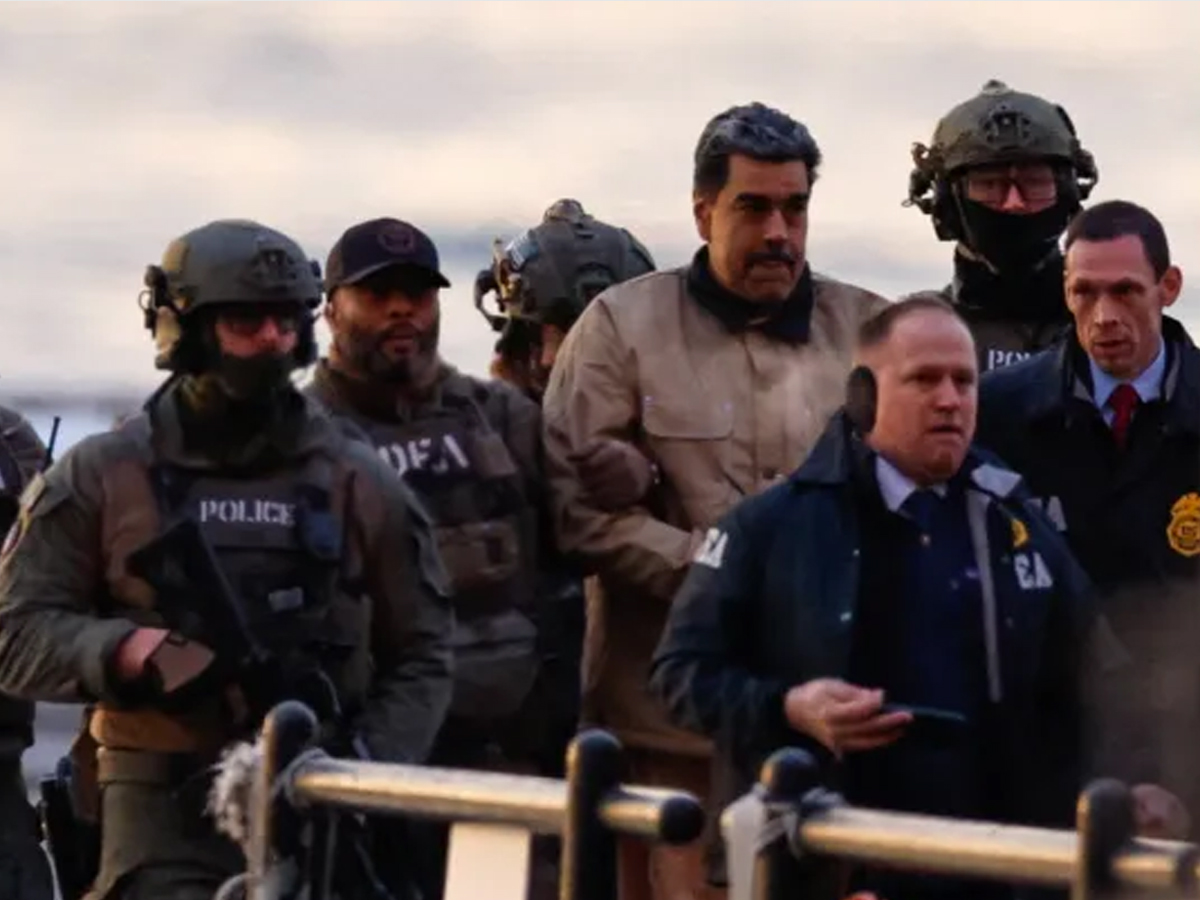
Following the turmoil in Venezuela, Trump is now poised to intervene in Iran; however, the circumstances appear to be markedly different in this case. In Venezuela, the US played a crucial role in undermining the Maduro regime, ultimately leading to the government’s downfall and the capture of Maduro and his wife, aided by insiders.
In contrast, Iran is grappling with a distinct crisis, as citizens from various backgrounds take to the streets to demand a transformation of the conservative Islamic regime that has altered their ethnic values and culture.
Trump’s involvement in this scenario could potentially galvanize Iranians and unite Islamic nations against the US, thereby exacerbating the complexities in West Asia. Furthermore, Trump supplies arms to Sunni Islamic countries by emphasizing the threat posed by Shia Iran. Should he succeed in altering the regime in Iran, it could severely impact his own arms industry and lobbying efforts.
Despite being aware of these intricacies, the question remains: why is Trump willing to initiate another conflict involving the US? Instead, I believe that the US should provide substantial economic incentives in return for significant political reform in Iran. The author is Professor, School of International Studies, JNU