
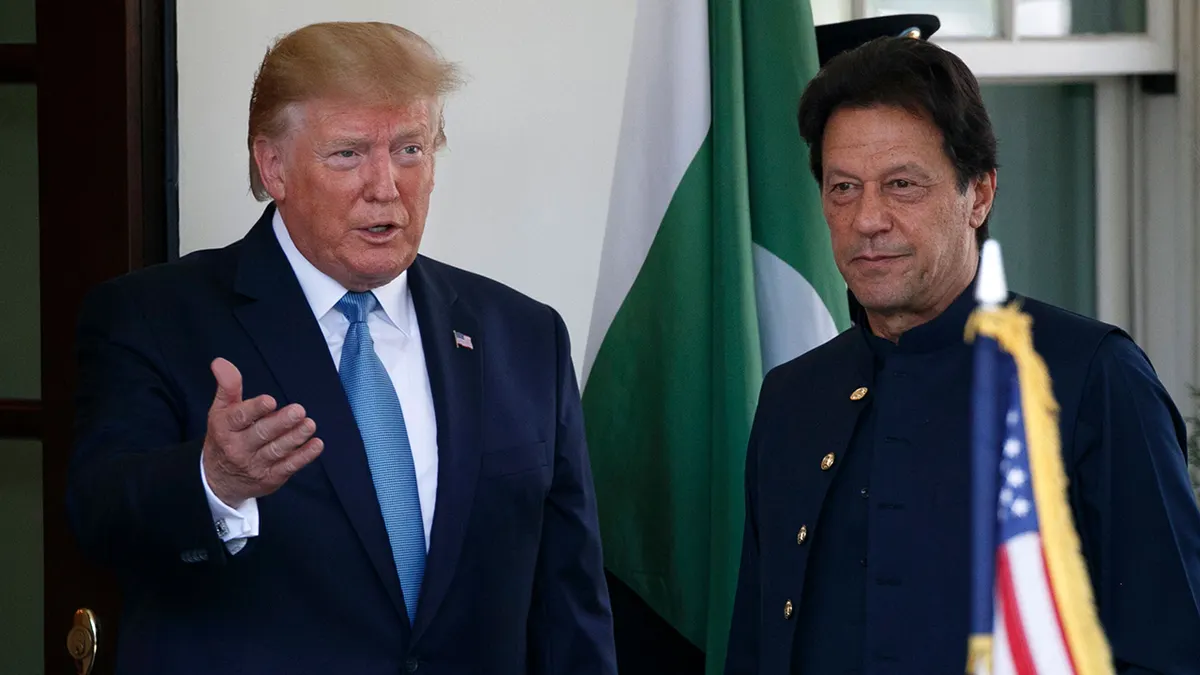
This is indeed a controversial action that leaves the rest of the world discussing while slashing import tariffs on Pakistani goods from 29% to 19%; it was taken by former President Donald Trump of the USA, who agreed with energy exploration in the United States and Pakistan.
US President Donald Trump levied a 19% tariff on Pakistani imports on Friday, one day after declaring a “landmark energy partnership” with Pakistan. The action is a component of Trump’s expansive “Liberation Day” tariff expansion plan, which was unveiled on Thursday through an executive order. The updated tariffs, which cover dozens of countries, are scheduled to take effect in seven days, on August 7, at 12:01am Washington time.
This decision comes during Trump’s ramped-up narrative for 2025, which is interpreted as shifting interests for the United States in South Asia. For Pakistan, it is a boon, hailed as one of the greatest economic opportunities, while, on the other hand, India is becoming more worried over this development, particularly because U.S. tariffs on Indian goods still stand at 25%.
US Pakistan Trade Deal
Trump praised a draft agreement with Pakistan on Tuesday that focuses on the cooperative development of what he described as the nation’s “massive oil reserves.” Declaring the deal “a significant beginning” to what he hoped would be a long-term US-Pakistan energy collaboration, he announced the news on his website, Truth Social.
What enormous oil reserves Trump was referring to in Pakistan are not readily apparent. Additionally, Trump’s announcement contained no reference to tariffs.
“We are in the process of choosing the oil company that will lead this partnership,” Trump added, without naming any specific firms or timeline.
Economic Diplomacy with Strategic Undertones
Trump has once again reduced tariffs on Pakistan and entered an oil partnership focusing on developing domestic energy reserves in Pakistan. Although the proven reserves in the country are smaller, it reflects the larger aims of securing influence in the region by alliances created economically; the effect of the deal is being portrayed as a failure to energy independence and foreign policy for its leadership.
India Under Pressure Amid Unyielding Tariffs
India, meanwhile, has been left out of any immediate tariff relief. Trump justified the continued 25% duties by referencing India’s ongoing defense and energy ties with Russia-an issue that has long tested U.S.-India relations. Indian officials, however, insist that India’s strategic autonomy must be respected and that American economic pressure would never alter its core partnerships. Political leaders in India are calling tariff stance “discriminatory” and asking the government not to bow down under pressure of any kind.
US New Tariffs
Some of those, like the 25% tax on Indian exports that Trump declared on social media this week, were anticipated. Additional fees included 30% for South African items and 20% for Taiwanese goods. A 19% levy was imposed on Thailand and Cambodia, two nations allegedly involved in a last-minute agreement, matching rates levied on Indonesia and the Philippines, two neighbors in the region. There will be a 20% levy on Vietnamese goods.
Additional taxes would apply to goods that were found to be transshipped in order to avoid higher rates. China, Canada, and Mexico are among the economies that fall under different orders and trade paths.
Regional Tensions and Trade Fallout
The different treatments of India and Pakistan would have to complicate the very delicate balance of power in South Asia. These analysts believe this would lessen much of the trust that India and the U.S. built together, especially as New Delhi continues negotiating a broader trade agreement with Washington. The widening gap in tariffs moreover risks emboldening Pakistan’s economic position while hampering India’s competitiveness in the U.S. market.