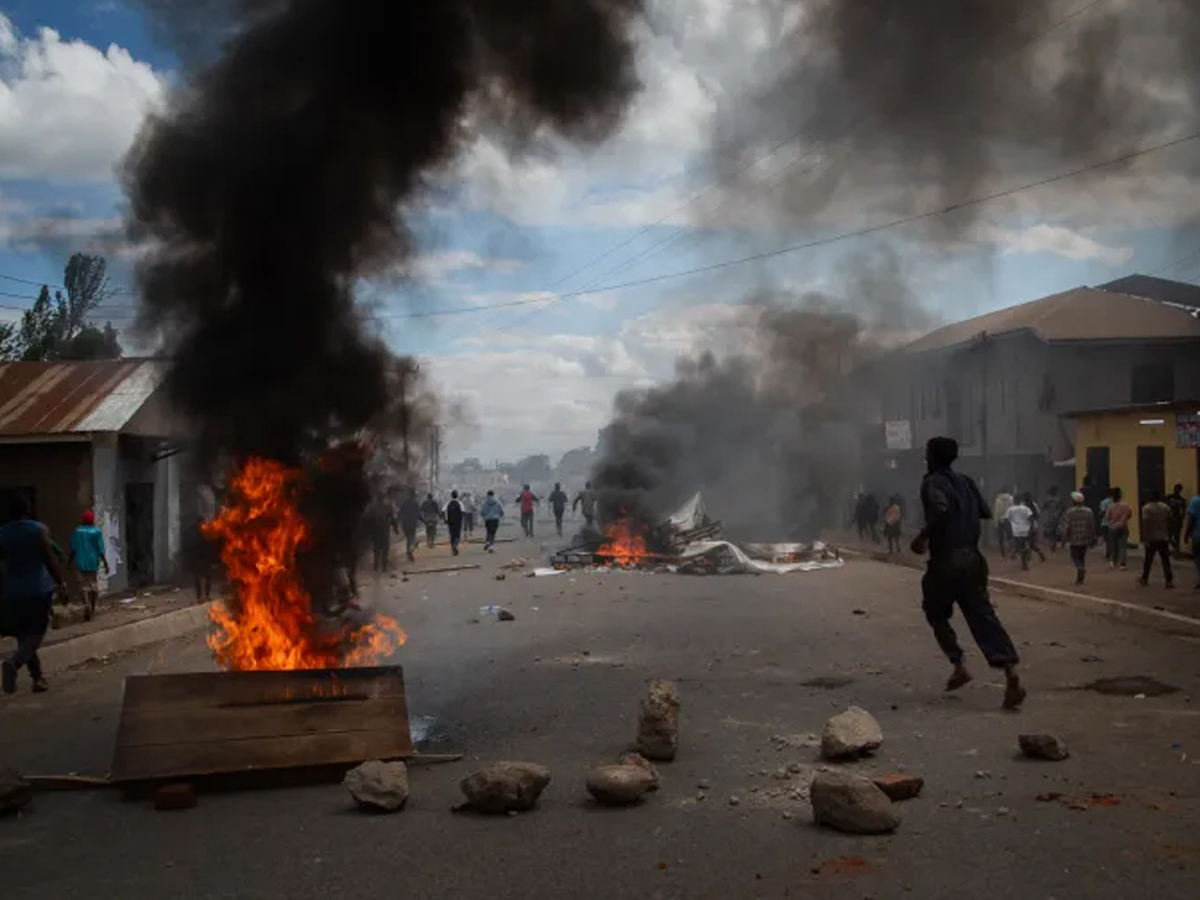
Tanzania has plunged into chaos after widespread protests broke out following the October 29, 2025, general election. The demonstrations erupted over allegations of vote rigging, opposition suppression, and unfair electoral practices. Citizens accused President Samia Suluhu Hassan’s government and the ruling Chama Cha Mapinduzi (CCM) party of manipulating the polls to secure her re-election.
As anger spread, thousands took to the streets in Dar es Salaam and other major cities, accusing the government of crushing democracy. The unrest has since spiraled into one of the worst political crises Tanzania has faced in years, marked by violence, internet shutdowns, and military deployment.
Tanzania Crisis
What began as election day disturbances quickly escalated into a broader political and social crisis. Reports suggest hundreds of protesters may have been killed, the opposition claims as many as around 700 deaths country-wide.
The internet shutdown and heavy security presence spooked businesses, left banks and flights disrupted, and sparked international concern.
Analysts warn that Tanzania now faces a major test of its democratic institutions. Many observers say the ruling party’s dominance and suppression of dissent means the country may be sliding toward authoritarian rule.
Hundreds Killed in Tanzania’s Post-Election Violence
Tanzania is reeling under a wave of deadly violence following its recent election, with the opposition party Chadema claiming that nearly 700 people have been killed in just three days of protests across the country.
According to a report by AFP, Chadema spokesperson John Kitoka stated that around 350 deaths occurred in Dar es Salaam and more than 200 in Mwanza, with the remaining fatalities reported from other parts of the nation.
Kitoka said the unrest broke out after citizens took to the streets to protest alleged election rigging and were met with a brutal crackdown by security forces. A security source, also cited by AFP, confirmed that similar casualty figures were being discussed within the Tanzanian army, indicating the true toll of the violence could be as severe as the opposition claims.
Tanzania Elections In Turmoil
The Tanzania crisis began soon after the October 2025 presidential election results were announced, declaring President Samia Suluhu Hassan the winner for a second term. Opposition parties, led by ACT-Wazalendo and CHADEMA, rejected the outcome, alleging widespread fraud, ballot stuffing, and intimidation of election observers.
Reports emerged of police blocking opposition rallies, detaining journalists, and restricting access to polling stations. Many citizens felt their votes had been stolen, sparking mass demonstrations across the country.
When protests broke out, polling stations in Dar es Salaam and other regions were attacked, curfews were imposed, and the public was largely cut off from communications.
The situation worsened when security forces allegedly used tear gas and live ammunition to disperse crowds, leading to several casualties. The government’s heavy-handed response and refusal to allow an independent election audit turned the protests into a full-blown national crisis.
Tanzania Presidential Election Protests
At the center of the unrest is the figure of Samia Suluhu Hassan, Tanzania’s president, who is seeking a full term after becoming president in 2021. Many say her path was cleared by steps that weakened opposition rivals.
Protesters argue that the strong-arm tactics and barring of challengers made the election meaningless. Human rights groups say at least 200 disappearances of activists have occurred since 2019.
The reaction to the protests has been harsh, as police fired tear gas, used live ammunition, and confronted crowds in multiple cities. Internet access was cut, and government employees were told to work from home.
President Samia Suluhu Hassan
Samia Suluhu Hassan rose to power following the death of President John Magufuli in 2021. Initially, many hoped she would usher in reforms and open up politics in Tanzania. But in recent years, her government has been criticized for reverting to stricter controls on the media, opposition, and civil society.
Her party, CCM, and its dominance are now being challenged by both internal dissent and rising public frustration. With the election crisis, her leadership faces perhaps its toughest challenge yet.
Tanzania’s Current Issues
Beyond the election unrest, Tanzania faces broader structural problems. Voter confidence is low after repeated allegations of electoral misconduct and suppression.
Economic pressures add to the stress, as tourism in Zanzibar and other key sectors has been disrupted, banks and businesses are affected by the unrest, and the shutdown of the internet harmed commerce.
The political climate has also become more dangerous. Activists speak of abductions and murder, while observers warn of a “wave of terror” used to silence dissent.