
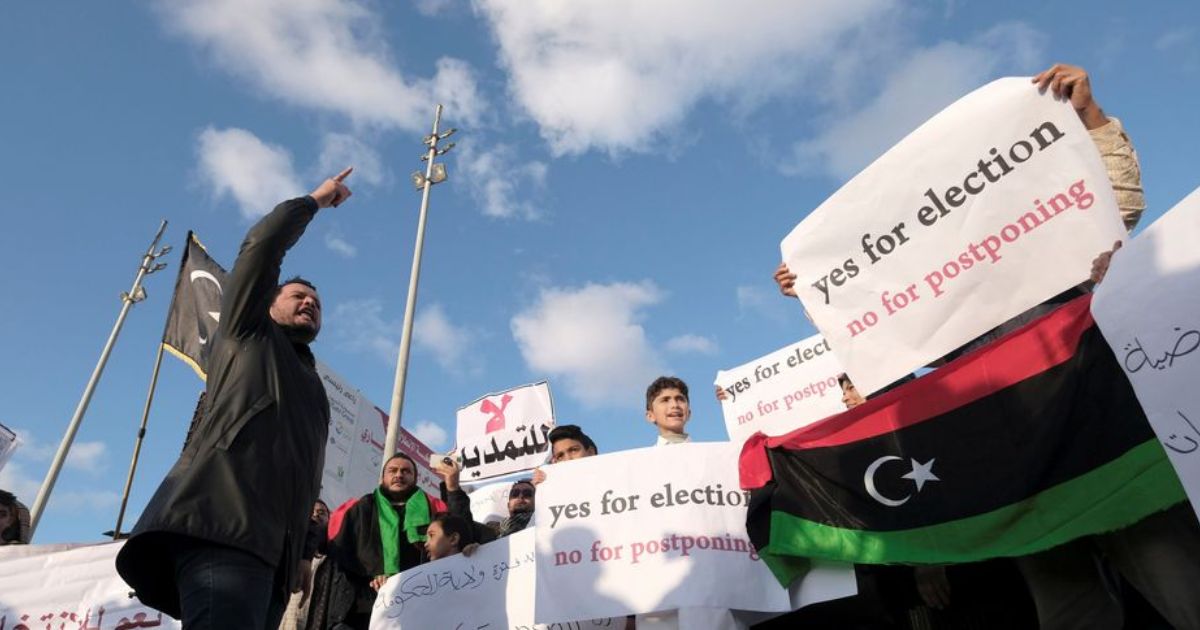
Libyans Head to Polls for Second Phase of Local Elections
Hundreds of thousands of Libyans voted Saturday in the second round of municipal elections, a democracy test in a nation still plagued by division and instability. Voting was held in about 50 municipalities, among them the capital Tripoli, where security was increased after incidents recently. Voters were to cast their ballots at polls that opened at 9 a.m. (0700 GMT) to cater for 380,000 registered citizens.
The elections follow as Libya continues to be divided between the UN-recognized government in Tripoli, headed by Prime Minister Abdulhamid Dbeibah, and the eastern government supported by military leader Khalifa Haftar. “These elections are extremely crucial because they decide who will control funds allocated by the government,” said Esraa Abdelmomen, a mother of three from Tripoli.
Security Challenges and Election Delays
The High National Election Commission (HNEC) was forced to reschedule votes in a number of municipalities as a result of attacks and violations. Arson attacks in Zawiyah and Sahel al-Gharbi last week burned election materials, rescheduling elections there through August 23. Armed men also attacked the HNEC office in Zliten, about 160 kilometers east of Tripoli, injuring people, said the UN Support Mission in Libya (UNSMIL).
UNSMIL denounced the attacks, charging that they undermined Libyans’ democratic dreams and were efforts to disenfranchise voters and impede the electoral process. In spite of these intimidations, there was a strong police presence to safeguard voters and polling places, especially in western areas under Tripoli control.
ALSO READ: Africa Takes On 500-Year-Old Map Bias, Demands True Size Be Seen On Global Stage
A Fragile Path Toward Democracy
Libya’s municipal elections are an extension of attempts to bring stability to the governance since the 2011 NATO-supported uprising that toppled long-time leader Moamer Kadhafi. Libya initially conducted free elections in 2012, then municipal elections in 2013 and legislative elections in 2014, many of which were marred by turmoil and low voter turnout.
To some western towns, they are the first municipal elections since 2014, both a test and a promise of Libya’s democratic transition. It is said that the fact that they could hold them, despite attacks and postponements, is an important step toward the revival of political engagement and local governments after years of turmoil.