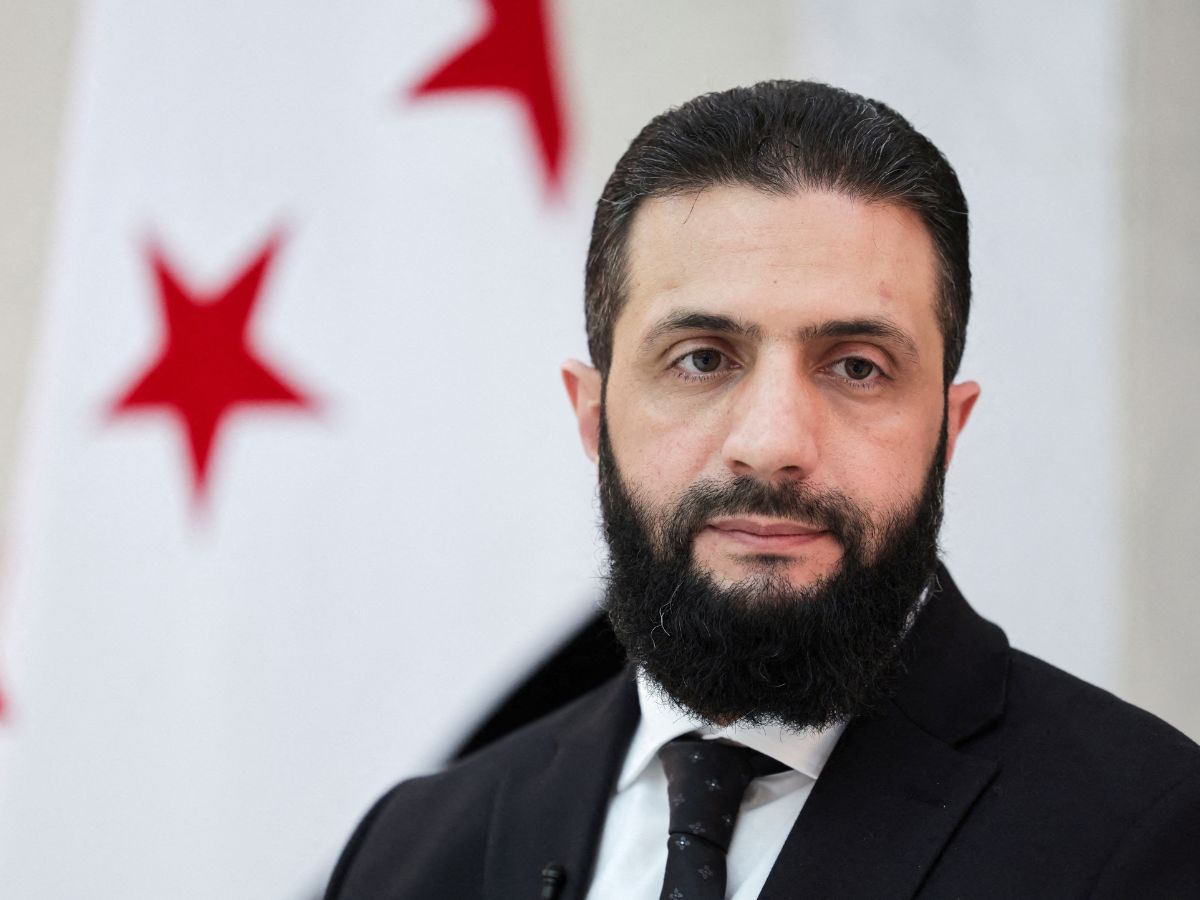
In a moment that marks a dramatic turning point for a war-ravaged nation, Ahmed al-Sharaa addressed the United Nations General Assembly as the President of Syria, the first Syrian leader to do so in nearly six decades. His presence on the world’s most prestigious diplomatic stage is astonishing, given that for years, the world knew him by a different name: Abu Mohammad al-Julani, a former al-Qaeda leader and a US-designated terrorist. One of the most notable and contentious political shifts in recent history has been his transition from terrorist commander to head of state.
Who Was Ahmed al-Sharaa Before He Became President?
Prior to his political rebranding, Ahmed al-Sharaa was a well-known figure in international jihadist circles under the name Abu Mohammad al-Julani. Born in 1982 in Riyadh to Syrian parents, he became involved in extremist movements after the US invasion of Iraq and joined al-Qaeda in Iraq. Because of his role, he was captured by American soldiers in 2006 and held in US custody for five years. Following his release and return to Syria during the Arab Spring, he founded the al-Nusra Front, al-Qaeda’s official branch in Syria, which played a major and brutal role in the country’s devastating civil war.
Also Read: ‘Weapons Decide Who Survives’: Zelensky’s Stark UN Warning on Putin and AI Arms Race
What Was His Pivot Away from Terrorism?
The crucial shift in al-Sharaa’s trajectory began in 2016. In a public split from al-Qaeda’s central command, he rebranded his organisation as Hay’at Tahrir al-Sham (HTS). He claimed to shift focus from global jihad to a “Syrian agenda,” emphasizing local governance over international terror. Alongside this, Abu Mohammad al-Julani rebranded himself as Ahmed al-Sharaa, presenting the image of a pragmatic leader consolidating authority in opposition-held areas. By doing this, he was able to put his history behind him and create a platform that eventually resulted in Bashar al-Assad’s overthrow in December 2024.
How is the West Engaging with This Former Enemy?
Al-Sharaa’s diplomatic charm offensive has been swift and calculated. He attended the UNGA after meeting with US President Donald Trump earlier this year, during which he referred to him as a “young, tough guy.” In New York, he met with US Secretary of State Marco Rubio, renewing his call for Washington to lift sanctions imposed under the Caesar Act.Despite his extremely worrisome past, this collaboration shows that Western powers have pragmatically, if uneasily, accepted al-Sharaa as a vital partner for stability in post-Assad Syria.
What is His Message on the World Stage?
Standing at the UN podium, al-Sharaa framed his presidency as a rebirth for Syria. “This is Syria coming back to the international community after years of suffering and isolation,” he declared, urging for the lifting of crippling economic sanctions. His speech aimed to project an image of a statesman focused on national recovery, a stark contrast to his previous life as an insurgent commander. He is aggressively fulfilling all the requirements to obtain international recognition and obtain the financial assistance that is essential for reconstructing his devastated nation.
Also Read: ‘Anti-ICE’ Ammunition Found After Dallas Detention Center Shooting Leaves Two Dead
What Does His Rise Mean for Syria’s Future?
Ahmed al-Sharaa’s ascent may have ended the Assads’ half-century grip on power, but it opens a Pandora’s box of uncertainty. Can a man once branded al-Qaeda’s face in Syria reinvent himself as a statesman? His UN appearance may be a bold comeback, yet without foreign recognition and domestic stability, his rule risks being defined more by shadows of the past than by promises of the future.