
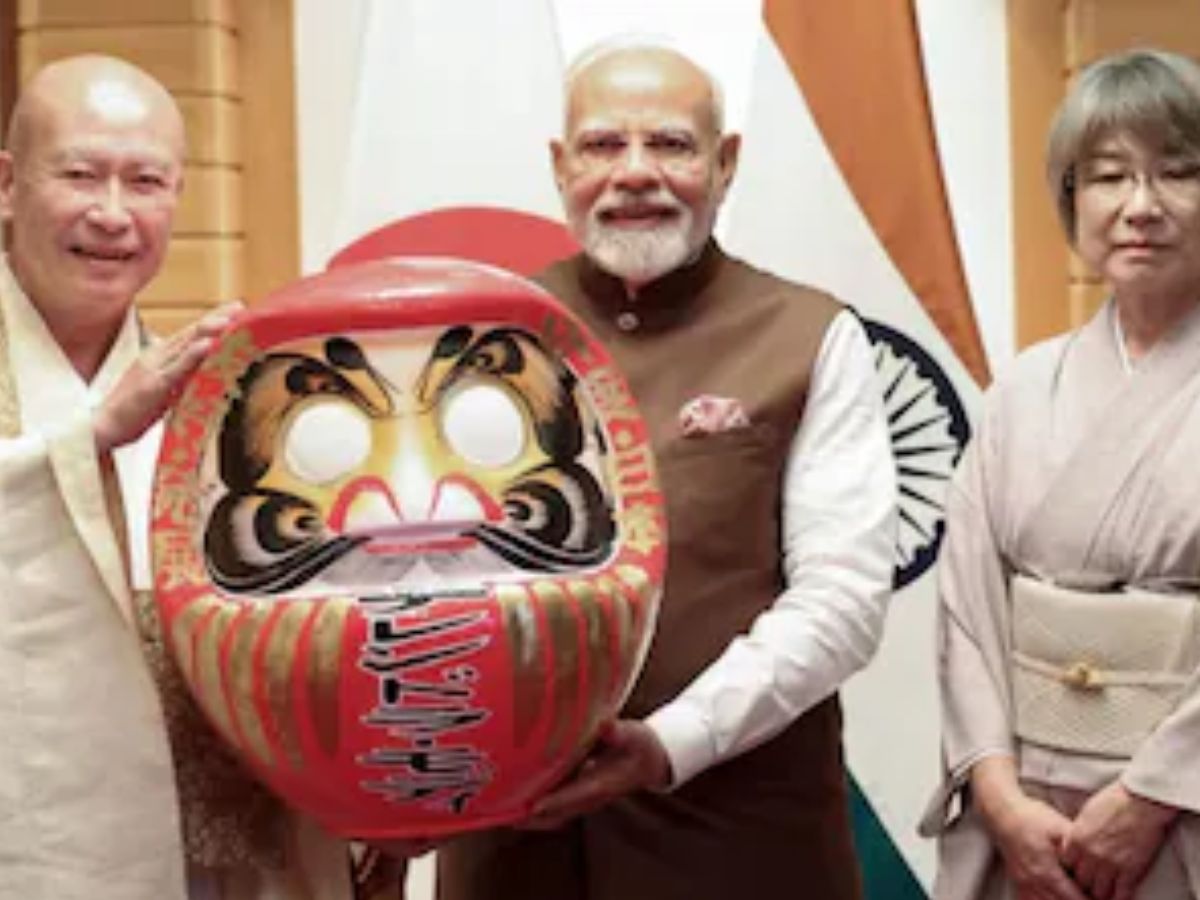
Prime Minister Narendra Modi received a Daruma doll on Friday during his visit to the historic Shorinzan Daruma-ji Temple in Japan. The doll, deeply rooted in Japanese tradition, was presented as a symbol of resilience, perseverance, and good fortune values that strongly reflect the spirit of India-Japan relations.
The gesture carried cultural and diplomatic importance, highlighting the centuries-old connection between the two nations. The Daruma doll, inspired by the Indian monk Bodhidharma, reminds both countries of their shared heritage and the strength that comes from overcoming challenges.
By accepting the doll, Modi not only embraced a Japanese cultural icon, but also reinforced the idea that India and Japan can rise together through determination, trust, and mutual growth.
Diplomatic Visit Amid Trade Tensions
Modi landed in Tokyo for a two-day official visit, which comes against the backdrop of growing friction between New Delhi and Washington over US tariffs on Indian imports. Despite this, Modi highlighted in Tokyo that India and Japan will work together to “shape the Asian century with stability, growth, and prosperity.” He stressed that “Japan’s excellence and India’s scale can create a perfect partnership and mutual growth,” inviting Japanese businesses to invest in India.
The Daruma Doll: A Symbol of Determination
The Daruma doll is a popular Japanese cultural icon, modeled after Bodhidharma, the founder of Zen Buddhism. It is used as a goal-setting charm: one eye is drawn when setting a goal, and the other when the goal is achieved. Its round shape ensures it always rises upright, symbolizing the saying “Fall seven times, stand up eight.”
Also Read: Deals or Diplomacy-Is Modi Turning India into the World’s Balancing Power?
India’s Ancient Connection to Daruma
The story of the Daruma links back to India. Bodhidharma, an Indian monk from Kancheepuram, Tamil Nadu, is revered in Japan as Daruma Daishi. He is believed to have meditated for nine years facing a wall, which explains why the Daruma doll is crafted without limbs or eyes. This spiritual connection underlines the deep-rooted cultural ties between India and Japan, beyond economics and diplomacy.
Strengthening Bilateral Relations
The symbolic exchange reflects not only cultural respect but also strategic partnership. Modi’s Japan trip includes business discussions and investment talks, ahead of his planned visit to China for the SCO Summit, where he will also meet global leaders including Xi Jinping and Vladimir Putin.