
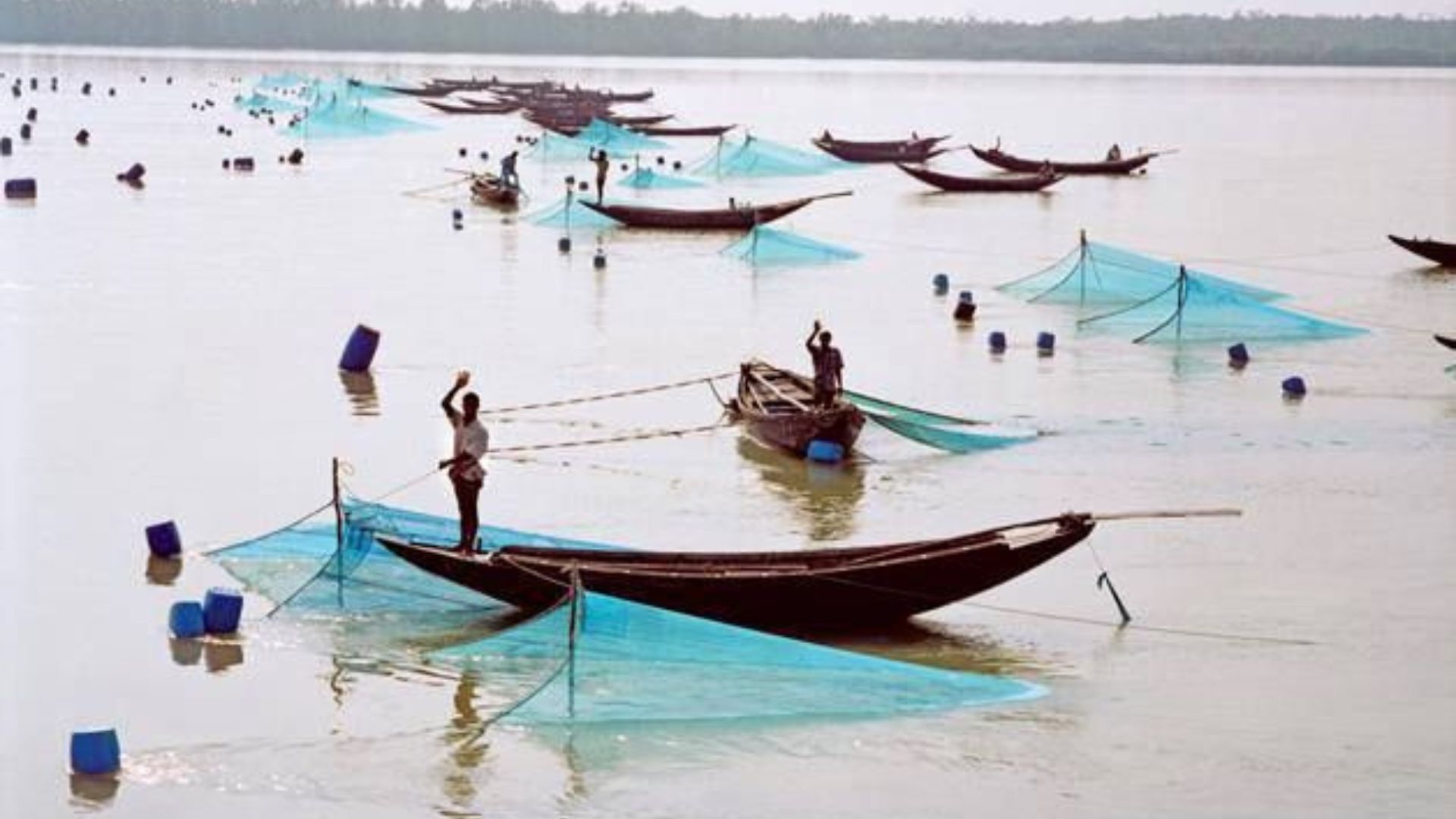
Thirty-four Indian fishermen from West Bengal’s Kakdwip region have been detained by Bangladeshi maritime authorities for allegedly straying across the international maritime boundary. The incident occurred earlier this week near the Mongla port, a critical point along Bangladesh’s southwest coast.
According to reports, the fishermen were aboard two fishing trawlers—FB Jhor and FB Ma Magal Chandi—when they were intercepted on July 14 and 15. They have since been charged with illegal entry and unauthorized fishing in Bangladesh’s territorial waters.
While their precise location of detention remains unclear, Indian officials have confirmed that the Indian High Commission in Dhaka has formally requested consular access to the detained men.
“As soon as we received the information, our mission in Dhaka took up the matter urgently through diplomatic channels,” a government source told Hindustan Times. “Efforts are ongoing to ensure their safe and early return, along with the two seized boats.”
Political and Diplomatic Coordination Underway
The West Bengal government, led by the Trinamool Congress, has also stepped in to assist. To facilitate the return of the fishermen, the majority of whom are thought to be the only providers for their families, state officials are collaborating with the federal government.
A Maritime Reality That Recurs
Such incidents are not uncommon. Every year, Bangladesh, Sri Lanka, and Pakistan frequently arrest dozens of Indian fishermen for unintentionally breaching maritime borders. Outdated or inadequate navigation systems are the main cause of the issue.
It is challenging to determine limits when at sea because the majority of small and medium-sized fishing boats in India do not have GPS or other contemporary nautical charting equipment.
What is the Case?
Mongla Port, where the arrests were made, is Bangladesh’s second-largest seaport after Chittagong. It lies along the Pashur River and is patrolled regularly by the Bangladesh Coast Guard and Navy.
As per the United Nations Convention on the Law of the Sea (UNCLOS), territorial waters extend 12 nautical miles from the coast, but many traditional fishermen operate without exact knowledge of these limits.
What Happens Next?
The Ministry of External Affairs in India is keeping a careful eye on the issue. The expected granting of consular access should soon allow Indian officials to meet with the detainees in person and assess their status.
Formal warnings, penalties, or temporary court custody have typically been the end of such occurrences in the past, followed by diplomatic repatriation; however, timelines might vary depending on local laws and bilateral cooperation.
Eyes on the Sea, Hope on Shore
Back in Kakdwip, anxious families are waiting for updates, clinging to the hope that their loved ones will return home safely. With monsoon fishing already a high-risk livelihood, this incident underscores the need for better maritime awareness, training, and technology support for India’s coastal fishing communities.