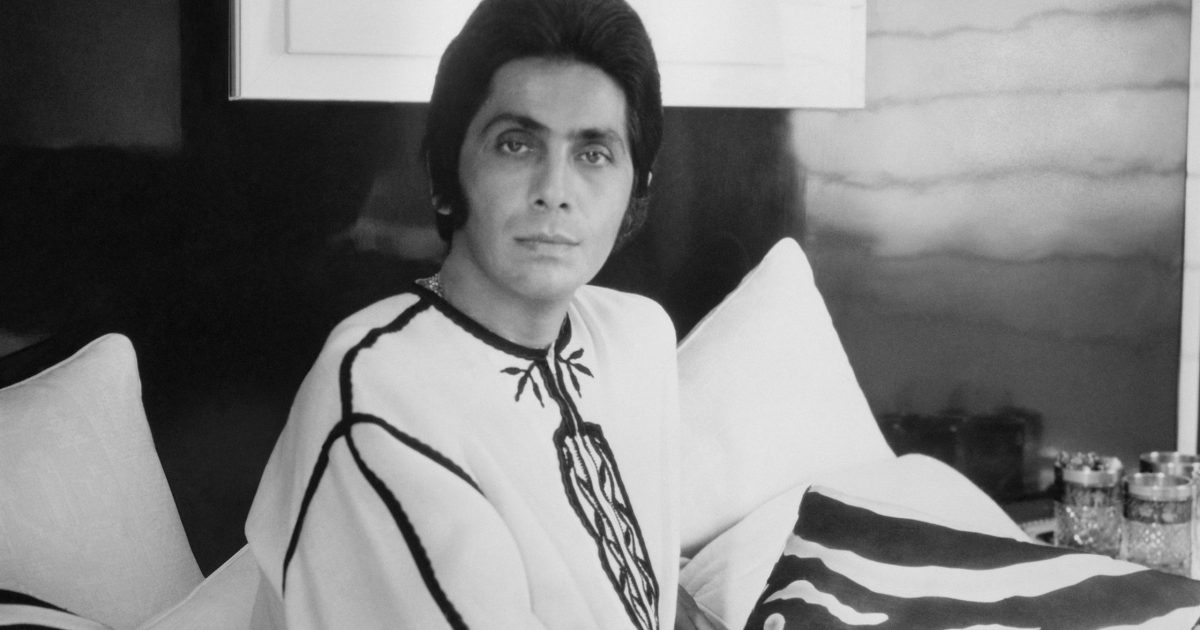
NEW DELHI: Valentino Clemente Ludovico Garavani—known simply as Valentino—was born on May 11, 1932, in Voghera, a quiet town between Milan and Genoa. By the time he died on January 19 at the age of 93, he had become one of fashion’s most enduring architects of beauty, synonymous with glamour, precision, and unapologetic femininity.
“I love beauty—it’s not my fault,” Valentino once said, a line that perfectly captured both his philosophy and his legacy. From the beginning, he saw fashion as a way to enchant women, offering them elegance that was immaculate, luxurious, and emotionally resonant.
He trained in Milan before moving to Paris at 17, studying at the École des Beaux-Arts and the Chambre Syndicale de la Couture. His early career included apprenticeships with Jean Dessès—known for dressing royalty—and later Guy Laroche and Princess Irene Galitzine. Even then, Valentino was sketching fantastical gowns filled with drapery, embroidery, and cinematic flair—dream dresses that would later be realised for his 30th anniversary exhibition in 1992.
In 1959, backed by his father and a family friend, Valentino opened his own fashion house in Rome. Around the same time, he met Giancarlo Giammetti, who would become his lifelong partner in love and business. Their meeting was chance, their bond immediate. They spoke French to each other from the start—a habit that lasted decades.
Success was not instant. Early financial troubles forced them to move salons, but Valentino’s talent soon drew attention. His breakthrough came when Elizabeth Taylor wore one of his designs to the premiere of Spartacus. Vogue followed, as did Jacqueline Kennedy Onassis, whose loyalty helped cement his international reputation.
Throughout the 1960s, Valentino defined a visual language of modern glamour—animal prints, dramatic evening coats, sculptural silhouettes, and, above all, red. His signature “Valentino red” became a declaration: bold, sensual, unforgettable.
As his fame grew, so did the worlds he built around himself. His Roman home on the Appian Way, decorated by Renzo Mongiardino, was a temple to beauty—filled with antiques, lavish fabrics, flowers, and art by Fernando Botero. His couture ateliers near the Spanish Steps buzzed with hundreds of artisans, quietly transforming imagination into craft.
Valentino’s shows were theatrical, ending with the designer stepping out to applause, fingers clapping against palms in triumph. Beauty, for him, was never accidental—it was disciplined, deliberate, and sacred.
His homes—from Capri to New York, and most notably the Château de Wideville near Paris—reflected the same devotion. Surrounded by exquisite gardens and interiors designed with Henri Samuel, Valentino lived exactly as he designed: with intention, drama, and grace.
Near the end of his career, when told that he had created beauty, Valentino wept. “It is beauty,” he said simply.
And that, ultimately, is his legacy.