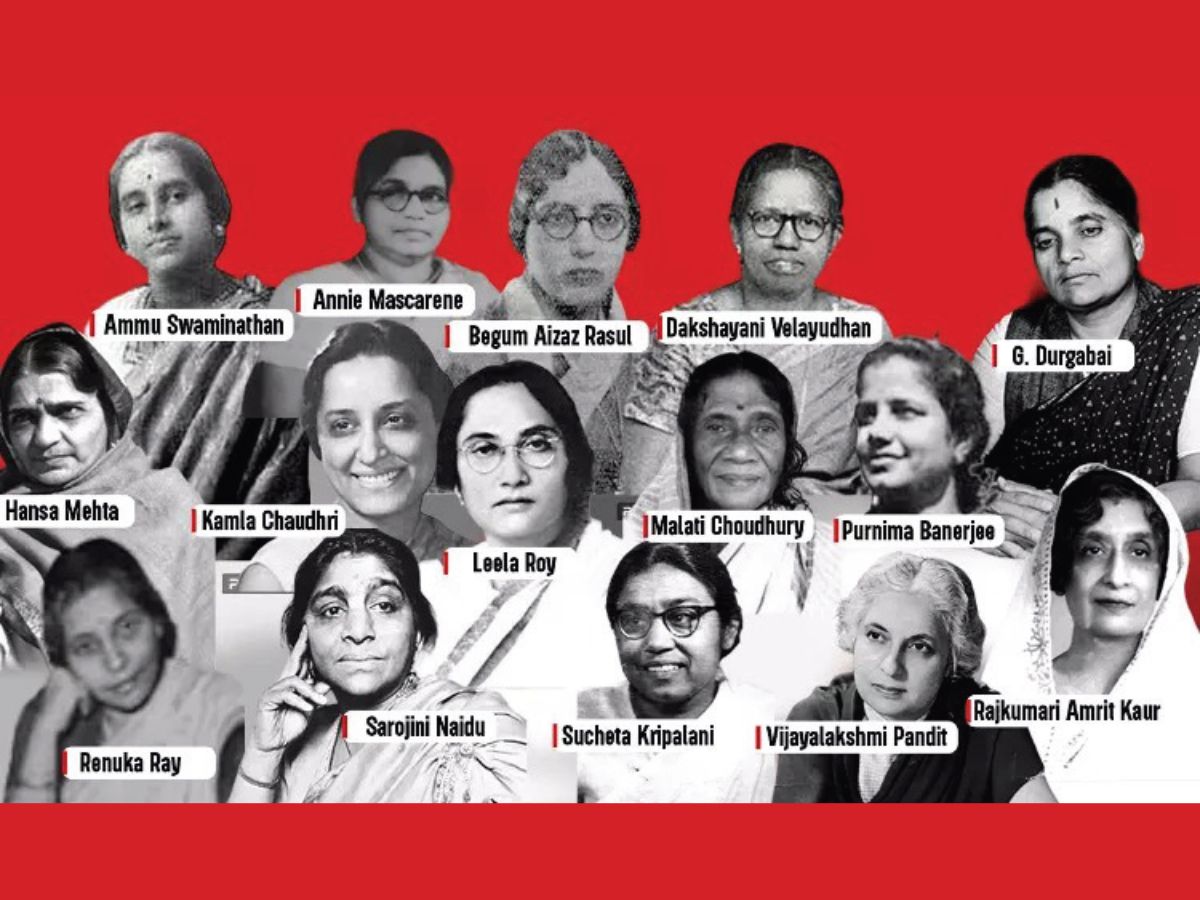
Between 1946 and 1950, fifteen remarkable women played a pivotal role in drafting India’s Constitution, leaving a lasting impact on the nation’s democratic foundations. These visionaries, including Hansa Jivraj Mehta, Rajkumari Amrit Kaur, and Dakshayani Velayudhan, championed fundamental rights, gender equality, and social justice, ensuring the Constitution was inclusive and forward-looking. Their contributions also influenced debates on the Uniform Civil Code, legal reforms, and women’s rights.
Voices for Equality and Justice
Ammu Swaminathan focused on fundamental rights and the powers of the Supreme Court, while Dakshayani Velayudhan, the only Dalit woman in the Constituent Assembly, tirelessly advocated for the rights of marginalized communities. Begum Aizaz Rasul, the sole Muslim woman, ensured minority perspectives were represented in critical discussions. Durgabai Deshmukh was instrumental in legal and judiciary reforms, and Hansa Jivraj Mehta emerged as a key champion of gender equality, contributing significantly to drafting the Fundamental Rights. Kamla Chaudhry, representing the United Provinces, pushed for broader social justice measures. Leela Roy emphasized women’s empowerment, while Malati Choudhury applied her civil rights experience to ensure progressive policies.
Championing Public Welfare and Civic Rights
Purnima Banerjee advocated for rural development and equality, and Rajkumari Amrit Kaur focused on public health reforms and equal opportunity. Renuka Ray worked on women’s rights and inheritance laws, while Sarojini Naidu, a celebrated freedom fighter and poet, reinforced equality and civic rights. Sucheta Kriplani promoted labor rights and civic improvements, and Vijaya Lakshmi Pandit, a diplomat, brought international perspectives to the Assembly. Annie Mascarene championed the rights of ordinary citizens, emphasizing the Constitution’s human dimension.
Legacy of Leadership and Vision
The contributions of these fifteen women, particularly those from the United Provinces, were crucial in shaping an inclusive, progressive Constitution. Through debates, committee work, and advocacy, they ensured gender equality, social justice, and minority rights were enshrined in India’s foundational document. Their dedication reminds us that the Constitution is not just a legal framework but a reflection of the values these women passionately upheld, making India a truly democratic and equitable republic.