
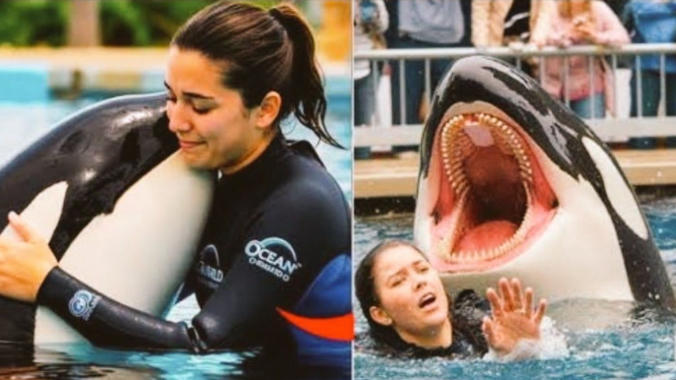
A shocking video circulated on TikTok and Facebook claimed to show a marine trainer named Jessica Radcliffe being attacked and killed by an orca — a species often called “killer whales.” The clip, allegedly filmed during a live show at a marine park, quickly went viral, alarming viewers across the globe.
However, fact-checking investigations revealed that the story was entirely false. No official records, news reports, or credible sources confirmed that Jessica Radcliffe even exists, let alone that such an attack occurred.
AI-Generated Misinformation Exposed
Experts quoted by IB Times concluded that the video was AI-generated, underscoring how easily misinformation can spread online. Once false content gains momentum, debunking it becomes difficult, leaving many people misled before the truth emerges.
The Power and Presence of Orcas
Adult orcas are among the largest predators in the ocean. Male orcas can grow 9–10 metres long and weigh more than 5 tonnes, according to TOI. They have tall dorsal fins, sometimes reaching nearly 2 metres, which make them easy to spot in the water. Despite their massive size, orcas are swift and agile swimmers capable of covering vast distances across the open seas.
Slow Reproduction Rates
Orcas reproduce at a remarkably slow pace. Females usually give birth starting in their early teens, but each pregnancy lasts around 17 months — one of the longest gestation periods in the marine world. Calves are born only every few years, meaning that orca populations take a long time to recover if numbers drop.
Global Travellers of the Ocean
Orcas live in oceans across the globe — from icy polar waters to warm tropical seas. Some pods stay in one place year-round, while others travel thousands of kilometres, following the movements of prey or seasonal changes. Because they roam so widely, orcas serve as important indicators of the health of marine ecosystems.
Diverse Diets and Intelligent Hunting
Orcas adapt their diets depending on their habitat. Some hunt fish like salmon, while others target seals, dolphins, or even other whales. They are known for their intelligence and teamwork, often using coordinated hunting strategies such as wave-hunting or synchronized attacks. These skills are passed down through generations, representing a rare form of animal culture.
Challenges in a Changing Ocean
Despite their status as apex predators, orcas face serious threats. Noise pollution from ships and underwater construction disrupts their ability to communicate and hunt. Overfishing reduces their food supply, and toxic pollutants can build up in their bodies, harming their health. These pressures highlight the vulnerability of even the ocean’s most powerful hunters.