
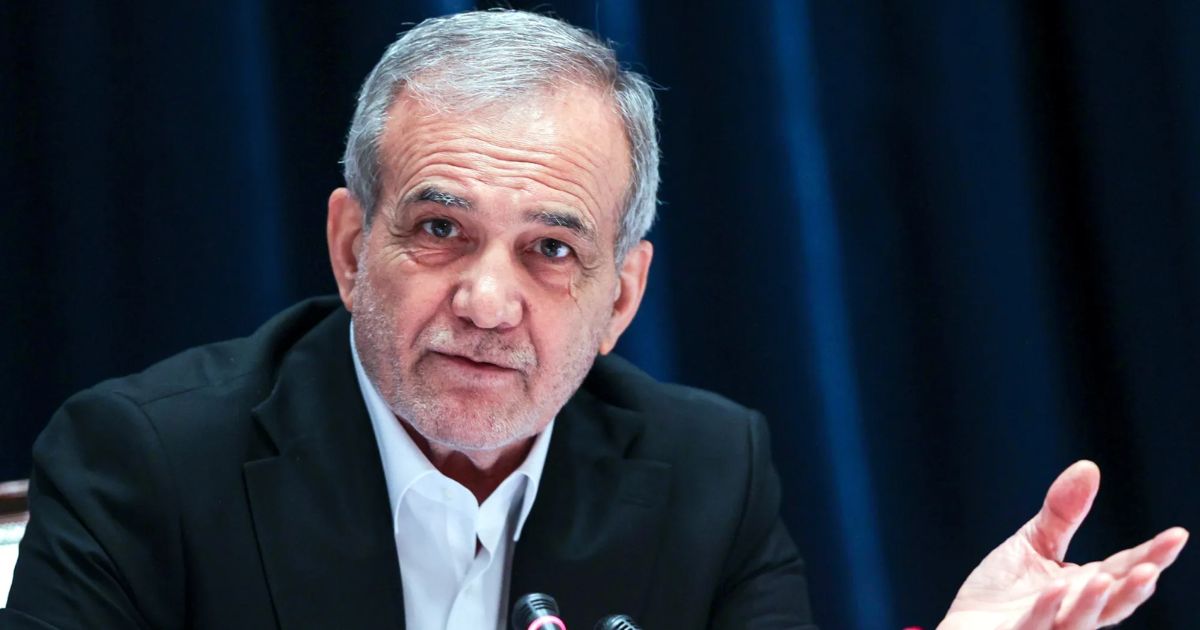
Iranian President Masoud Pezeshkian sustained a minor leg injury during an Israeli airstrike on June 16, targeting a high-level security meeting in western Tehran. The strike, which hit a building in the Shahrak-e Gharb neighbourhood, reportedly followed the blueprint of a prior Israeli plan to assassinate Hezbollah leader Hassan Nasrallah.
According to Iran’s IRGC-affiliated Fars News Agency, the attack aimed to eliminate Iran’s top leadership in one swift move. While the attack injured individuals, including Pezeshkian, the targeted officials were not killed and escaped through a pre-installed emergency hatch. The precision of the strike has now necessitated an investigation within for a potential insider leak.
Israeli Missiles Target Supreme Security Meeting
The Israeli missiles hit a building where Iran’s Supreme National Security Council was holding a session. The session involved leading figures like Parliament Speaker Mohammad Bagher Ghalibaf, Judiciary Chief Gholam-Hossein Mohseni Ejei, and other leading security commanders.
The Israeli forces fired six precision missiles, directly targeting the entry and exit of the building to enclose the officials inside and hinder any escape, replicating moves once planned for Nasrallah’s assassination in Beirut.
Iran Emergency Hatch Rescues Top Leaders
The explosion severed electricity to the floor where the officials were. Despite the darkness and pandemonium, the officials were evacuated via a pre-mounted emergency hatch. President Masoud Pezeshkian and a few others were slightly injured in the evacuation process.
Iranian authorities now suspect that the attackers possessed advanced information regarding the time and location of the meeting and have initiated an investigation into an alleged infiltration or leak.
Pezeshkian Admits Israel Attempted to Kill Him
After the strike, President Masoud Pezeshkian admitted that Israel had attempted to assassinate him. In a conversation with Tucker Carlson, he declared, “They did try, yes… They acted accordingly, but they failed.”
His remark supported that the Israeli attack was not a coincidental one, but a focused attempt on his life and that of other senior officials.
Israeli Strikes Kill Key Iranian Commanders
This missile attack was just one of a wider Israeli campaign during the 12-day war, where several of the top Iranian military commanders were killed. They included IRGC Commander Hossein Salami, Iranian Armed Forces Chief Mohammad Bagheri, and IRGC Air Force Commander Amir Ali Hajizadeh.
Israel also killed several other high-ranking officers from the IRGC’s air force branch. These assassinations have undermined Iran’s command structure within its armed forces and opened up gaping security vulnerabilities.
Khamenei Was Also a Targeted For Assassination
It has also been reported that Israel had intended to kill Iran’s Supreme Leader, Ayatollah Ali Khamenei, in the same conflict. Israeli officials allegedly never got the right timing to execute the operation. The plan was kept on standby during the 12-day offensive.
Shadow War Climbs to the Top of Iran’s Leadership
The Pezeshkian attack is a significant escalation of the shadow war between Iran and Israel. With the Israeli army now showing its ability to attack deep within the Iranian capital, and Iran’s inner circle no longer safe, regional conflict has entered much more treacherous times.
Tehran now has to deal with not just the threats from outside but also the threat of betrayal from within, as Israel indicates that no target is too high-profile.