
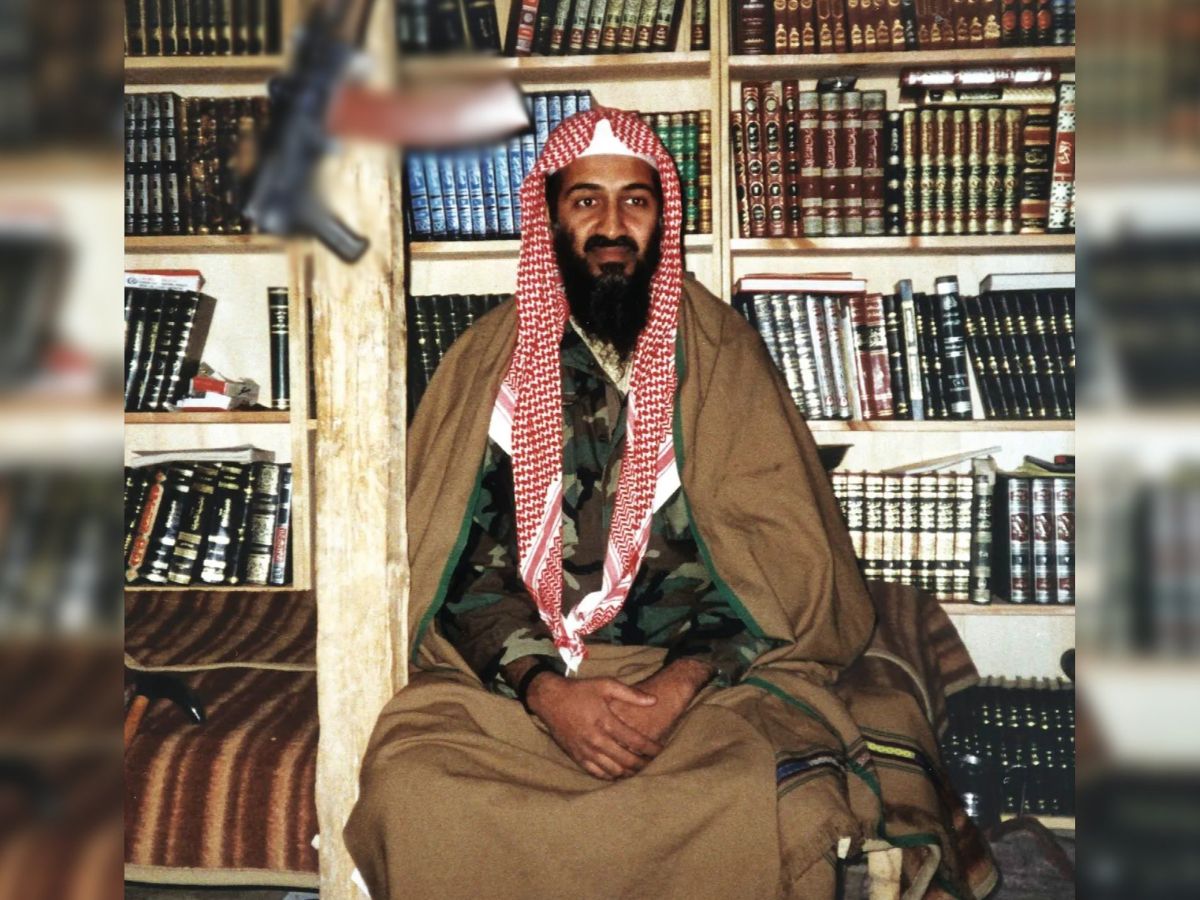
When U.S. Navy SEALs raided Osama bin Laden’s compound in Abbottabad, Pakistan, on May 2, 2011, ending the life of the al-Qaeda leader behind the 9/11 attacks, the global spotlight shifted not only to him but also to his family particularly his wives. Khairiah Sabar, Siham Saber, and Amal Ahmed Abdel-Fatah al-Sada emerged as key figures in a tale of secrecy, interrogation, and geopolitical complexity.
Who Is Khairiah Sabar?
Khairiah Sabar, identified as “Um Hamza” or “Mother of Hamza,” is one of Osama bin Laden’s three wives. She is of Saudi origin and was residing with him in Abbottabad, Pakistan, at the time of his death. Their son, Hamza bin Laden, has been reported to have married the daughter of Mohammed Atta, the lead hijacker in the 9/11 attacks. Moreover his other wives Siham Saber and Amal al-Sada lived in relative isolation in Abbottabad, away from the public eye, until the shocking raid in 2011.
Khairiah Sabar, one of Osama bin Laden’s three wives explained that along with Siham Saber and Amal Ahmed Abdel-Fatah al-Sada, her life changed forever on May 2, 2011, when U.S. Navy SEALs raided their home in Abbottabad, Pakistan. Osama bin Laden, the founder of al-Qaeda and the mastermind behind the 9/11 attacks, was killed in that operation. From that moment, uncertainty and fear became part of their daily life.
Arrest and Interrogation
After bin Laden was killed, Pakistani authorities promptly arrested the three wives and held them at a facility in Rawalpindi, near Islamabad. They were placed under the supervision of Pakistan’s Inter-Services Intelligence (ISI), which carried out extensive interrogations.
Both Pakistani and U.S. intelligence agencies questioned them extensively to investigate whether they had any involvement in bin Laden’s terrorist operations or ties to other al-Qaeda members. Reports indicated that the wives maintained a hostile attitude throughout the interrogation process. Despite these efforts, no evidence was found linking them to any crimes, and they were never formally charged.
Release and Life Thereafter
Approximately seven months later, the Pakistani government quietly released all three women. Two of the Saudi-born wives returned to Saudi Arabia, while Amal al-Sada, the Yemeni wife, reportedly relocated to Qatar.
Today, their precise locations remain unknown. It is widely believed that they continue to live in anonymity, deliberately distancing themselves from the infamy of their past. Only a few glimpses of their lives have emerged through scattered reports and occasional interviews, keeping their personal stories largely concealed from public view.
International Controversy
The way Pakistan handled the situation drew widespread attention and provoked controversy. Many observers, including political analysts and human rights advocates, criticized the lack of transparency in the case. Some speculated that the absence of formal charges or detailed public explanations could imply deeper complicity or negligence in sheltering Osama bin Laden for years.
Despite political figures asserting that the women were merely suspects and never implicated in any crimes, public opinion remained doubtful, especially given Pakistan’s complex relationship with militant groups in the region.
A Life of Silence
It is reported that the wives and children of Osama bin Laden now lead quiet lives, far removed from the public eye and media glare. Khairiah Sabar, in particular, chose not to seek attention, focusing instead on providing a low-profile life for herself and her children. Her story symbolizes the harsh reality faced by family members of notorious figures caught between geopolitical tensions, security concerns, and personal survival. Their fate continues to be one of the most enigmatic outcomes of the 2011 Abbottabad raid.
Also Read: Kate’s 13-Second Hair Hack Becomes a Global Beauty Trend