
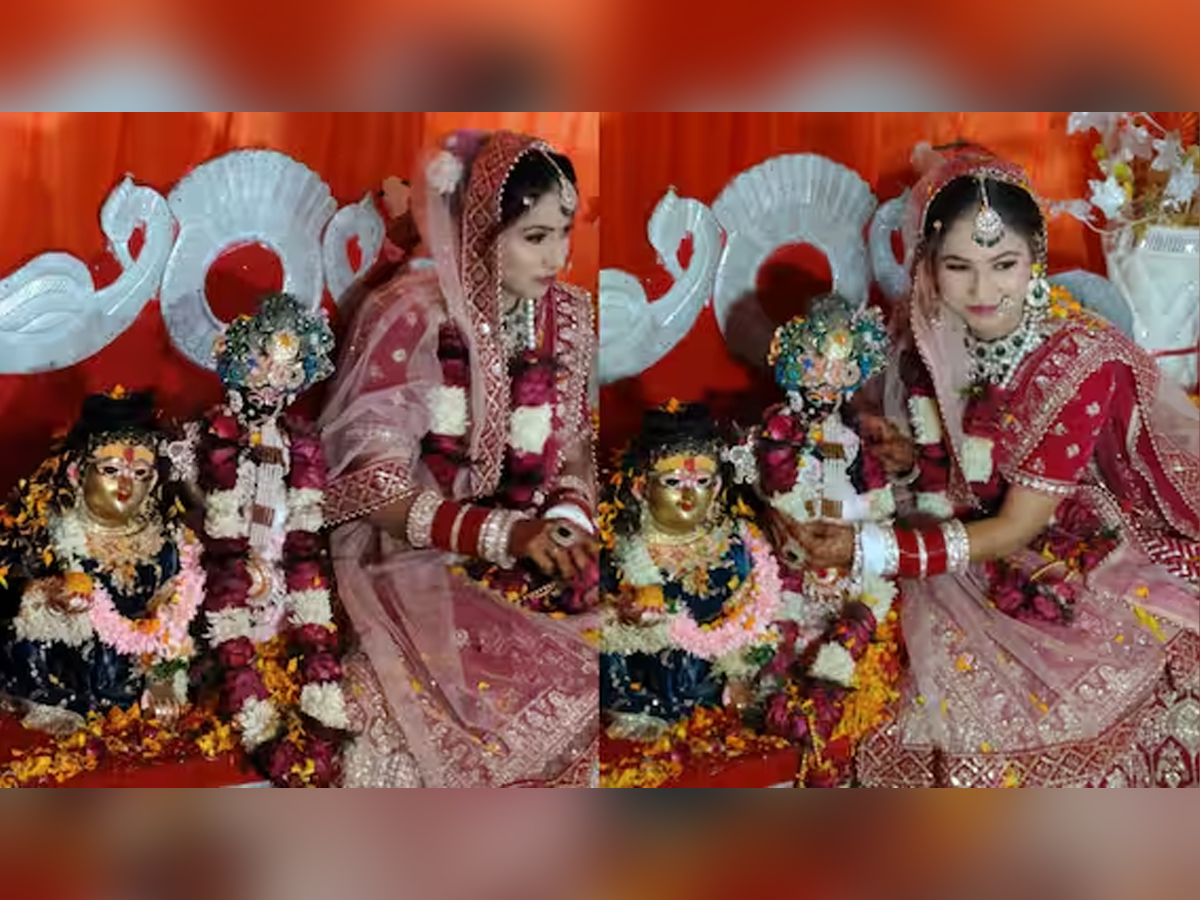
In a quiet village in Uttar Pradesh’s Budaun district, what looked like an ordinary wedding turned extraordinary. On a recent Saturday, 28‑year-old Pinky Sharma walked down the aisle, not with a human groom, but with an idol of Lord Krishna.
The groom arrived in a decorated car, villagers played the part of relatives, and rituals unfolded just as in any traditional Hindu wedding. The striking ceremony captured nationwide attention and sparked widespread discussion.
Rituals, Rings, and a Ringing Faith
The wedding followed every customary ritual. Pinky lifted the idol in her arms, exchanged garlands, accepted sindoor, and even circled the sacred fire seven times, the “saat pheere”, while holding the statue. Villagers and relatives joined in as baraatis and gharatis, bringing full social and familial support to the event.
The turning point came months earlier on a pilgrimage to the temple in Vrindavan. While receiving prasad, Pinky received a gold ring in her hand. She interpreted this as a divine sign from Krishna himself. For her, the ring cemented the bond and sealed her spiritual commitment.
From Student to Devotee: Pinky’s Story
Pinky belongs to a humble farming family in Byour Kasimabad village under Islamnagar police area. She completed her postgraduate education but remained deeply spiritual and devoted to Lord Krishna since childhood. Her father said Pinky often visited Vrindavan, seeking solace in faith rather than conventional marriage.
When her family realized no human groom would satisfy her devotion, they accepted her unique wish, viewing it as an act of faith rather than rebellion. Her father even promised her property rights like his sons, showing full support for her unusual commitment.
Village Supports, Devotion Wins: A Collective Blessing
What makes this wedding truly remarkable is the community participation. Villagers attended in large numbers, played traditional wedding roles, and helped arrange the ceremony. Many now call Pinky a modern‑day “Meera Bai,” alive with heartfelt devotion to Krishna, “Meera” being the name locals affectionately use for her.
For Pinky, the wedding was not a social statement but a spiritual vow. She told reporters she plans to live her life in service and devotion, possibly in Vrindavan, wholly surrendering worldly attachments.
Why This Story Resonates — Faith, Identity, and Tradition in Modern Times
The wedding challenges conventional ideas of marriage and companionship, highlighting an alternate form of spiritual union. It underscores the strength of personal faith and how individuals can interpret religious experiences deeply and personally.
The community’s support suggests evolving social acceptance for non‑traditional choices deeply rooted in devotion. It raises questions about identity, choice, and the meaning of marriage beyond societal norms.
For many, Pinky’s decision reflects more than personal devotion — it represents hope, faith, and a powerful expression of personal belief. In a world fixated on rules and norms, sometimes faith carves its own path.