
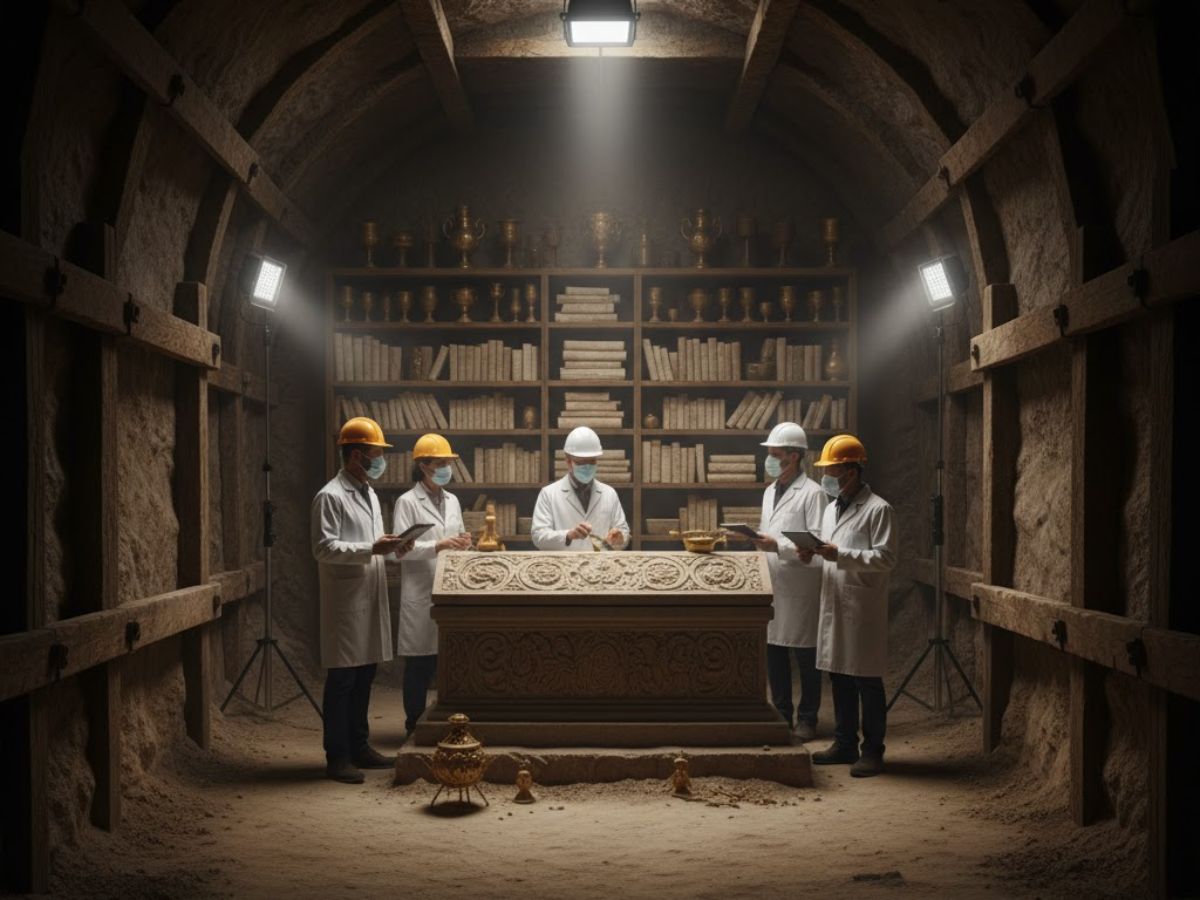
Following a month of precise tunneling, Polish archaeologists have broken into a centuries-old sealed crypt, discovering a type of burial previously unknown in Poland. The find, located beneath the Church of St. John the Baptist and the Five Martyrs, consists of six coffins stacked in three layers, some mysteriously coated in a unique mixture of fabric and tar.
What Was So Unusual About the Coffins?
The team discovered three distinct layers of burials, but it was the preservation method that stunned researchers. The coffins were covered in an unusual layer combining fabric and tar, a substance scientists suspect was used as a powerful sealing agent. Lead researcher Malgorzata Grupa from Nicolaus Copernicus University stated she had never encountered such a “layered sandwich of fabric and tar” in Poland. This unique combination suggests the burials were a complex, deliberate process unlike any other found in the nation’s historical crypts.
Why Were Tar and Fabric Used Together?
Experts theorize that this method was a practical response to a logistical delay. The report indicates that reaching the crypt for the burials took several days. To keep the bodies from decomposing during the wait, mourners likely used tar to seal the coffins. Layers of fabric were used to reinforce each coat of tar, keeping the coffins airtight for a longer time. This smart technique shows the level of care and effort put into these burials.
Who Was Buried in This Crypt?
While all the individuals were treated with reverence, one burial stood out.The first row of coffins was spaced apart with metal rods, indicating special status. Grupa said this setup suggests the person was a “significant figure,” since the other coffins were intentionally not placed directly on top. This is the first time such a clear social hierarchy has been seen in a Polish crypt, giving a rare look into past societal roles.
How Did Archaeologists Access the Site?
The crypt itself had no available entrance, making access the first major challenge. The team had to carefully tunnel 23 feet under the monastery to reach the space located beneath the church’s main altar. The site gained archaeological attention in 2022 during a broader search for the remains of the Bernardines, the monastic order that originally owned the complex built between 1513 and 1520. With the remains now removed for further study, the ancient crypt itself will soon be opened for public viewing.