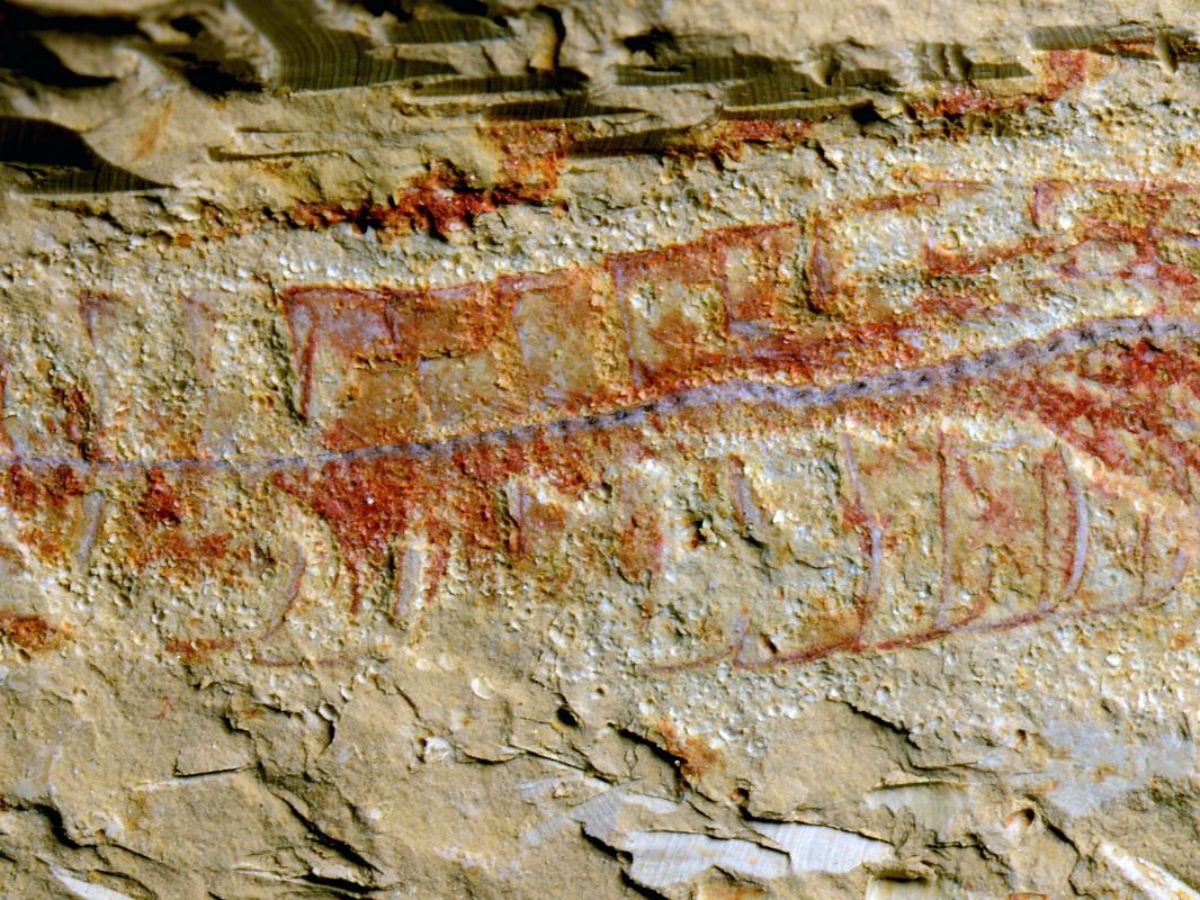
Scientists have uncovered a rare 520-million-year-old larva fossil, with soft organs and a tiny brain and nervous system fully intact, leaving researchers stunned.The fossil, called Youti yuanshi, offers an unparalleled, in-depth glimpse at the anatomy of some of the oldest complex organisms on Earth. It is an early relative of contemporary arthropods like crabs and insects.
What Was Discovered?
The fossil, discovered in China and studied by researchers from the University of Durham, is exceptionally rare due to its preservation of soft tissues, which typically decay without a trace. The specimen is incredibly small and required sophisticated technologies to evaluate because it is the preserved form of a larval animal.
Using sophisticated 3D scanning imaging, the team was able to map the creature’s internal structures in remarkable detail, revealing:
- Miniature brain regions
- A primitive circulatory system
- Digestive glands
- Traces of nerves leading to its simple legs and eyes
Why is This Discovery So Significant?
Lead author Dr. Martin Smith of Durham University described the find as something he had “dreamt of for a long time.” Larvae are incredibly fragile, making their fossilization nearly miraculous. Discovering one with intact organs offers a unique glimpse into a developmental stage critical for understanding how major animal groups evolved.
Dr. Smith described how his “jaw just dropped” when he observed the complex features that had been preserved beneath the fossil’s skin. He emphasized the remarkable quality of the preservation by asking, “How could these delicate details have resisted degradation and yet be here to view half a billion years later?”
Also Read: Trump’s Antitrust Warning Adds to Scrutiny of Netflix’s $72 Billion Warner Bros Deal
What Does This Tell Us About Early Life?
Youti yuanshi belongs to the early Cambrian Period, a time of explosive diversification in animal life often called the “Cambrian Explosion.” This fossil acts as a direct anatomical roadmap to the ancestors of today’s arthropods, the most abundant animal group on Earth.
By studying its preserved nervous system and organs, scientists can now:
- Compare the early evolution of arthropod bodies and brains to those of their contemporary offspring.
- Gain a better understanding of the evolutionary processes that made insects, spiders, and crustaceans successful.
- Gain insights into how complex organ systems first evolved and were organized in primitive animals.
Your Questions Answered: Ancient Fossil Discovery FAQs
Q: How old is this fossil exactly?
A: The fossil is approximately 520 million years old, dating back to the early Cambrian Period.
Q: What kind of animal was Youti yuanshi?
A: Since it was a larval form of an early arthropod, it was an ancient relative of modern groups like crabs, lobsters, spiders, insects, and centipedes.
Q: Why is finding a fossilized larva so rare?
A: Larvae are tiny, delicate, and have soft bodies. They don’t have the hard bones or shells that usually help with fossilization. An extraordinary occurrence in the fossil record is the preservation of a larva with its internal organs intact.
Q: How did scientists study such a tiny, delicate fossil?
A: They created intricate digital reconstructions of the fossil’s minuscule interior features by non-invasively peering within it using cutting-edge 3D scanning and imaging technologies.
Q: Where is the fossil now?
A:The worldwide study team examined the physical fossil specimen, which is currently kept at Yunnan University in China.
Also Read: Trump-Brokered Ceasefire Collapses as Thailand Launches Airstrikes on Cambodia