
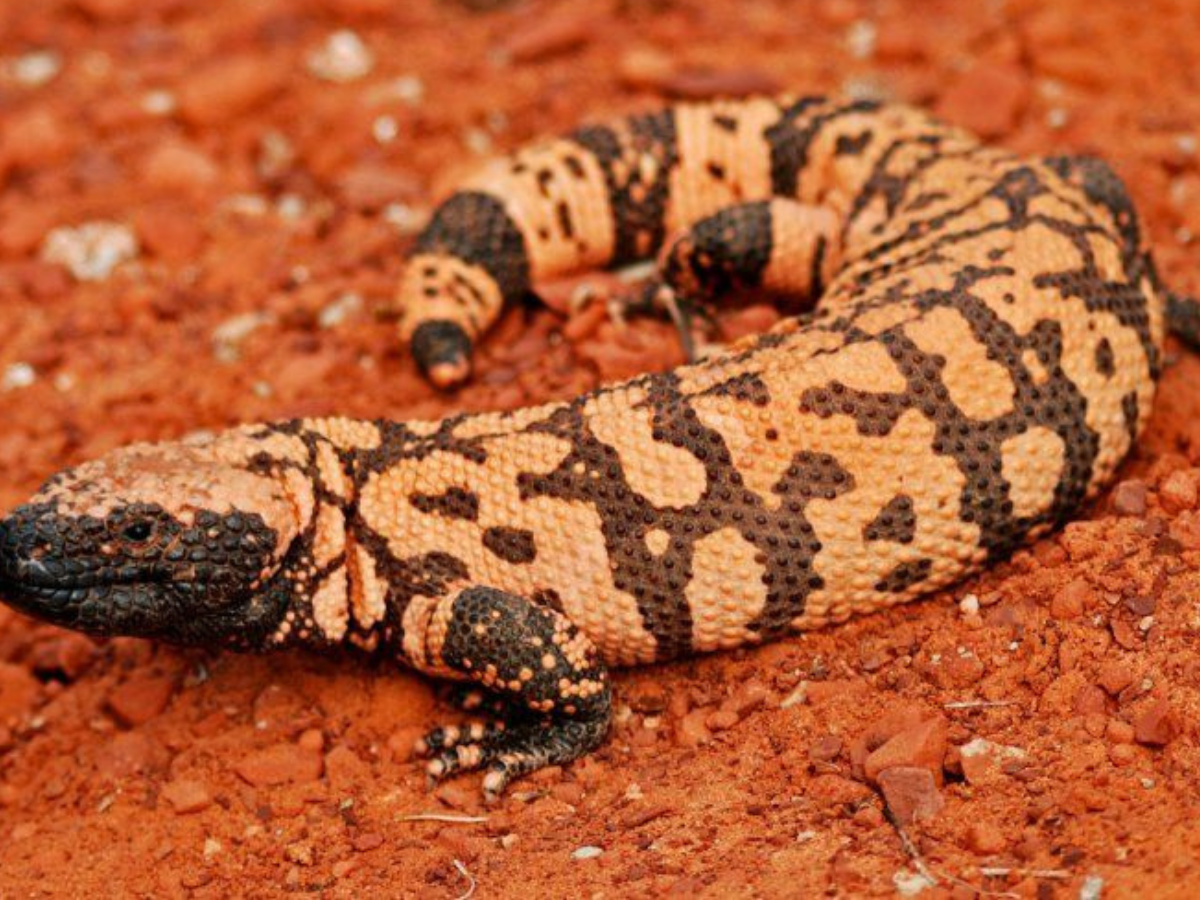
A science enthusiast pointed out an interesting anecdote that concerns the Gila monster, a venomous lizard that has contributed to the salvation of mankind. In a popular video clip, the man talked at length about the lizard found in the deserts of Arizona in the US and Mexico. The male then directed the audience to the life cycle and reproduction information on the lizard according to its Wikipedia page, which states, “The male begins courtship by flicking his tongue to find the female’s odor.”
In 1992, biologists found that the saliva of the Gila monster has exendin-4, a structural homologue of human GLP-1. But it is much longer-lived. There is a synthetic formulation of the expendin-4 known as the exenatide, which is held to be appropriate for use in man and reduces the body’s glucose levels a possible game-changer in weight reduction in ambulant type 2 diabetic patients.
Science Video On How A Lizard Solved Weight Issues
The Gila monster lives in the desert, and the food is not necessarily readily accessible to it. “So it has developed a phenomenal metabolism, where it eats once and then goes on a fast of months,” says Krish Alok, who shared the viral video of how a venomous lizard’s saliva might solve the world’s weight loss issue. The man referred to research stating that this lizard is able to survive by eating only four to five times a year.
When this distinctive characteristic of the Gila monster surprised the biologists, they delved into research on expendin-4. The expendin-4 activates a very particular receptor in the pancreas of the poisonous lizard. In the following years, the researchers also learned that this exendin is almost structurally identical to a hormone present in the human body when it eats food.
“That hormone encourages the body to release insulin, slows down the stomach emptying, and signals to the brain that you’ve eaten enough food,” Alok said. Crucially, this hormone also tells the human liver not to produce any more glucose.
Also Read: Scorpion Venom Shows Promise in Breast Cancer Treatment, Say Scientists
Drug Made Based on Gila Monster’s Venom
13 years later, after thorough research on the topic, scientists extracted the venom of the Gila monster and developed a drug mimicking the action of the hormone in the body to ensure effective glucose production. It led to the development of the birth of the drug exenatide, synthesized from the venom of the Gila monster. The drug was approved in 2005 by the Food and Drug Administration (FDA) in the USA. Exenatide became the world’s first GLP-1 drug, intended for the treatment of patients having type 2 diabetes.
There was one issue. The action of the GLP-1 drug only lasted for a short period of time before being broken down by an enzyme that goes by the name of DPP-4. Patients needed to take the drug repeatedly for permanent effects. The problem for scientists at this point was how to make the synthetic version of GLP-1 stay longer in the human body.
Also Read: First Aid After Snake Bite: Bengaluru Techie Dies After Snake Hidden in Shoe