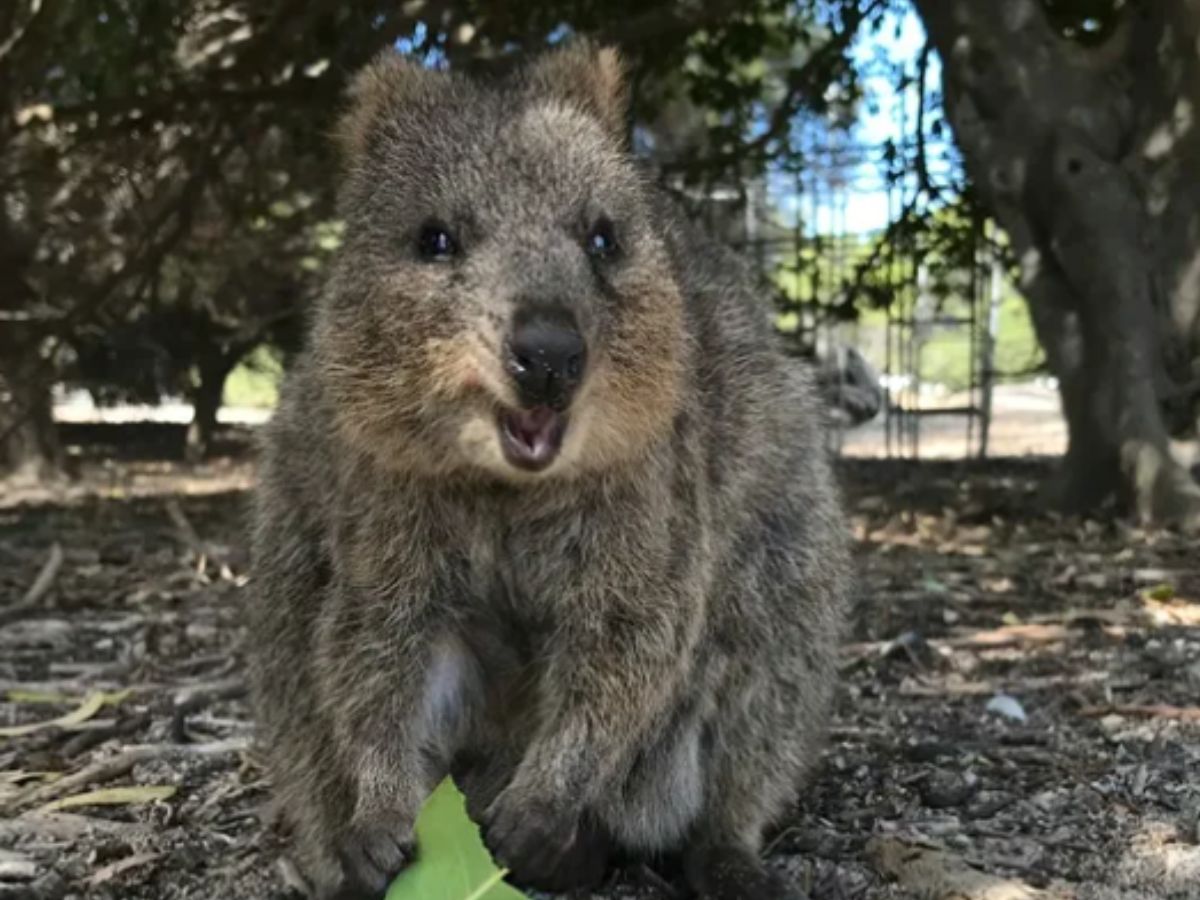
The quokka, often called the world’s happiest animal, has won hearts globally with its permanent smile and friendly, curious nature. These small marsupials are native to Rottnest Island, located off the coast of Western Australia, and are part of the wallaby family. Quokkas live in social groups, thriving in the island’s scrublands and eucalyptus forests.
The Happiest Animal Quokka Diet and Lifestyle
Quokkas are herbivores, feeding mostly on grasses, leaves, and bark. Their expressive faces, which seem to be constantly smiling, have turned them into a global social media phenomenon. Tourists from around the world flock to Rottnest Island hoping to capture the perfect “quokka selfie.” Their cheerful demeanor and lack of fear toward humans have made them symbols of happiness and positivity.
The Happiest Animal Quokka Conservation Concerns
Despite their popularity, conservationists emphasize that quokkas must be respected and protected. The species is classified as vulnerable due to habitat loss, predation by introduced animals, and human interference. Experts warn that feeding or touching quokkas is prohibited, as it can harm their health.
The Happiest Animal Quokka, A Reminder of Nature’s Joys
Adorable, curious, and endlessly photogenic, the quokka serves as a reminder of nature’s simple pleasures. Their cheerful smiles not only inspire joy but also highlight the importance of protecting these animals for future generations.